China’s leading electric vehicle maker, BYD, reports a staggering $107 billion in revenue for 2024. This surpasses Tesla’s $97.7 billion, according to a Shenzhen stock exchange filing released today, March 24, 2025.
The company nets a $5.55 billion profit, up 34% from last year, while Tesla earns $7.6 billion. This milestone marks a pivotal shift in the global EV market, spotlighting BYD’s rapid ascent.
BYD sells 4.272 million vehicles in 2024, including 1.765 million fully electric models and 2.485 million plug-in hybrids, dwarfing Tesla’s 1.789 million EV sales.
The company’s fourth-quarter profit jumps 73% to $2.07 billion, beating forecasts of $1.98 billion, driven by a 161% sales surge to 1.524 million units. Tesla delivers 495,570 vehicles in the same period, trailing BYD’s 595,413 EV sales by nearly 100,000.
Government support fuels BYD’s dominance in China, where subsidies and trade-in deals boost demand for affordable models like the $10,000 Seagull hatchback. Tesla’s pricier $39,000 Model 3 struggles amid a softening market and aging lineup.
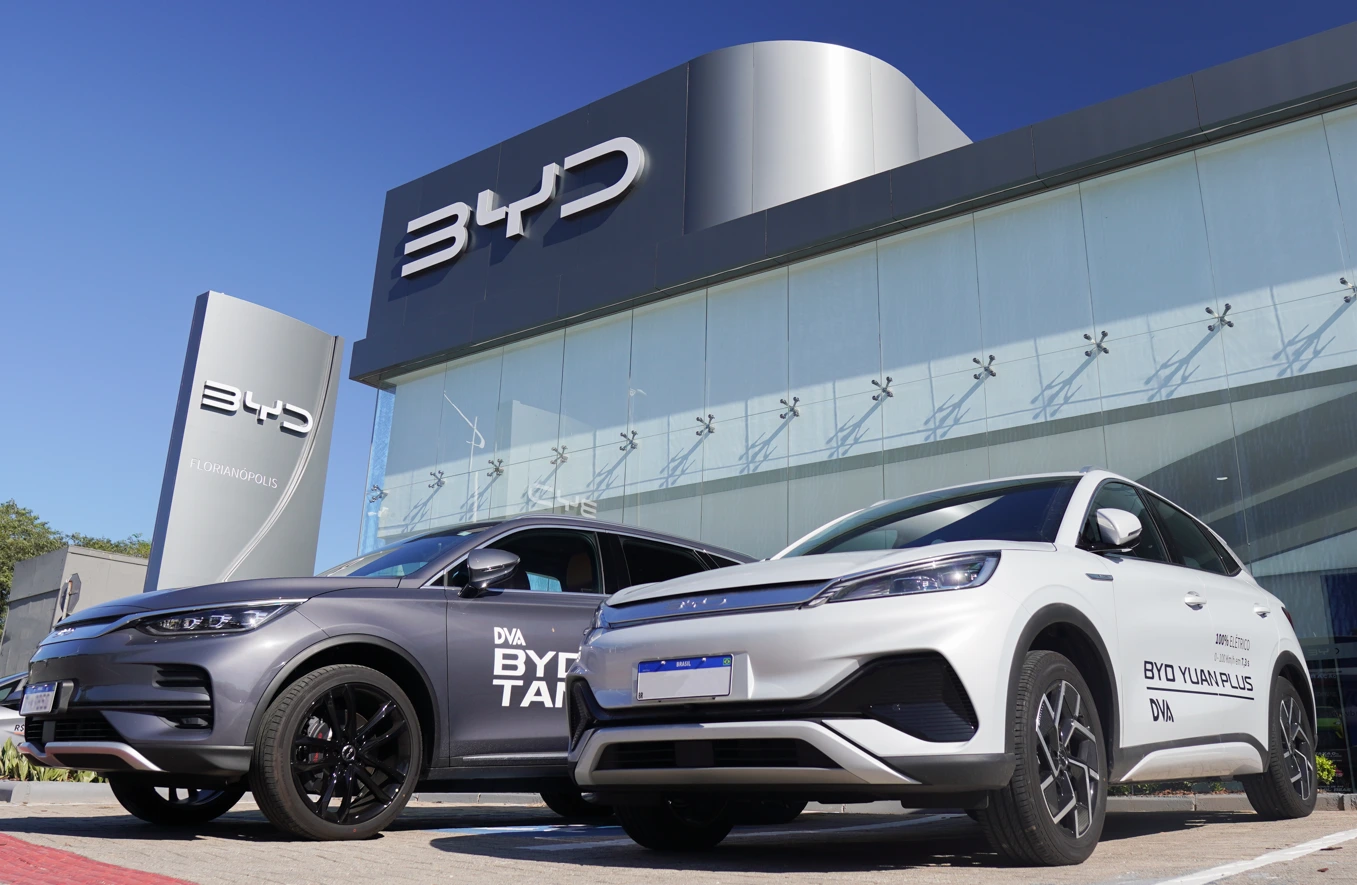
Meanwhile, BYD’s overseas sales climb 72% to 417,204 units, aided by new factories in Hungary and Turkey dodging EU tariffs. Profit margins reveal a contrast, as BYD’s gross margin dips to 17.01% in Q4 from 21.89%, reflecting higher costs, yet rises annually to 19.4%.
The Shifting Dynamics of the EV Market
Tesla maintains higher profitability despite a shrinking 14.6% margin, squeezed by price cuts. BYD’s $5.7 billion R&D budget and 100,000-strong research team outstrip Tesla’s $3.9 billion, signaling long-term ambition.
Doubts linger over BYD’s figures, given China’s opaque system, but independent sales trackers align with its 4.272 million total. Tesla faces its first annual sales drop, missing growth targets, while BYD’s production hits 4 million units against Tesla’s 1.77 million.
This gap underscores China’s EV edge, where sales quadruple North America’s. BYD’s rise challenges Tesla’s reign, leveraging scale, cost, and hybrids, yet Tesla retains brand strength and tech prowess.
The shift hints at a broader trend, as China’s policies and BYD’s adaptability reshape the industry. Observers watch whether this marks a temporary lead or a lasting power change.
This article was produced by The Rio Times’ automated newsroom system. How we use AI · Report an error
Read More from The Rio Times