BYD Proposes Tesla Alliance to End Gasoline Cars Amid Global Expansion Challenges
Chinese electric vehicle (EV) giant BYD has proposed a partnership with Tesla to accelerate the transition from gasoline cars to electric vehicles.
In an interview with the Financial Times on March 4, 2025, BYD Executive Vice President Stella Li emphasized the need for collaboration between the two EV leaders.
She called internal combustion engine vehicles a “common enemy.” She also highlighted BYD’s willingness to share its advanced EV and autonomous driving technologies with foreign companies despite ongoing trade tensions.
BYD, which sold 1.86 million new energy vehicles in 2022, has focused on expanding its global reach.
To fund its international growth, the company raised R$33.6 billion ($5.6 billion) in a Hong Kong share offering.
Its European expansion includes production facilities in Hungary and Turkey, with plans for a third plant under consideration.
These moves aim to bypass the European Union’s tariffs of up to 45.3% on Chinese-made EVs. The tariffs have created significant barriers for Chinese manufacturers.
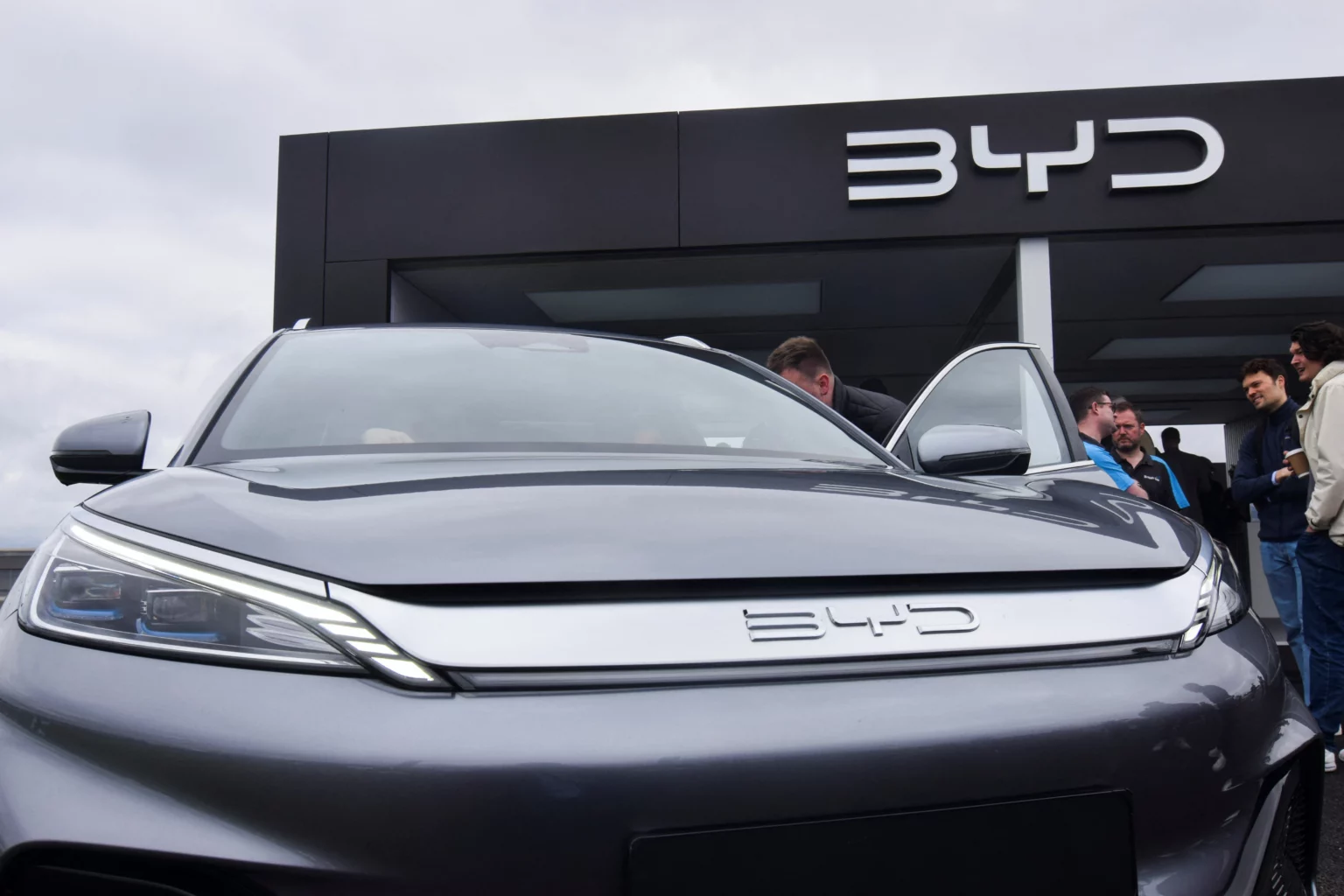
In Europe, BYD has gained ground over competitors like SAIC Motor’s MG brand by offering affordable EVs equipped with cutting-edge technology. Its “God’s Eye” autonomous driving system, provided at no extra cost across all models, stands out.
The system includes three tiers of capabilities, ranging from basic driver assistance to advanced highway and city driving autonomy.
It utilizes LiDAR sensors to enhance these features. Even BYD’s budget-friendly Seagull EV, priced at R$57,000 ($9,500), features advanced driver-assistance technology.
BYD’s Strategic Challenges and Potential Tesla Alliance
However, BYD faces insurmountable challenges in the U.S., where a 100% tariff on Chinese-made EVs imposed in 2024 has effectively blocked market entry. This contrasts with Tesla’s struggles in Europe, where CEO Elon Musk’s political activism has impacted sales.
Li’s proposal for an alliance with Tesla underscores the potential of shared expertise to lower costs and accelerate EV adoption globally. Such collaboration could pressure traditional automakers while reshaping market dynamics.
Yet geopolitical tensions and trade barriers remain significant hurdles. China’s role as a global EV leader remains pivotal. Its government-backed policies and BYD’s innovations have driven rapid growth in electrification.
A partnership between BYD and Tesla could set new benchmarks for affordability and innovation. It would also challenge the dominance of gasoline-powered vehicles worldwide.
This article was produced by The Rio Times’ automated newsroom system. How we use AI · Report an error
Read More from The Rio Times