Brazil’s Wealthy Drive Small Consumer Confidence Rebound as Others Struggle
Brazilian consumer confidence showed modest improvement in March 2025, according to data released Tuesday by the Getulio Vargas Foundation (FGV-IBRE).
The Consumer Confidence Index rose by 0.7 points to 84.3 points, interrupting three consecutive months of decline. The increase reflects a slight recovery from February’s reading of 83.6 points, which had marked the lowest level since August 2022.
This modest uptick comes despite persistent economic headwinds facing Latin America’s largest economy. The Current Situation Index led the improvement, climbing 1.6 points to 81.0 points.
Meanwhile, the Expectations Index remained almost flat, edging up just 0.1 point to 87.4 points. Both measures continue to hover well below the 100-point threshold that would signal optimism.
Economists point to a growing divide in consumer sentiment across income brackets. The positive result stems exclusively from improved confidence among Brazil’s highest income consumers.
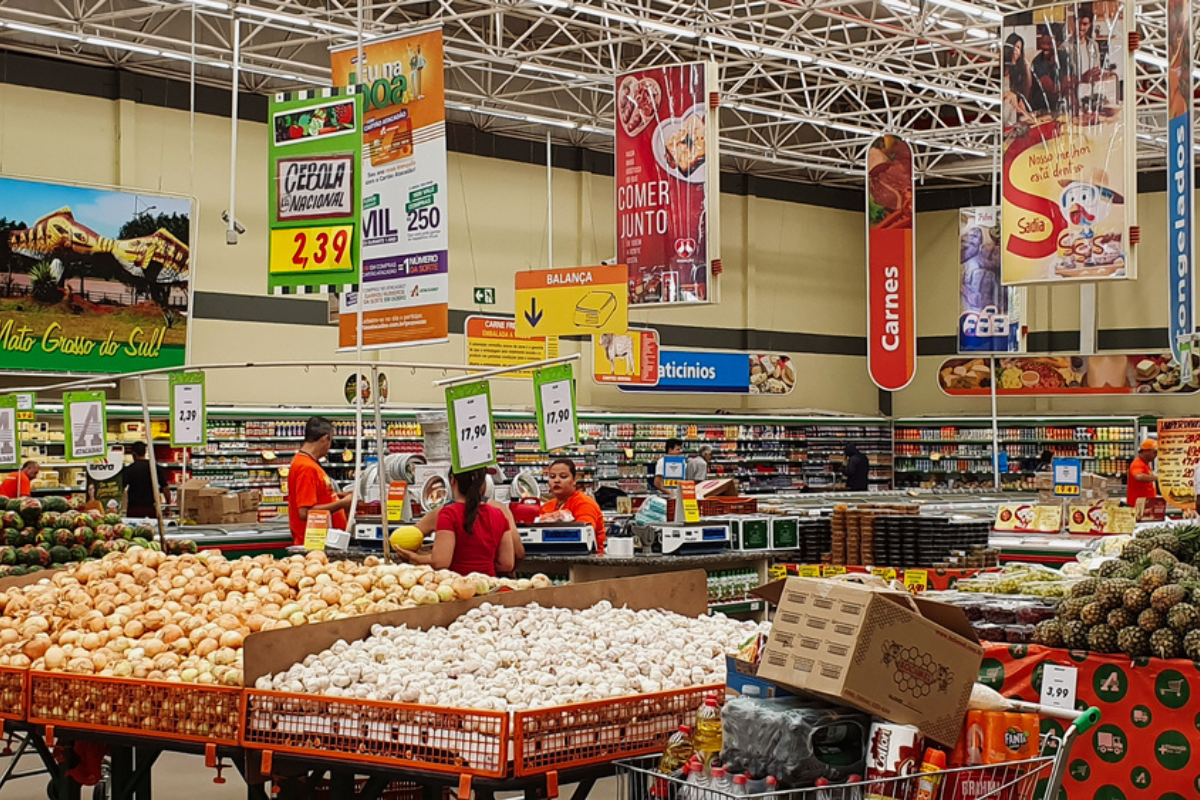
Lower and middle-income groups continue to report declining confidence levels, highlighting economic inequality concerns. “The moderate rise reflects an adjustment of the indicator, which remains in the pessimistic range,” explained Anna Carolina Gouveia, economist at FGV IBRE.
She emphasized that ongoing food inflation and rising interest rates worsen the financial situation of many Brazilian families. Brazil’s central bank raised its benchmark Selic rate by another percentage point to 14.25% in March.
This follows similar increases in January and December, with another hike expected in May. These aggressive monetary measures aim to combat inflation, which hovers around 4.83%.
Brazil’s Economic Tightrope
The restrictive monetary policy represents part of a broader economic tightening expected throughout 2025. Economists forecast Brazil’s GDP growth to slow to 1.6% this year and 1.8% in 2026, following three years of approximately 3% growth.
Youth and low-income consumers show particular vulnerability to current economic conditions. These groups express heightened concern about rising prices, with 50% of respondents citing inflation as their top worry.
Brazil’s broader economic picture presents mixed signals. The labor market shows resilience with unemployment at 6.2%, nearly a record low. This strength partially offsets pessimism caused by monetary tightening and fiscal concerns.
The March uptick provides minimal relief after February’s sharp decline, which saw the confidence index drop from 86.2 to 83.6 points. Economic analysts remain cautious about whether this represents a genuine trend reversal or merely a temporary adjustment.
Brazil’s consumer confidence still sits significantly below the historical average of 90.47 points recorded since measurements began in 2005. The all-time peak of 113.20 points occurred in April 2012, while the record low of 58.20 points was set during the pandemic’s early months in April 2020.
More: Brazil news in English, every day from The Rio Times.
This article was produced by The Rio Times’ automated newsroom system. How we use AI · Report an error
LatAm Markets: Live Signals → — real-time movers, turnover leaders and FX across Latin America.
Read More from The Rio Times