Brazil’s Prio, GPA, and Blau Face Rising Costs, Hard Choices, and Changing Growth Plans
Brazil’s key companies in oil, retail, and pharmaceuticals—Prio, GPA, and Blau Farmacêutica—have just released their second quarter 2025 financial results.
Together, their stories reveal a deeper shift in the country’s economy: even the biggest players must now rethink growth and spending as costs climb, competition heats up, and markets change fast.
For readers outside Brazil, these firms’ challenges will sound familiar: how do you build for tomorrow when costs, risk, and uncertainty keep climbing today?
Prio: Growth Meets Its Limits
Prio, a top oil producer in Brazil, is pumping out more oil than ever. In the second quarter, it averaged over 100,100 barrels per day, up 11.4% from last year, and output rose even more in July. Yet, even as Prio produced more, its profits fell sharply.
Net income dropped 54% to $122.5 million while Ebitda also fell 57% to $260 million. The company’s Ebitda margin—a key profitability number—shrank by 30 percentage points to 55%.
Why did Prio’s profits tumble while it increased production? Two reasons stand out. First, its operating costs have jumped, with the lifting cost (what it costs to bring each barrel to the surface) rising 81% to $13.8 per barrel.
This jump was driven partly by Prio’s bold $3 billion (R$17.1 billion $3.0 billion) move to buy the rest of the Peregrino oil field, making it the sole owner.
But large acquisitions mean bigger bills, and managing new assets does not always go smoothly right away. Second, output at the Frade field declined, contributing to pressure on costs.
Prio’s debt has also climbed. Its net debt-to-Ebitda ratio, a measure of leverage, increased to 1.8, up from 0.4 last year. The company now faces a real test: can it tighten up costs and run its new assets efficiently enough to make growth pay off?
The real story behind the numbers is about risk and reward. Prio bet big on becoming a leading oil producer, but now must prove it can do more than just produce oil—it must do it profitably.
GPA: No More Growth-at-Any-Cost
GPA runs hundreds of Pão de Açúcar and Extra supermarkets, making it one of Brazil’s retail giants. In Q2, GPA shrank its net loss to R$216 million ($38 million) from R$332 million ($58 million) the year before—a major improvement.
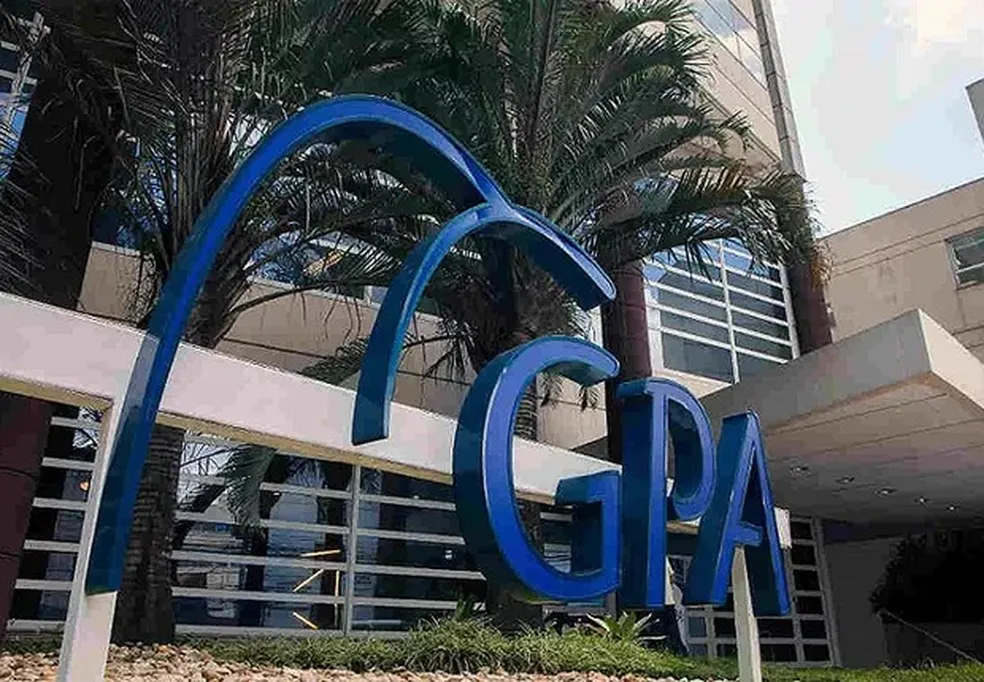
Total sales reached almost R$5.1 billion ($895 million) and net revenue was about R$4.7 billion ($825 million). Adjusted Ebitda improved by 6.1% to R$420 million ($74 million), and its Ebitda margin was 9%.
What is driving change at GPA? There are two big trends. First, the company got lucky with the timing of Easter, bringing a temporary boost to traffic and sales. Second, GPA is moving away from rapid store expansion to focus on running its existing operations better.
It opened only nine new stores this quarter and has paused future growth plans, citing higher interest rates and the difficulty of getting cheap financing.
GPA has now opened 213 of the 300 stores planned in its big expansion project, but has stopped projecting how many will come next. Sales at core Pão de Açúcar stores rose 6.5%, showing the brand remains strong. Store-for-store, sales rose 5.1%.
The deeper message: GPA does not want to risk overreaching during turbulent times. Like many retailers worldwide, it is shifting from “grow as much as possible” to “make every store count.” It’s a move to protect against a weaker economy and high borrowing costs.
Blau: Betting on Factories, Cautious on Innovation
Blau Farmacêutica, a key pharmaceutical supplier, had a good quarter for profit, posting R$63.2 million ($11 million), up 33% year-on-year.
Total revenue stayed stable at R$465 million ($82 million), but Ebitda—a key operational indicator—rose to R$122 million ($21 million) with margins improving to 26.3%, the best in four years.
Under the surface, Blau’s divisions show some strain. Hospital product sales hit a ceiling due to production bottlenecks.
Instead of focusing on launching many new drugs, Blau invested R$100 million ($18 million) into expanding its main factory in Pernambuco and adding four new lines in São Paulo, betting on future growth through greater output capacity.
Retail, plasma, and aesthetics segments pulled in R$59 million ($10 million), but that was down 12.3%. Blau also cut R&D investment by 13.2% to R$44 million ($8 million), preferring to plow resources into factory upgrades.
The story inside Blau is about picking battles. It has chosen to pause big bets on research and, instead, ramp up its ability to make and sell more of its best-selling drugs.
The strategy is pragmatic: the firm invests where it sees the fastest payoff, but it also risks losing ground in new product development if market conditions change.
In summary, Prio races to prove that boosting production can still deliver profits in a costlier world. GPA slows expansion to build a more stable, efficient retailer.
Blau doubles down on manufacturing to anchor its future, even if that means less innovation in the short term. For each company, the numbers tell a story of caution, recalibration, and the realities of running a business in today’s Brazil.
These firms must balance short-term survival against long-term bets—a dilemma that speaks to business leaders everywhere, not just in Brazil.
Live Company IntelligenceCompanhia Brasileira de Distribuição — the full investor dossier
Valuation & profitability
Price & risk
$1.4052-wk high
$4.19
Revenue trend · 6y
Ownership
Dividend
This article was produced by The Rio Times’ automated newsroom system. How we use AI · Report an error · Editorial responsibility: Matthias Camenzind, Editor-in-Chief
LatAm Markets: Live Signals → — real-time movers, turnover leaders and FX across Latin America.