Brazil’s Bolsonaro to sue Supreme Court Justice Moraes for abuse of office
RIO DE JANEIRO, BRAZIL – Conservative Brazilian President Jair Bolsonaro on Monday (16) appealed to the Supreme Court (STF) for abuse of office against Justice Alexandre de Moraes. The person in charge of the case, Justice Dias Toffoli, is in the Dominican Republic – he will not return to Brazil until Thursday (19).
Find the full presidential announcement here.
Bolsonaro questioned his inclusion in the so-called fake news investigation, which investigates the spread of false news against the country’s activist STF.
It is worth mentioning that in Brazil there is an investigation against Fake News regarding the Supreme Court, but none about Fake News regarding the president, though since the first day of his presidency, there have been so many (false) allegations about conservative Jair Bolsonaro that few before him have had to endure.
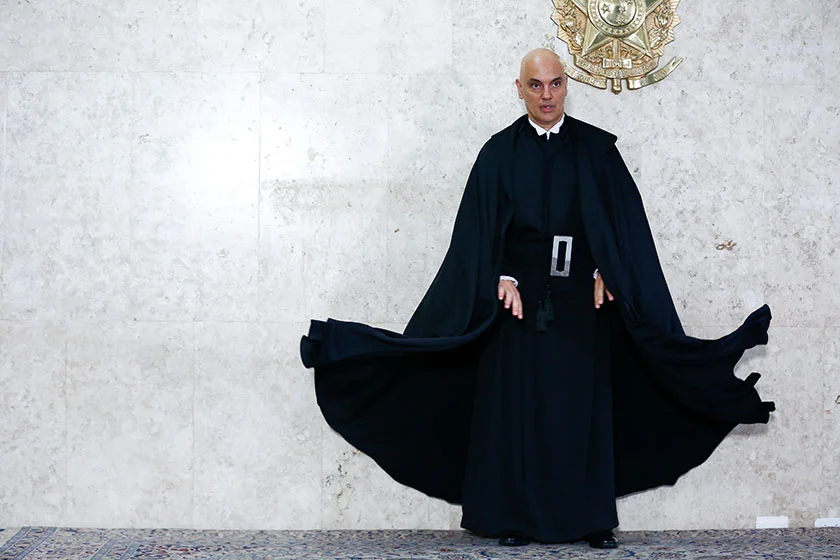
Bolsonaro said that he was still being investigated even after the Federal Police (PF) concluded that he had not committed any crimes when he spoke during a live broadcast about the security of the electoral process.
With this request, Bolsonaro further delineates his differences with part of the STF.
In the request for investigation, Bolsonaro questions his involvement in the Fake News investigation, which is investigating the spread of disinformation against Supreme Court Justices.
The president was included in the investigation after he had questioned in July 2021 the security of the electoral process. Moraes is rapporteur for the investigation.
This has contributed to the escalating crisis between the Court and Bolsonaro, whose supporters contend the probe is unconstitutional, arguing the Supreme Court cannot be the victim, investigator, and judge at the same time.
“The political damage done to the national mandate by the persistence of such an investigation is obvious and easily ascertainable,” says the announcement. To prove the claim, it is enough to look at the Brazilian press to see how many derogatory articles have been published against the President of the Republic due to his inclusion in the investigation,” the statement said. The text is signed by lawyer Eduardo Magalhães.
Bolsonaro also questions the establishment of the Fake News investigation, which was opened in 2019 under the leadership of Dias Toffoli. The argument is that the investigation was opened without a request from the Public Prosecutor’s Office.
Read in this context, the article Brazil’s Supreme Court sets precedents that could be dangerous for democracy.
In June 2020, the Court confirmed the opening of the investigation by 10 votes to 1. At that time, the plenary considered the investigation necessary to allow “the institutional defense of the STF” and that the Supreme’s internal regulations allow the adoption of measures to prevent attacks on the judiciary.

BOLSONARO X STF
On the judicial side, there are at least four major legal investigations or inquiries involving fake news, some with overlapping remits. The first, and perhaps most controversial, is this above-mentioned Supreme Court inquiry into the spread of disinformation by Bolsonaro’s followers, as well as threats they have made against members of the court.
The investigation is being led by Supreme Court Justice Alexandre de Moraes, a former public prosecutor and minister of justice. The president himself became an investigated party in that inquiry in August, after claiming that the 2014 and 2018 elections, the latter of which he won, were plagued by fraud (Bolsonaro claims he should have won on the first round, but admitted he had no proof).
The investigation has contributed to the escalating crisis between the Court and Bolsonaro, whose supporters contend the probe is unconstitutional, arguing the Supreme Court cannot be the victim, investigator and judge at the same time.
Nevertheless, the case has deeply shaken Bolsonaro’s inner circle, as Federal Police have searched the homes and offices of dozens of allied businessspeople, bloggers and politicians.
De Moraes has also authorized arrests, including that of Roberto Jefferson, a staunch Bolsonaro ally and the head of the conservative Brazilian Labour Party. According to the justice, Jefferson was part of a ring of criminals who sought to “destabilize republican institutions” by spreading fake news. Following Jefferson’s arrest, Bolsonaro asked the Senate to impeach de Moraes.
The other probes include a Congressional investigation of criminal misinformation networks, which has asked the Federal Police to determine whether Senate computers were used to spread fake news on Instagram.
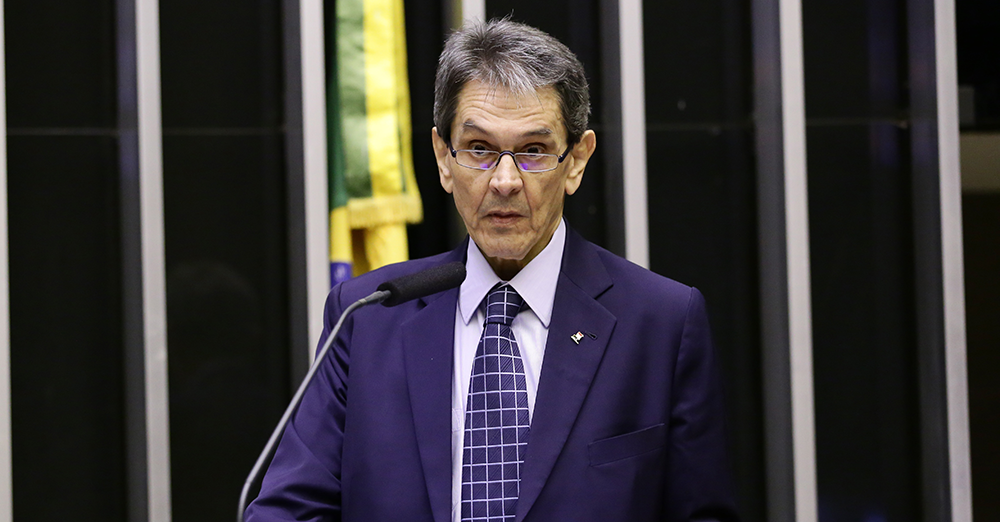
That investigation has also asked social media companies to give them the names behind several social media profiles, including accounts that were accessed from the congressional office of Eduardo Bolsonaro.
A separate probe by the Superior Electoral Court TSE has looked into allegations that Bolsonaro and supporters have spread misinformation this year’s election, including unproven claims that Brazil’s electronic voting machines are susceptible to fraud.
The fourth investigation, created by the Senate, is exploring misinformation and other aspects of the Bolsonaro government’s ineffective response to the Covid-19 pandemic. Posts on social media have claimed the pandemic is exaggerated by left-wingers, that hospitals are actually empty, and that people are being buried alive to drive up death rates.
The president himself has insisted that “early treatment” drugs such as hydroxychloroquine, ivermectin and azithromycin are effective against Covid-19.
A claim that was considered a downright lie at the time, but could very well be correct given the current state of research.
Taken together, these investigations have heightened the possibility that Bolsonaro could be impeached by Congress or declared ineligible for the 2022 election. In response, the president has increasingly warned that a “rupture” in Brazil’s democracy may be imminent.
He has also stepped up his critics on Brazilian institutions, with a focus on the court and specifically on Justices de Moraes and Luis Roberto Barroso.
The president gathered hundreds of thousands of his supporters to stage a protest against the Supreme Court on September 7, Brazil’s independence day, and declared that he would never again comply with an order from de Moraes, which would be illegal.
The declaration prompted a forceful response from members of other branches of government, including Barroso, who refuted Bolsonaro’s claims of electoral fraud point by point, calling them “empty rhetoric.”
A few days later, Bolsonaro appeared to back down, saying in a letter that his threats toward the Court came “in the heat of the moment” and promising to respect other branches of government. But few observers expected the truce to last.
LEGISLATORS
In Congress, legislators have also tried to fight back, introducing at least 45 bills aimed at curbing the spread of fake news. But many of the measures carry significant risks. Several would modify the Civil Rights Framework for the Internet, changing its rules on safe harbor, which currently give Internet providers and platforms immunity in case third party content violates any laws.
This would expose the companies to major legal risk, and transform their business models. Other proposals seek to force social networks to remove objectionable content no more than 24 hours after a user files a complaint (currently they remove content that violates their terms of the agreement, or when complying with a court order).
Some bills would allow users who share fake news to be prosecuted as criminals, even if they are unaware that they are spreading lies. There is even a proposal to limit to 1,000 the number of users who can receive a WhatsApp message. Meanwhile, some members of Congress and the judiciary are pressuring tech platforms to ban Bolsonaro and his allies, in the same way, many did with Donald Trump in early 2021.
Aware of the threat, Bolsonaro is taking countermeasures of his own. On September 6 he signed an executive order that attempted to ban platforms from de-platforming users (as happened to Trump) or taking down most content without a court order.
The New York Times called the decree “the first time a national government has stopped Internet companies from taking down content that violates their rules.” The decree was ruled unconstitutional a few days later and thrown out by Congress, but most experts believe Bolsonaro will continue to try to use all tools at his disposal to protect his allies.
In the meantime, social media companies feel caught between Bolsonaro and his opponents, facing the dual threats of onerous regulation or a free-for-all environment that would further diminish public trust in their platforms.
It’s unclear whether any of this can prevent what looks like a looming crisis in 2022. Bolsonaro has repeated on several occasions that he sees only three potential outcomes for himself: “prison, being killed, or victory.”
More: Brazil news in English, every day from The Rio Times.
This article was produced by The Rio Times’ automated newsroom system. How we use AI · Report an error · Editorial responsibility: Matthias Camenzind, Editor-in-Chief