Covid-19: Race for Domestic Brazilian Vaccine Has 11 Projects in Initial Study Phase
RIO DE JANEIRO, BRAZIL – Brazil has at least 11 projects of candidates for a domestically developed Covid-19 vaccine, according to a G1 survey. All are being developed in universities and public research institutions in the country.
Projects to develop a national immunizer against the disease caused by the novel coronavirus (Sars-CoV-2) are still in their initial research stages. They are not expected to begin human trials or have their studies completed before foreign candidates that are currently conducting Phase 3 clinical trials in Brazil.
There are several obstacles, ranging from the difficulty in accessing part of the required technology to the lack of political commitment, according to the researchers who lead the projects mapped by G1. Another factor is the lack of partnerships with the private sector – partly due to the risk of the project, since potential investors are unable to forecast whether the studies will succeed.

Should one of the candidates succeed, it will be the first vaccine fully developed in Brazil. The report below has three sections:
- The projects: what are they and where are the research centers located?
- The candidates: which are the research projects?
- The obstacles: what scenario must scientists face in order to progress?
Where are they?
The 11 projects involve at least nine research institutions – in the states of São Paulo, Rio de Janeiro, Minas Gerais, and Paraná:
1) The Butantan Institute (São Paulo): three projects plus one. The latter is being developed in partnership with Fiocruz (Oswaldo Cruz Foundation) in Minas Gerais, UFMG (Minas Gerais State University), and the Vaccine Science and Technology Institute (INCTV), also in Minas Gerais. The Biomedical Sciences Institute and the Medical School of Ribeirão Preto, both linked to USP (São Paulo University), are also involved.
2) Biomedical Sciences Institute (ICB) of USP: three projects
3) Fiocruz/Manguinhos (Rio de Janeiro): two projects
4) Federal University of Paraná (UFPR): one project
5) Heart Institute (INCOR) of USP: one project
The candidates
The vaccines researched worldwide (not only in Brazil) against Covid-19 are basically focused on four manufacturing processes, that is, four platforms: viral vector, proteins, genetics and inactivated virus (which is the platform of the majority of vaccines on the market today for most diseases).
Despite being a world reference in vaccine production – with technology transfer, mainly to the Butantan and Manguinhos – Brazil has never succeeded in developing a fully national vaccine from zero.
There are several obstacles ranging from the difficulty in accessing part of the required technology to the lack of political commitment, according to the researchers who lead the projects mapped by G1. There is also the issue of risk for those investing in a vaccine – who do it without knowing if it will succeed.
Below, you will see details about the ongoing research in Brazil. At the end of the report, there is further information on the obstacles faced.
The Butantan
Of the four Butantan projects, two are egg-based – one of which is more advanced and is conducted in partnership with the Mount Sinai hospital network in the United States with the support of the U.S. government and the Bill and Melinda Gates Foundation. This version uses the inactivated virus.
“It’s the same principle as the flu vaccine – you inoculate a viral strain in the egg, which grows on the embryonated egg, and then it [the virus] is purified from that egg. So, in fact, the vaccine plant is the egg – the bird embryo, the chick, which produces the viruses that later are converted into a vaccine,” explains Dimas Covas, the Butantan director.
The project in partnership with the Americans has already been tested in mice and awaits the next phase, to be conducted in monkeys. The vaccine presented an “interesting response” in rodents, according to Covas.
The second proposal based on eggs is being conducted in partnership with the institutions in Minas Gerais (see below).
The other less advanced proposals combine a coronavirus protein with one from the BCG – the tuberculosis vaccine – but it is still in a very early stage, according to the director. The fourth research recombines the coronavirus with the Influenza virus, and it is also in its initial stage.
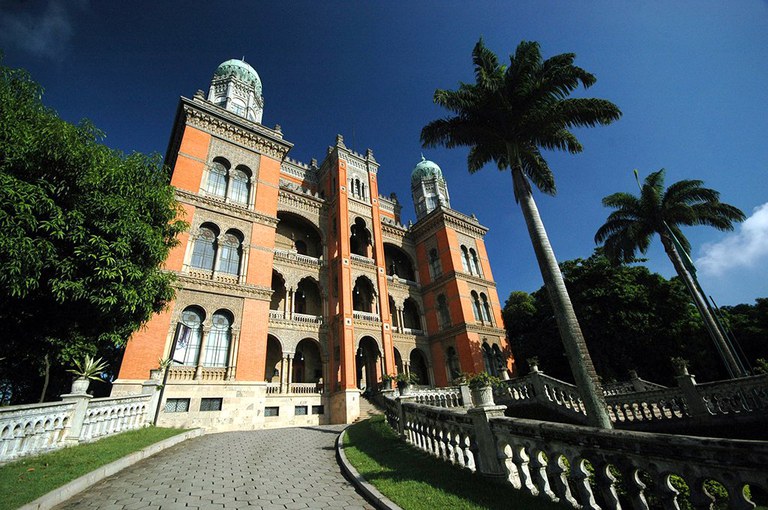
Butantan + Fiocruz-Minas:
The focus of research is the use of viral vectors, explains the Fiocruz-Minas researcher and Fiocruz-FMRP/USP platform, Ricardo Tostes Gazzinelli, who heads the group.
The vaccine proposal includes the “spike” S protein gene, which Sars-CoV-2 uses to infect cells, in the genome of the Influenza virus, which causes the flu. Two other influenza proteins are used: the hemaglutinin and neuraminidase (in the acronym H1N1, for instance, the H represents the hemaglutinin and the N, the neuraminidase).
Both change greatly from year to year, says Gazzinelli, and that is why vaccination for influenza is required every year.
“The hemaglutinin is important for the virus to enter the cell, and the neuraminidase is important for the virus to exit the cell”, explains Gazzinelli. “We take the neuraminidase gene and cut it. In its place, we place the gene that encodes the spike protein. It [the virus] enters the cell, but it is unable to exit it, so it does not produce a replication virus – yet it is able to induce an immune response,” he says.
The concept, according to the researcher, is that the vaccine should be bivalent – to serve against both common Influenza and Sars-CoV-2.
“We chose the Influenza virus because it infects airway cells well. These are the same cells the coronavirus infects. If it can induce a local immunity, maybe it will induce a greater protection”, says Gazzinelli.
Currently, the Biomedical Sciences Institute (ICB) of USP is conducting protection tests with Sars-CoV-2 in mice, which carry an altered gene so that they can be infected with the novel coronavirus. The Faculty of Medicine of Ribeirão Preto, also of the University of São Paulo, is testing the immunizer in rodents with pulmonary comorbidities.
The tests are required for researchers to define the best way to administer the vaccine, the best virus, and the best vaccination scheme – in one or two doses.
In the next weeks, the candidate will be submitted to the Butantan for pharmacokinetics and safety tests.
Biomedical Sciences Institute of USP
The ICB has three strategies, all of which are experimental and being tested in mice, according to the director, Luís Carlos Ferreira:
- The researchers place the Sars-CoV-2 genetic information in bacteria so that they produce three proteins of the virus: A, S, and N. The vaccine is combined with adjuvants (which enhance the immunizing effect) and tested in animals.
- The nanovaccines: the proteins are organized in nanoparticles – rather than being the “pure” protein, they are like a complex – and tested in animals.
- Genetic vaccines: with genetic material. There are two platforms: one uses DNA (of plasmids, a molecule that typically occurs in bacteria), and the other, a type of RNA (messenger).
“All were tested in mice and are safe and produce an immune response,” says Luis Carlos Ferreira. “The next step is to show that the vaccine provides protection.”
Fiocruz/Manguinhos (Rio de Janeiro)
There are two proposals at Manguinhos:
One is a synthetic vaccine, based on small synthetic Sars-CoV-2 protein molecules capable of inducing the production of specific antibodies and activating T cells, a type of defense cell of the body, against the coronavirus.
The other is a subunit vaccine, which uses (other) parts of proteins capable of boosting the immune response. This version tests different structures of the S protein, which is the one the novel coronavirus uses to infect the patient’s cells. The goal is that the body will produce the antibodies required to defend itself when it has contact with this protein.
According to Manguinhos’ deputy director of technological development, Sotiris Missailidis, both have already passed a first stage of pre-clinical trials with mice and proved safe for the animals.
Now, scientists are assessing the production of antibodies and the responses of animal defense cells. The best of the designs and tested doses will be tested for ‘challenge’ – when scientists infect the animals with the virus and check whether the vaccine has provided protection.
The next test will be conducted in hamsters, scheduled for November, and then possibly monkeys.
“If we can find a laboratory to do it, the test on monkeys would occur in December. At the end of the year or in January we could complete the pre-clinical phase,” says Missailidis. He says it is difficult to tell when the clinical trials will take place, because there may be delays.
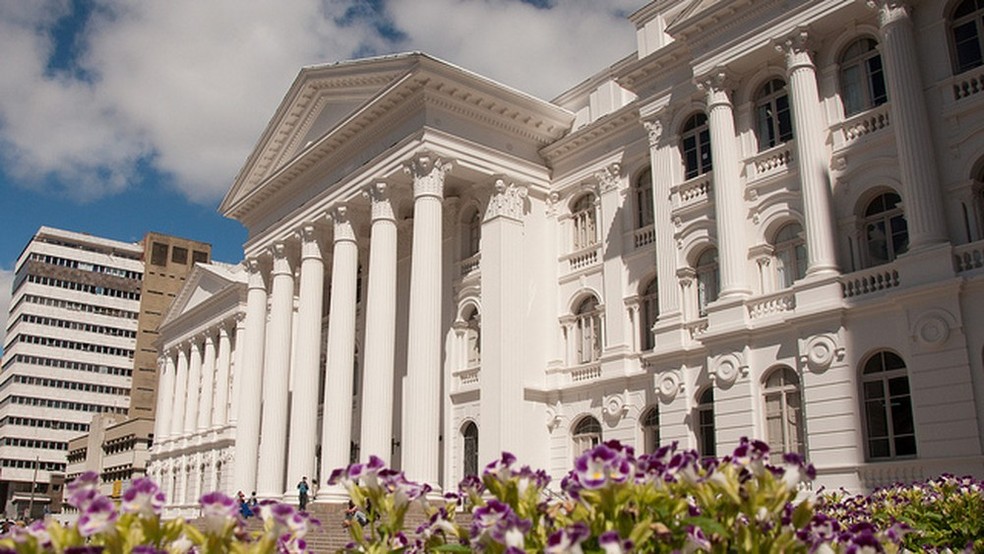
Federal University of Paraná (UFPR)
The UFPR group removes a protein from Sars-CoV-2, and transfers it to a bacteria, which then produces more proteins. Then it associates the proteins to a large molecule (polymer) called polyhydroxybutyrate (known by the acronym PHB).
According to the head of the research, Professor Marcelo Müller, the use of PHB is based on three factors:
- So that the virus protein does not penetrate the animals “alone”. “Usually, when you inject the antigen – in this case, this protein – without it being fixed on some material, it can be quickly degraded,” says Müller.
- So that the protein can be more easily recognized by the body. “When the antigen is fixed on some surface, it will be much closer than what is naturally found in the virus. So it is as if we were mimicking the virus without using it” says the researcher.
- The third reason is not yet fully established, but there are studies that suggest that the PHB itself can enhance the effect of the vaccine.
Scientists are now conducting tests on mice to find the best compound capable of inducing the immune response. The projection is that results will be out by the end of the year. Then researchers will need partnerships to infect the animals with Sars-CoV-2 and determine if the antibodies produced protect the animals (see details below).
Heart Institute (INCOR)
The INCOR project also focuses on Sars-CoV-2 proteins.
“We studied the antibody and cellular response of over 200 people with the disease and selected the best targets that trigger an effective [immune] response against these viral fragments – which we call peptides. There are parts of the spike [protein S] too,” explains Jorge Kalil, who heads the INCOR Immunology Laboratory and heads the research.
The compound is also being tested in mice so that researchers can achieve the best prototype. Later, they intend to develop a nasal version of the vaccine – rather than intramuscular – that Kalil intends to be the definitive one against the disease.
“We want to trigger a very strong response for the respiratory system, in addition to the whole body, both in the production of antibodies that are specific to the mucosal response – the velvety tissue that composes the whole respiratory tract – and also to boost the defense cells response in the respiratory tract,” he explains.
“We are looking for a vaccine that provides great coverage – that is very effective in many people because it produces a very important local response,” he says.
What are the obstacles?
Ricardo Tostes Gazzinelli says the problem is structural: those investing in vaccines – the pharmaceutical companies, entrepreneurs, the State – don’t want to take risks, so they focus on countries that already have experience and expertise to develop vaccines from scratch. He states that this concern is a mistake.
“If you invest and release your product, you will get a high return. Brazilian entrepreneurs don’t want to take risks, they want guarantees. No one knows if these vaccines [from abroad] will work and how well they will work – why not invest in a Brazilian concept?” he questions.
The investment is expensive: Gazzinelli’s project, for instance, has already been granted R$4.6 million in funding – from the Ministry of Science, Technology and Innovation (MCTI), Fiocruz and the state foundations to support research in Minas (FAPEMIG) and São Paulo (FAPESP). Another R$4.5 million, also from the MCTI, were allocated to research at INCOR, and in Paraná, the Ministry’s contribution amounted to R$2.4 million. In Manguinhos, there are another R$2 million.
Technology imports are also expensive: when announcing the purchase of the CoronaVac vaccine, the Ministry of Health estimated a R$2.6 billion expenditure.
Another challenge is technology, points out Luís Carlos Ferreira, director of ICB-USP.
“That’s why both the Butantan and Fiocruz are fully dependent on technology transfer: either they buy from abroad or they license it and try to produce the vaccine here. All the vaccines we produce are like that – either they buy or they import technology. There is no way to complete the whole chain,” says the ICB director.
He points as an example the inability to produce antigens with the required degree of purity to test the vaccine. According to the director, only the Butantan and Fiocruz are in a position to do this – but both are committed to the production of vaccines from abroad.
Sotiris Missailidis of Fiocruz considers it important that Brazil should emerge in the race for the vaccine as an important player.
“Brazil has top scientists, with technological knowledge to drive these products. I think it is very important to come, register, produce our product and be on the world map as one of the major players that can provide this kind of response to support the country’s public health and Latin America or the world in this supply agreement,” he says.
Source: G1
More: Brazil news in English, every day from The Rio Times.
This article was produced by The Rio Times’ automated newsroom system. How we use AI · Report an error · Editorial responsibility: Matthias Camenzind, Editor-in-Chief