Brazil Audit Court Flags 82% of Pix Amendments as Irregular
Brazil · Public Accounts
Brazil’s federal Court of Accounts has completed its largest review yet of “Pix amendments” — the fast, lightly supervised budget transfers that lawmakers can steer to states and towns — and found irregularities in 82 of 100 transfers examined, with roughly a quarter of the money diverted, misspent or impossible to trace.
Key Facts
— Scope. The TCU audited 100 special transfers made from 2020 to 2024 to 73 municipalities and the states of São Paulo and Para, worth R$198.11 million (about US$38.9 million).
— Irregularities. Auditors flagged problems in 82 of the 100 transfers.
— Damage. The court put effective or potential losses to the treasury at R$49.07 million (US$9.6 million) — about a quarter of the audited money.
— Not final. These are technical-staff findings; the court’s full bench has not yet ruled.
What the auditors found
The audit, part of the TCU’s Special Plan for Auditing Special Transfers, broke the flagged money into three buckets. Auditors could not trace R$26.36 million (US$5.2 million) that beneficiaries moved through ordinary, non-dedicated bank accounts — so-called “transit accounts.” A further R$14.95 million (US$2.9 million) paid for expenses that lacked valid legal or tax documentation, or was spent on purposes other than those declared. And R$14.1 million (US$2.8 million) fell under “total or partial non-delivery of the work and overbilling” — cases where, in the auditors’ words, the money left the federal coffers but the public service never reached the citizen.
Among the practices the report says could fall under criminal law: bid-rigging, the hiring of companies already barred from public contracts, and tenders written to steer results and shut out competitors. Earlier reporting has linked some Pix amendments to contracts for festivals, concerts and sporting events.
The “transit account” problem
The single largest category — the R$26.36 million (US$5.2 million) that vanished from view — points to a structural weakness. When a town or state routes an earmark through a general-purpose account rather than a dedicated one, the TCU says, it “breaks the backbone of financial tracking” and makes it impossible for federal authorities to confirm whether the money was actually used for its stated purpose. Fixing that is now a formal demand: the court gave the Management Ministry (MGI) 120 days to update the “Special Transfers” module of Transferegov, the federal platform that tracks these payments, so recipients can no longer rewrite their spending plans at will.
For a foreign reader, it helps to understand why this matters so much. In Brazil, the federal budget is not only an executive tool; a significant slice of it is controlled directly by Congress through individual amendments. The Pix model was created to speed up the delivery of those funds, bypassing the traditional, slower project-by-project agreements. That speed, however, came at the cost of the usual checks. A dedicated bank account acts like a glass box: every deposit and withdrawal is visible to oversight bodies. A transit account is more like a curtain — money enters, then gets mixed with other municipal cash, and the audit trail goes cold. The TCU’s demand to update Transferegov is therefore an attempt to rebuild that glass box digitally, forcing towns to declare exactly where the money sits and what it buys, rather than letting them shuffle it out of sight.
The R$55 million question — and the names that are missing
The headline damage figure needs a footnote. Add the three flagged categories together and they come to about R$55.4 million (US$10.9 million); the TCU’s official damage estimate is lower, at R$49.07 million (US$9.6 million), because some debts were counted under more than one category and were stripped out to avoid double-counting. Both numbers appear in the coverage, and the gap is simply gross versus net.
The bigger gap is a different one. The report identifies the transfers, the towns and the irregularities — but it does not name the members of Congress who directed the flagged amendments. That omission is the story’s loudest silence: the Pix-amendment model exists precisely so that individual lawmakers can point federal money wherever they choose, yet the document that catalogues the problems stops short of the people who signed off on them.
This silence touches a raw nerve in Brazilian politics. The country has spent years debating how to balance legislative power over the budget with the transparency voters need to hold their representatives accountable. The Supreme Court has already stepped in to demand more traceability, and this audit lands right in the middle of that unresolved tension. The question it leaves hanging is whether technical audits can ever be fully effective if they stop at the municipal door without walking back to the parliamentary office that opened it.
What happens next
Because the TCU has no criminal powers, its findings go to Supreme Federal Court (STF) Justice Flavio Dino, who is rapporteur of ADPF 854, the case setting new transparency and traceability rules for parliamentary earmarks. The material could feed future prosecutions. For now, the report is a set of technical findings signed by Justice Walton Alencar Rodrigues; the court’s full bench has not yet issued a ruling.
Several open questions will shape what comes next. Will the STF use this audit to tighten the rules further, perhaps requiring that the lawmaker’s name be attached to every transfer before the money is released? Will the Management Ministry meet its 120-day deadline, and if it does, will the new Transferegov module actually close the transit-account loophole or simply shift the problem elsewhere? And perhaps most consequentially, will federal prosecutors treat this report as a roadmap for criminal investigations, or will the absence of named lawmakers keep the findings stuck at the administrative level? The answers will determine whether this audit becomes a turning point for budget transparency or another report that documents a problem without fixing it.
Background: Foreign Investors No Longer Fear a Lula Win — They’re Watching the Fed Instead.
Background: Brazil Tax Reform Timeline: Tech Sector Faces 2026 Invoice Shock.
Background: our bringing your pet to brazil the complete mapa guide for expats guide.
Background: our investing in brazil guide.
Frequently Asked Questions
What are “Pix amendments”?
They are special budget transfers Brazilian lawmakers can send straight to states and municipalities without a formal execution agreement, nicknamed after Brazil’s instant-payment system Pix because the money moves fast and with little tracking.
What is the TCU?
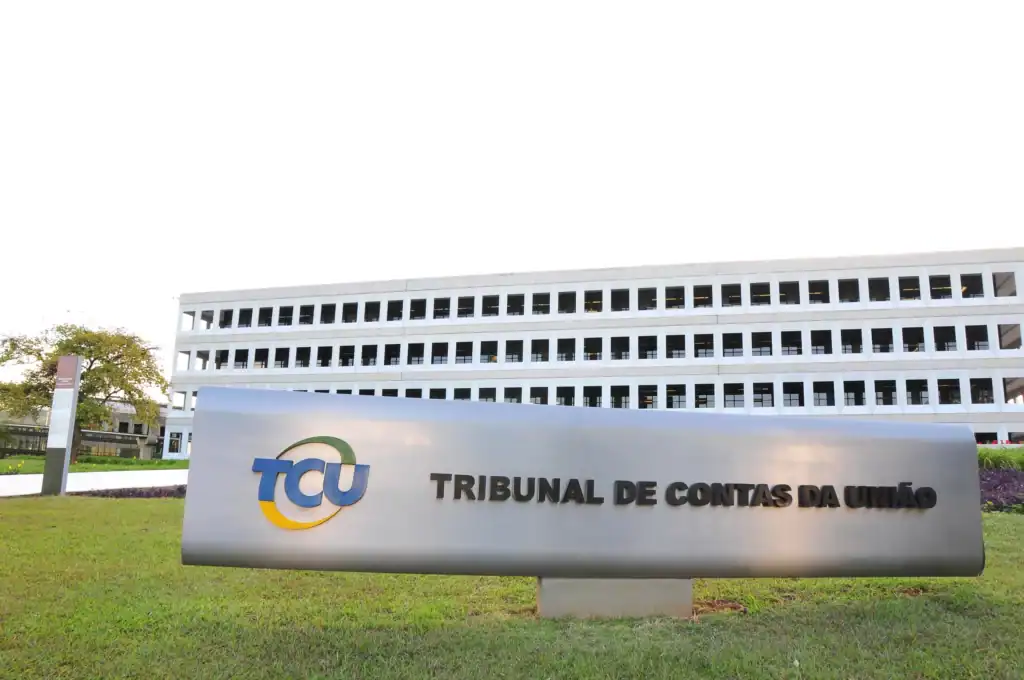
The Tribunal de Contas da Uniao, Brazil’s Federal Court of Accounts — the body that audits how federal money is spent.
Does the audit name the lawmakers responsible?
No. It documents the transfers and irregularities but not the members of Congress behind them. The findings now go to STF Justice Flavio Dino.
Connected Coverage
Sources: Brazil's Federal Court of Accounts (TCU).
This article was produced by The Rio Times’ automated newsroom system. How we use AI · Report an error
Read More from The Rio Times