Brazil Senators to Vote on Gang Crackdown on 14 October

BRAZIL · SECURITY
Runoff · Sunday, 25 October
Flávio Bolsonaro vs Lula: what happens next
First-round results, how the runoff works, the key dates and who backs whom, in one guide.
Key Facts
- —The country Brazil, Latin America’s largest economy, holds a presidential runoff on Sunday 25 October between President Lula and conservative senator Flávio Bolsonaro.
- —What happened On Monday 12 October, Lula repeated that he will create a security ministry once the Senate passes the gang crackdown.
- —The vote The Senate’s justice committee meets on Wednesday 14 October at 9 a.m. Brasília time to vote on three amendments singled out for separate votes.
- —The US link Since 5 June 2026, Washington has listed the PCC and Comando Vermelho, two of Brazil’s biggest gangs, as Foreign Terrorist Organizations.
- —Still open After the committee, the amendment still needs two rounds of voting in the full Senate before it can move on.
- —Prediction markets Polymarket gives Flávio Bolsonaro an 87.4% chance of winning the 25 October runoff (13 October, 2:43 a.m. ET). Polymarket puts Flávio Bolsonaro’s chance of winning at 87% and Kalshi at 87% (Lula: 13% and 13%), as of 13 October, 3:20 am ET; prices are bets, not polls.
Brazil’s Senate justice committee meets on Wednesday 14 October to finish its review of a gang crackdown amendment to the constitution. The amendment would widen the federal government’s role against organised crime, an issue both runoff candidates are campaigning on.
On Monday 12 October, President Luiz Inácio Lula da Silva repeated his promise of a new Ministry of Public Security once the Senate approves it. For US readers, the targets are familiar: Washington lists two of Brazil’s biggest gangs as terrorist organisations.
What the Senate Committee Will Vote On
The Constitution, Justice and Citizenship Committee, known as the CCJ, reviews proposed changes to Brazil’s constitution before they reach the Senate floor. Its official agenda lists an extraordinary session for 9 a.m. Brasília time on Wednesday.
The text, known as PEC 18/2025, came from the Chamber of Deputies, the lower house, and reached the Senate on 10 March 2026. It amends 11 articles of the constitution, including Article 144, the section on public security.
According to the newspaper Folha de S.Paulo, the proposal expands the federal government’s powers to step up the fight against organised crime. At present, most day-to-day policing in Brazil is run by the states.
The committee approved the core report on 2 September, backing four amendments in full and two in part. Senators filed 81 amendments in total, on topics from municipal guards to money for the national security and prison funds.
On Wednesday, senators vote only on amendments 13, 29 and 45, which were singled out for separate votes. If the committee finishes, the gang crackdown moves to the full Senate, where it needs two rounds of voting.
What Lula Promised
Lula spoke on Monday 12 October, a national holiday, in an interview at the Palácio da Alvorada, his official residence in Brasília. He had just attended a Mass for Our Lady of Aparecida, Brazil’s patron saint.
“Once the security amendment is approved, we will create the Ministry of Public Security,” he said, according to Folha. TV Globo’s news site, g1, also reported the pledge.
Both outlets quoted his campaign’s security line. “For working people, we want calm, we want peace, we want protection,” Lula said.
“Now, for criminals, we want prison,” he added, according to both outlets. Folha also quoted him saying the government “will defeat organised crime and free Brazilian territory.”
Lula had promised a security ministry before but did not create one in this term, Folha recalls. He has made the new ministry conditional on Congress passing the amendment first.
Who Is Involved
Lula, 80, co-founded the left-wing Workers’ Party (PT) and is seeking a fourth term. He finished behind his rival in the first round on 4 October, Folha reports.
That rival, Senator Flávio Bolsonaro of the conservative Liberal Party (PL), is the eldest son of former president Jair Bolsonaro. On Tuesday 6 October he promised longer sentences for gang bosses, and he also backs a lower age of criminal responsibility.
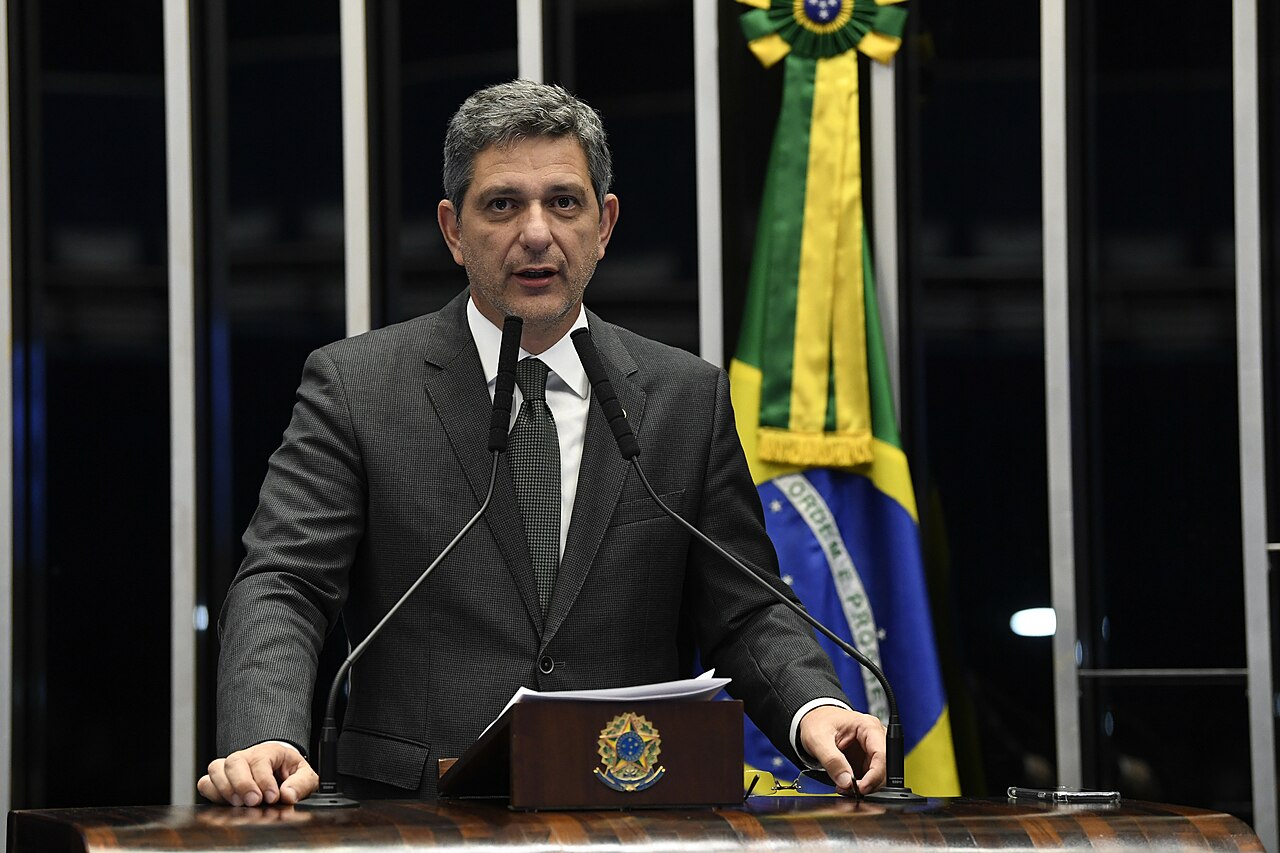
Lula’s campaign replies that his government already passed an Anti-Faction Law, with prison terms of 20 to 40 years for gang leaders. The committee’s rapporteur on the amendment, who wrote its report, is Senator Rogério Carvalho of Lula’s party.
Folha describes the committee chair, Senator Otto Alencar of the centrist Social Democratic Party (PSD), as an ally of the government.
Why Washington Is Watching
On 28 May 2026, US Secretary of State Marco Rubio designated the PCC and Comando Vermelho as Foreign Terrorist Organizations. The decision took effect when the Federal Register, the US government’s official journal, published it on 5 June.
The PCC, or First Capital Command, is based in São Paulo, and Comando Vermelho, or Red Command, in Rio de Janeiro.
Under US law, anyone under US jurisdiction who knowingly gives a listed group material support commits a crime, according to the State Department.
US banks holding funds linked to such a group must keep control of them and report them to the Treasury’s sanctions office. Wednesday’s committee vote does not change the US listing.
What It Means for You
For travellers, the gang crackdown changes nothing for now: Wednesday’s vote does not alter policing on the streets, which stays with state forces.
For US banks, companies and investors dealing with Brazil, the terrorist designations already apply, whatever the Senate decides.
What Is Not Known
The Senate lists Wednesday’s session as scheduled but not yet confirmed, so the gang crackdown vote could slip. It is also unclear when the full Senate would hold its two rounds of voting.
Lula has not said what a new ministry would cost, who would run it or when it would open. How a President Flávio Bolsonaro would treat the gang crackdown is also open.
What Prediction Markets Say
On Polymarket, an online prediction market, bettors give Flávio Bolsonaro an 87.4% chance of winning the 25 October runoff (13 October, 2:43 a.m. ET). Lula stands at 12.5%, in a market with about US$180 million in total bets.
Prediction markets · who wins the runoff
Implied chance of winning Brazil’s presidency on 25 October, from traders’ prices.
Polymarket
Flávio Bolsonaro 87.4% · Lula 12.5% (US$180 million traded)
Kalshi (regulated in the US by the CFTC)
Flávio Bolsonaro 87% · Lula 13%
As of 13 October, 3:20 am ET (08:20 Lisbon), updated every 20 minutes. Prices are bets, not polls, and can move fast.
Why we show this: prediction markets turn real-money bets into a live probability that moves within minutes of the news, which is why investors, campaigns and newsrooms in the United States now follow them closely. We show them next to polls and official results, never instead of them.
More: Brazil news in English, every day from The Rio Times.
Frequently Asked Questions
What is Brazil’s gang crackdown amendment?
It is a proposed change to Brazil’s constitution, known as PEC 18/2025, that widens the federal government’s role in public security. Folha de S.Paulo describes it as a way to step up the fight against organised crime.
When does the Senate vote on the gang crackdown?
The Senate’s justice committee meets on Wednesday 14 October at 9 a.m. Brasília time to vote on three amendments singled out for separate votes.
Are the PCC and Comando Vermelho on a US terrorist list?
Yes. US Secretary of State Marco Rubio designated both gangs as Foreign Terrorist Organizations on 28 May 2026, and the designation took effect on 5 June.
Sources: Federal Senate of Brazil (CCJ agenda, 14 October 2026), 13 October 2026; US Department of State notice, Federal Register (91 FR 34267), 5 June 2026; US Department of State, Foreign Terrorist Organizations, 13 October 2026; Folha de S.Paulo, 12 October 2026; g1, 12 October 2026.
This article was produced by The Rio Times’ automated newsroom system. How we use AI · Report an error · Editorial responsibility: Matthias Camenzind, Editor-in-Chief