Brazil Police Expert Built Secret Files on Two Supreme Court Judges
Rule of Law
Key Facts
—The files. Two PDFs, named for Justices Alexandre de Moraes and Dias Toffoli, were compiled in December 2025 from a phone seized in the Banco Master case.
—The author. Police say a forensic expert on the task force, João Cláudio Nabas, assembled them without authorisation.
—The contents. References by third parties, including a R$129m ($25m) contract between the bank and a firm led by Moraes’s wife, plus family business dealings of Toffoli’s.
—The limit. Neither file contained messages written by the justices themselves.
—The motive alleged. Investigators believe he wanted the material leaked, to create public pressure for a formal inquiry.
—The consequence. He was searched in May, removed from duty, and faces an inquiry over leaking and inducing colleagues to break the law.
A forensic expert on Brazil’s biggest bank-fraud case concluded that two members of the Brazil Supreme Court would never be investigated. According to the Federal Police, he decided to build the case anyway, then to hand it to reporters.
Police say the expert who made them was acting entirely on his own. He is a financial-crimes specialist who joined the task force weeks earlier.
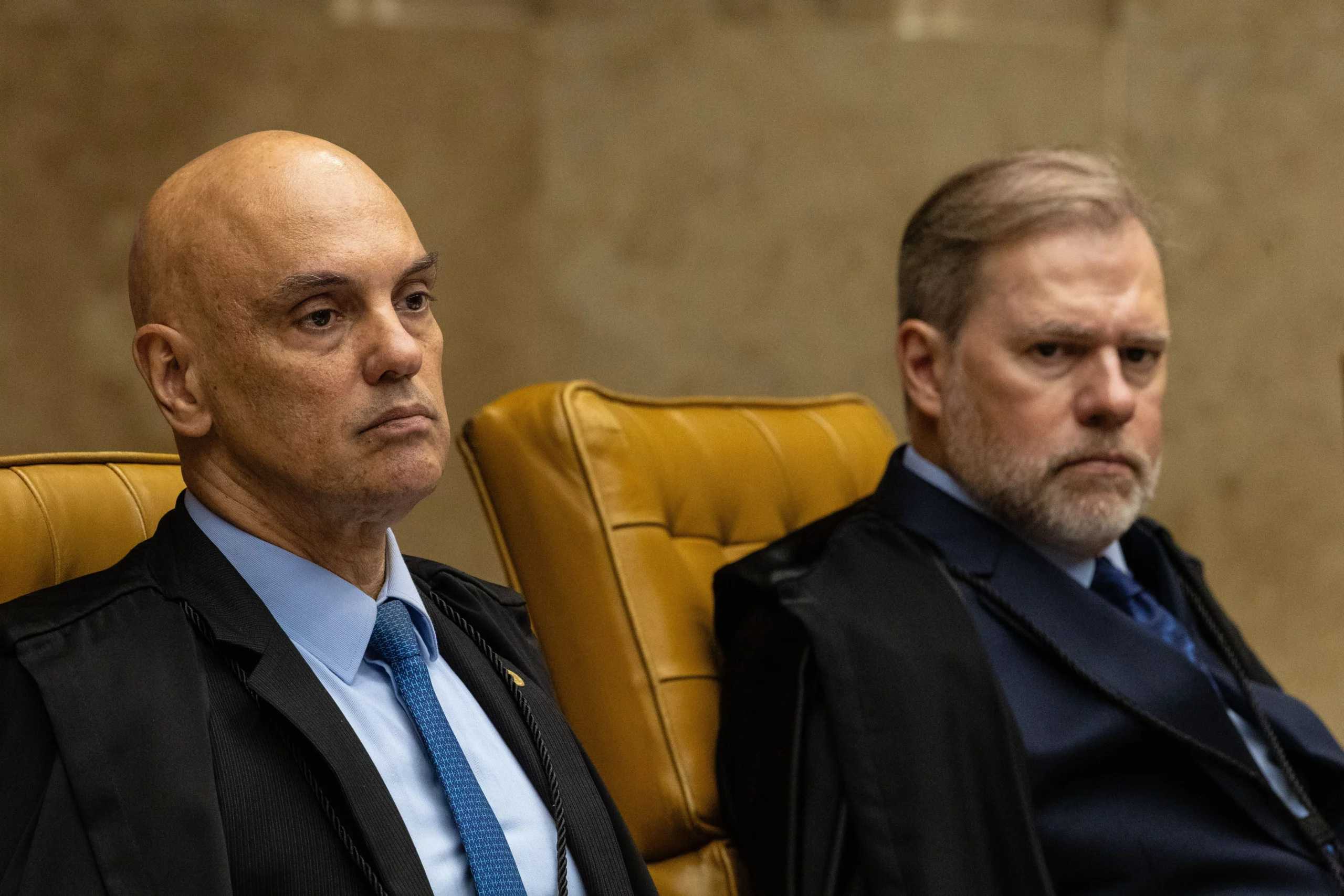
One document was named for Justice Alexandre de Moraes. The other was named for Justice Dias Toffoli and his former wife.
Both were made in December 2025. They were drawn from data pulled off the first mobile phone seized from the banker Daniel Vorcaro.
He works out of Roraima, on the northern frontier, and was summoned to reinforce the team in November 2025. That call came right after the first raid produced the banker’s personal handset.
The Federal Police reported its findings last week to André Mendonça, the justice who now oversees the case.
Why nobody can investigate the Brazil Supreme Court
To see why this matters, start with the rule rather than the scandal. Brazil’s Constitution reserves to the Supreme Court itself the power to prosecute its own members for ordinary criminal offences.
The relevant clause is Article 102 of the Constitution. It lists the president, members of Congress and the court’s own justices among those the Supreme Court alone may try.
In practice no inquiry into a sitting justice can begin without the court’s consent. Investigators say the expert reached that obvious conclusion and drew the wrong lesson from it.
Believing the justices were beyond reach, he allegedly planned to leak the material. The idea was to let public outrage force the court’s hand.
His colleagues, according to the police account, refused to carry the documents to the press. The substance of the Moraes contract reached the public anyway.
It is that sequence, rather than any single document, that hardened the suspicion. Files created, a leak proposed, a refusal, then publication — an order the police found hard to read as coincidence.
What was in the two documents
This is where care is owed. The files contained mentions of the justices made by other people, not messages either man wrote.
The Moraes file gathered conversations, contact details and references. Among them was a legal-services contract between Banco Master and the law firm of his wife, Viviane Barci de Moraes, reported at 129 million reais, about 25 million dollars.
The Toffoli file assembled information on the business affairs of his family and his former wife. It dwelt on a stake in a luxury resort in the interior of Paraná.
Neither justice has been charged with anything. Both have denied wrongdoing in connection with the bank, and the prosecutor general previously archived a request to investigate.
The expert himself has not been convicted. He was the subject of a search warrant in May, was removed from his post, and now faces an inquiry over the unlawful disclosure of protected information and an attempt to induce colleagues into crime.
The custody chain ran through the accused
Now hold the timeline up to the light. Toffoli was the rapporteur of the Banco Master case when the phone was seized, and he ordered the entire trove sealed and delivered to the Supreme Court.
He restricted access to four experts he chose himself. Some of the material later surfaced in a police request that he be declared unfit to hear the case.
He stood aside earlier this year after his name appeared in the evidence. So a justice named in a seized phone was, for a time, the judge deciding who could read it.
That is the structural problem this affair has exposed, and it survives whatever happens to the expert. The relationship had already soured.
In January the same justice publicly blamed the Federal Police for missing a 24-hour deadline he had set. He warned that the delay might let suspects destroy evidence.
For a foreign investor the reading is uncomfortable and simple. The bank’s collapse has cost Brazil’s deposit-guarantee fund about 9.5 billion dollars.
And the case is being judged by a court that alone decides whether its own members may be examined.
Can the Brazil Supreme Court’s justices be investigated?
Only with the court’s own authorisation. The Constitution gives the Supreme Court exclusive jurisdiction to try its own members for ordinary criminal offences.
Were the justices accused of a crime?
No. The files compiled references made by other people, contained no messages written by either justice, and neither has been charged.
What happens to the forensic expert now?
He has been removed from duty and faces an inquiry into leaking protected material and encouraging colleagues to do the same. He has not been convicted.
Frequently Asked Questions
What did the two PDFs compiled by the forensic expert actually contain?
The files contained references by third parties. These included a R$129m ($25m) contract between Banco Master and a firm led by Justice Alexandre de Moraes's wife, plus family business dealings of Justice Dias Toffoli. Critically, neither file contained messages written by the justices themselves.
Who compiled the files and was he acting with official authorization?
Federal Police say the files were compiled by João Cláudio Nabas, a financial-crimes forensic expert brought onto the task force in November 2025. Police state he assembled the documents entirely on his own, without authorization.
What consequences did the forensic expert face after the investigation?
João Cláudio Nabas was searched by authorities in May, removed from duty, and now faces an inquiry over leaking and inducing colleagues to break the law. Investigators believe his motive was to have the material leaked, creating public pressure for a formal inquiry into the justices.
Connected Coverage
Banco Master Scandal Spreads From Bank Failure to Supreme Court Scrutiny
Brazil’s Biggest Banking Scandal Reaches a Former President and Three Ex-Ministers
This article was produced by The Rio Times’ automated newsroom system. How we use AI · Report an error · Editorial responsibility: Matthias Camenzind, Editor-in-Chief
Read More from The Rio Times