Brazil’s $2.9bn Transnordestina Railway Reaches 82% Complete
Infrastructure
Key Facts
—The milestone. Finished track reached 777 of 1,206 kilometres after a 101km stretch between Acopiara and Quixeramobim opened on 2 July, putting phase one at 82% physical execution.
—The bill. Total cost is put at R$15bn ($2.9bn), of which R$9.8bn ($1.9bn) had been disbursed by March 2026.
—The financier. The Northeast development fund FDNE, run by the regional agency Sudene, has released more than R$6.6bn ($1.28bn), with a further R$152.4m ($29m) approved in March.
—The payload. Once complete the line is designed to move more than 30 million tonnes a year of grain, fertiliser, fuel, cement and ore.
—The blockage. A 500km branch from Salgueiro to the Port of Suape stays frozen, its contracting suspended by Brazil’s federal audit court.
—The deadline. Phase one, running from Eliseu Martins to the Port of Pecém, is targeted for the end of 2027.
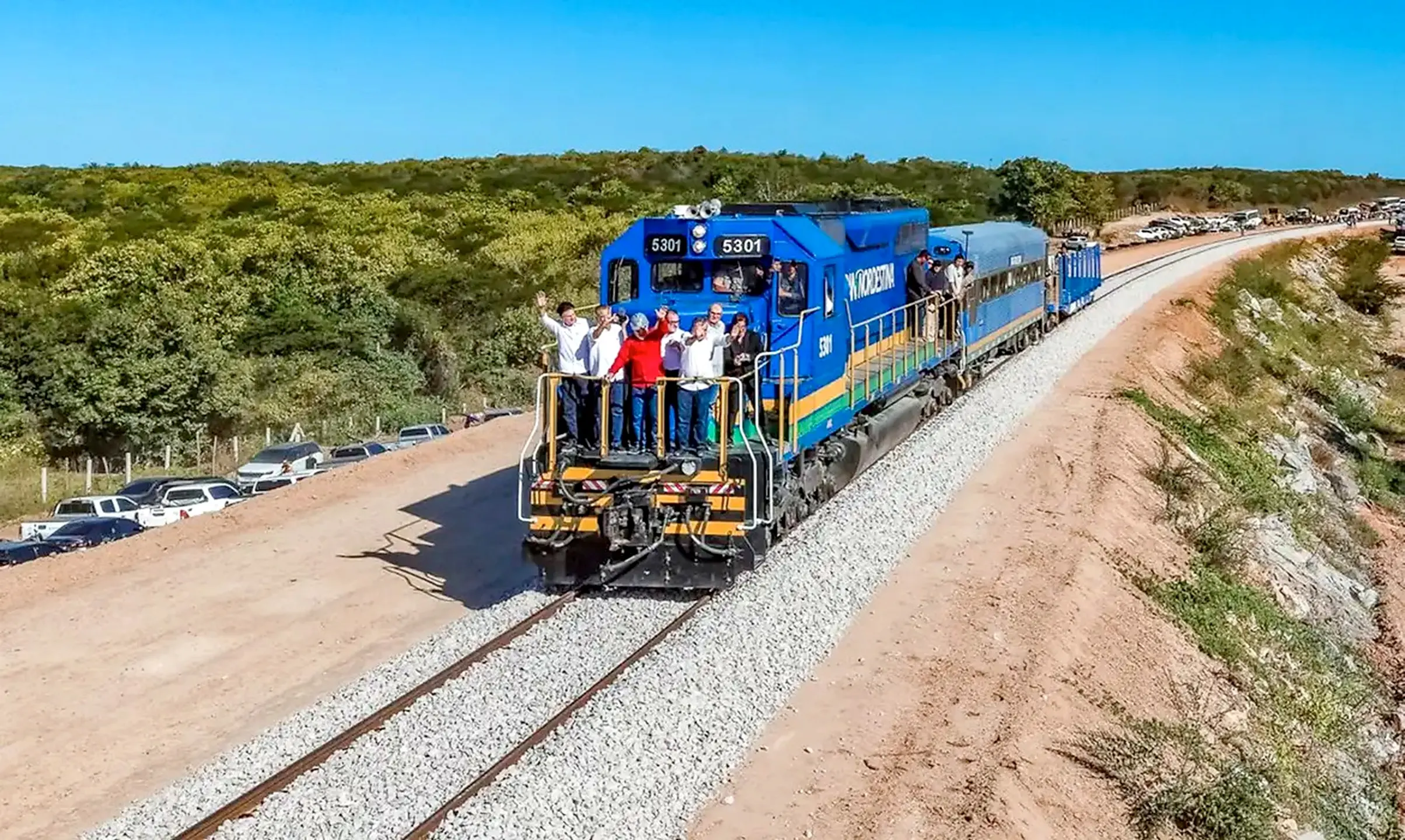
Brazil’s Transnordestina railway is the largest linear construction project under way in the country. It has reached 82 percent of its first phase after a new stretch opened in the dry interior of Ceará.
The line exists to solve an old and costly problem. Almost everything grown or dug up in Brazil’s Northeast still reaches port by truck, on roads that add cost to every tonne.
On 2 July, President Luiz Inácio Lula da Silva and the governor of Ceará, Elmano de Freitas, opened 101 kilometres of new track between the towns of Acopiara and Quixeramobim. That single stretch cost about two billion reais, roughly 390 million dollars, and employed some 1,500 people directly.
What the Transnordestina railway has actually built
The route will eventually run 1,206 kilometres. It reaches from Eliseu Martins in the state of Piauí to the deep-water Port of Pecém on the Atlantic coast of Ceará.
It crosses 53 municipalities on the way, most of them in the dry interior of the country’s poorest region. Finished track now covers 777 of those kilometres.
Officials describe phase one as 82 percent complete. That figure counts earthworks, bridges and viaducts as well as rails.
Those two numbers are worth separating. Measured purely by route length, only about 64 percent of the line carries steel, so the final segments will take longer than the headline percentage implies.
The pace is nonetheless real. In a June bulletin the Ministry of Regional Development put physical execution at about 81 percent and reported a single-day assembly record on the Quixeramobim stretch.
Why exporters are watching the numbers
When the corridor is finished the government expects it to move more than 30 million tonnes a year of grain, fertiliser, fuel, cement and ore. That volume decides whether Northeastern farmland can compete with the export corridors of the centre-west.
The rolling stock is arriving ahead of the rails. One hundred grain hopper wagons were handed over on the day of the opening, with another 370 announced, all built by Brazilian factories.
Two private projects tie the line to the sea and to industry. A service order was signed for a spur to the Nelog private terminal inside the Pecém complex, controlled by the steelmaker CSN.
A letter of intent also covers a dry port at Quixeramobim. It carries about one billion reais, roughly 190 million dollars, of private money.
CSN is no bystander here. Its logistics arm, Transnordestina Logística, holds the concession and says every construction lot is now under contract, with more than 5,500 workers and around 1,300 machines on site.
The public bill runs to fifteen billion reais, close to three billion dollars. Just under two billion dollars of that had been paid out by March of this year.
Most of the money flows through a Northeast development fund administered by the regional agency Sudene. That fund has released more than six and a half billion reais to the project, worth well over a billion dollars, and is one of its main financiers.
The stretch that is still frozen
One piece of the original design is going nowhere. A branch of more than 500 kilometres was meant to run from Salgueiro, in Pernambuco, to the Port of Suape near Recife, giving that state’s industry its own outlet to the sea.
The branch was cut under the previous federal government and has not returned. Contracting remains suspended by the Tribunal de Contas da União, Brazil’s federal audit court, whose staff found no studies showing the benefits would exceed the cost.
Pernambuco is still lobbying to revive it. Until the auditors are satisfied, the Northeast gets one rail corridor to the Atlantic rather than two.
Checking any of this has become unusually awkward. The Ceará state government has suspended its news pages for the election period, citing the campaign law that bars institutional publicity before a vote, and the transport ministry’s own announcement page is no longer publicly readable.
For a foreign investor the signal is simple enough. A corridor that has swallowed two decades and close to three billion dollars is now near enough to completion that the interesting question is no longer whether it opens, but what it will charge.
When will the Transnordestina railway be finished?
The government targets the end of 2027 for phase one, the section running from Eliseu Martins to the Port of Pecém. The concessionaire expects another 120 kilometres of track to be laid this year.
What will the line carry?
Mainly grain, fertiliser, fuel, cement and ore, with a design capacity above 30 million tonnes a year. Local officials also expect smaller regional cargoes, including dairy and footwear from Quixeramobim.
Why is the Suape branch suspended?
Brazil’s federal audit court halted new financial commitments after its staff said no studies had shown the benefits would outweigh the costs. The Pernambuco government is pressing for the work to resume.
More: Brazil news in English, every day from The Rio Times.
Frequently Asked Questions
How much of the Transnordestina railway's first phase has been completed, and what was the most recent milestone?
Phase one of the Transnordestina railway has reached 82% physical execution, with 777 of 1,206 kilometres of finished track. The most recent milestone was the opening of a 101km stretch between Acopiara and Quixeramobim on 2 July, which cost approximately R$2bn ($390m).
How is the Transnordestina railway being financed, and how much has been spent so far?
The total cost of the project is estimated at R$15bn ($2.9bn), of which R$9.8bn ($1.9bn) had been disbursed by March 2026. The Northeast development fund FDNE, run by regional agency Sudene, has released more than R$6.6bn ($1.28bn), with an additional R$152.4m ($29m) approved in March.
What cargo is the Transnordestina railway designed to carry, and when is it expected to be completed?
Once complete, the line is designed to move more than 30 million tonnes per year of grain, fertiliser, fuel, cement, and ore. Phase one, running from Eliseu Martins to the Port of Pecém, is targeted for completion by the end of 2027.
Connected Coverage
Brazil Puts Soybean Meal on Year-Round Rails to Chase Argentina
Odebrecht Returns to Brazil Highways in a Northeast Concession
This article was produced by The Rio Times’ automated newsroom system. How we use AI · Report an error · Editorial responsibility: Matthias Camenzind, Editor-in-Chief