IMF Tells Brazil to Save Oil Revenue Windfall, Not Spend It
Brazil · Economy
Key Facts
—The advice. An IMF review urged Brazil to save its oil-related revenue rather than spend it as it arrives.
—The reason. Saving the windfall, the Fund said, would help put public debt on a firmer downward path.
—The harder fix. It also called for tackling spending rigidities, the large share of the budget locked in by law.
—The growth view. The IMF sees Brazil’s economy strengthening to about 2.5% over the medium term.
—The payoff. Credible reform would lower borrowing costs and free room for priority investment.
—Why it matters. Brazil’s fiscal credibility is the central question hanging over its assets for foreign investors.
The debate over Brazil oil revenue has a new and authoritative voice, after the International Monetary Fund told the country to bank the windfall from its oil boom rather than let it disappear into everyday spending.
What the IMF actually said
In its latest annual review of the Brazilian economy, the International Monetary Fund delivered a clear message on the country’s public finances. The windfall from oil should be saved, not spent.
The Fund praised steps already taken to strengthen the budget, but said more is needed. Saving oil-related revenue, while offering only targeted and temporary support elsewhere, would help place public debt on a firm downward path.
It paired that with a harder demand: tackling what it called spending rigidities. These are the large slices of the budget fixed by law, which leave ministers little freedom to cut.
Why the Brazil oil revenue question matters
For a reader outside Brazil, the temptation of an oil windfall is the heart of the story. When a government suddenly earns more from commodities, the easy path is to spend it on popular programmes that are hard to unwind later.
The risk is well known to economists. If the windfall funds permanent commitments, the country is exposed the moment oil prices fall, leaving a hole that has to be filled by borrowing or cuts.
Saving the money, by contrast, builds a buffer and signals discipline. That is the choice the IMF is pressing Brazil to make while the revenue is still flowing.
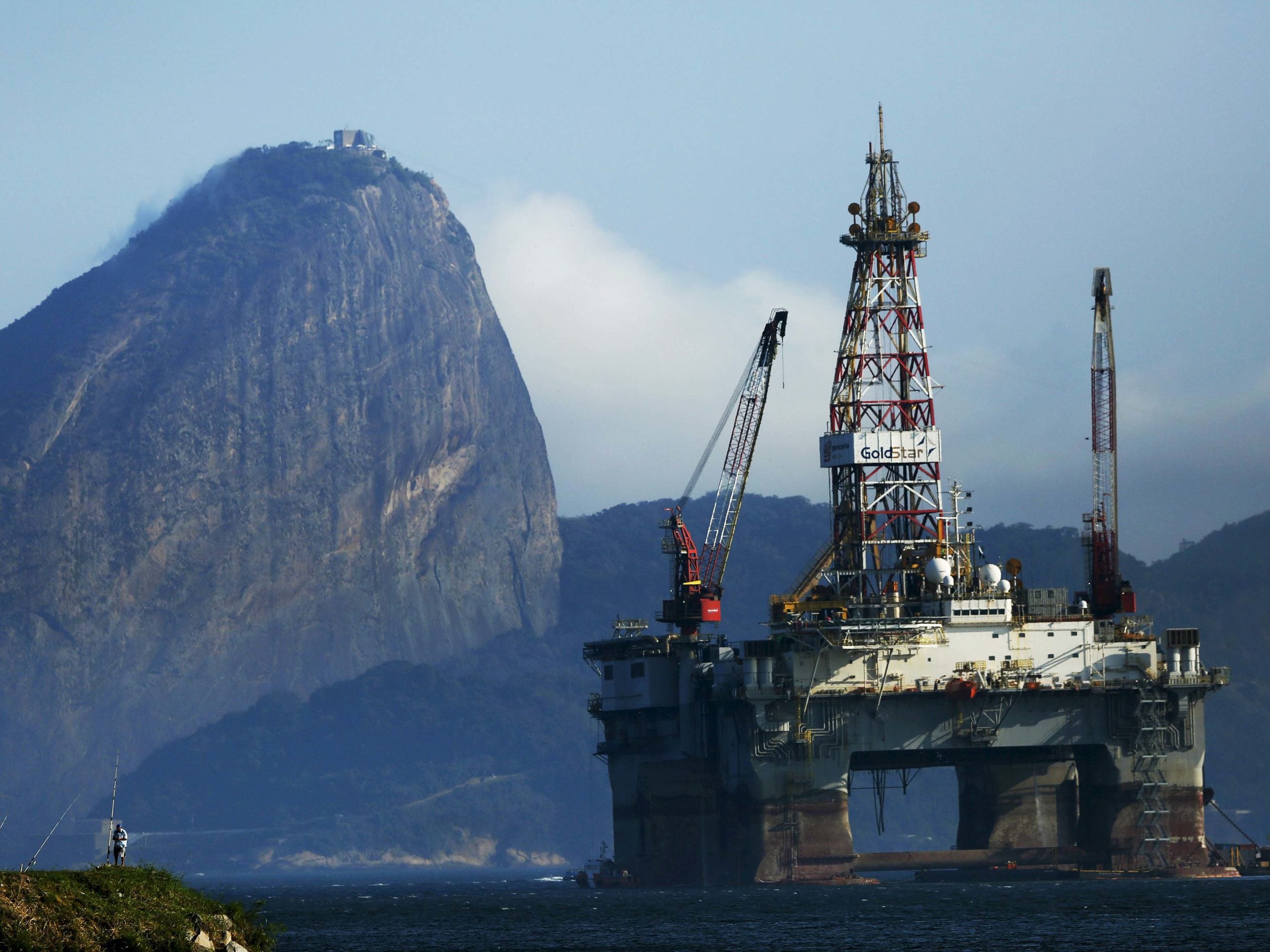
The windfall itself is real and growing. Brazil has become a major oil producer thanks to its vast offshore fields, and rising output means the state collects ever larger sums in royalties and taxes from the sector.
That success creates the very dilemma the Fund is flagging. The more the oil earns, the greater the temptation to treat a temporary boom as if it were permanent income.
Live Market IntelligenceBrazil — Live Market Board
Rio Times · Live Market Intelligence
Brazil — Live Market Board
-0.47%
205,526.47
-0.47%
66,790.35
-0.26%
10,912.39
-0.49%
2,857,176
+0.75%
2,591.39
+0.35%
59,543.73
+0.54%
| Instrument | Last | Change | YoY | Prev. | High | Low | Volume |
|---|---|---|---|---|---|---|---|
| IBOV | 205,526.47 | -0.47% | +21.85% | 206,505.98 | 168,310 | 167,142 | — |
| USD/BRL | 5.16 | +0.01% | -5.13% | 5.16 | 5.18 | 5.14 | — |
| SELIC | 14.00% | — | — | — | — | — | |
| PETR4 | 41.64 | -0.05% | +35.19% | 41.66 | 41.97 | 41.15 | 41,499,400 |
| VALE3 | 72.97 | +0.83% | +30.75% | 72.37 | 73.54 | 72.66 | 17,658,000 |
| ITUB4 | 38.60 | -1.03% | +4.57% | 39.00 | 39.34 | 38.39 | 29,487,800 |
| BBDC4 | 16.85 | +0.36% | +3.50% | 16.79 | 16.90 | 16.67 | 19,416,900 |
| BBAS3 | 19.37 | +0.47% | +0.73% | 19.28 | 19.44 | 19.16 | 11,069,200 |
| B3SA3 | 14.26 | -0.21% | +12.73% | 14.29 | 14.47 | 14.11 | 33,037,800 |
| ABEV3 | 14.89 | -0.80% | +21.91% | 15.01 | 15.07 | 14.81 | 16,453,100 |
| WEGE3 | 47.59 | +0.49% | +29.99% | 47.36 | 48.08 | 47.36 | 3,364,600 |
| PRIO3 | 59.14 | -0.19% | +50.67% | 59.25 | 59.81 | 58.74 | 3,325,600 |
| SUZB3 | 41.33 | +2.35% | -23.55% | 40.38 | 41.48 | 40.35 | 3,914,900 |
| RENT3 | 34.68 | -0.09% | +0.84% | 34.71 | 34.96 | 34.35 | 7,979,100 |
| AZZA3 | 15.89 | -2.63% | -53.76% | 16.32 | 16.42 | 15.82 | 1,330,300 |
| CSNA3 | 4.30 | +0.47% | -42.65% | 4.28 | 4.41 | 4.26 | 10,076,100 |
| GGBR4 | 24.69 | +2.19% | +51.38% | 24.16 | 24.85 | 24.18 | 7,047,600 |
| ENEV3 | 24.21 | -1.38% | +70.49% | 24.55 | 24.64 | 23.99 | 9,297,000 |
The problem of a rigid budget
The deeper issue is structural. A very large part of Brazil’s spending is mandatory, tied to pensions, salaries and constitutional rules, which means it rises automatically year after year.
That leaves the government boxed in. When most of the budget cannot be touched, even modest savings targets force painful squeezes on the small portion that is flexible, such as public investment.
Reforming those rigidities is politically hard, because it means changing entitlements that millions of people rely on. It is the kind of reform that is easy to recommend and difficult to deliver, especially in an election year.
What it means for investors
This is why a technical-sounding review carries weight in markets. Brazil’s benchmark interest rate sits near record highs, in part because investors demand extra reward for holding the debt of a country whose budget they do not fully trust.
High rates then make the government’s own interest bill heavier, which feeds back into the deficit, a loop that credible reform could help break. Lower borrowing costs would ripple through the whole economy.
The IMF also offered some reassurance, projecting growth strengthening to around two and a half percent over the medium term and describing the financial system as resilient. The message is that the foundations are sound, but the fiscal choices still have to be made.
The road ahead
None of this is binding. An IMF review is advice, not instruction, and the government is free to chart its own course on how it uses the oil money.
But the timing gives the advice teeth. With an election approaching and spending pressures mounting, how Brazil handles its windfall will be read by investors as a test of whether discipline or politics wins out.
For now, the message from Washington is patient but pointed. The oil money is a chance to strengthen the budget, the Fund argues, but only if the country resists the urge to spend it twice over.
More: Brazil news in English, every day from The Rio Times.
Frequently Asked Questions
What did the IMF recommend on Brazil oil revenue?
The IMF urged Brazil to save the windfall from oil-related revenue rather than spend it, while tackling rigid, legally fixed spending. It said this would help put public debt on a firmer downward path.
What are spending rigidities?
They are the large parts of the budget that are mandatory by law, such as pensions and salaries, and rise automatically each year. They leave the government little room to cut spending when it needs to.
Why do investors care about this?
Brazil’s fiscal credibility shapes its borrowing costs, and interest rates sit near record highs partly because of budget doubts. Credible reform could lower those costs and steady the country’s assets.
Connected Coverage
Brazil Fiscal Squeeze Deepens as Finance Chief Warns on Spending
Brazil Moves to Lift Tax Ceiling for Millions of Micro-Businesses
This article was produced by The Rio Times’ automated newsroom system. How we use AI · Report an error · Editorial responsibility: Matthias Camenzind, Editor-in-Chief