After his success in Brazil, artist Gabriel Wickbold wants to expand internationally
Brasilia split in half, a new work by Gabriel Wickbold, was one of the most surprising installations at the last edition of SP Arte in late August.
Inside was a Capitonê sofa and a crystal chandelier by Scatto Lampadário, an allusion to the divided country and the power games behind the scenes in the federal capital.
It had everything to do with the theme of the “Brazilian Routes” fair and the artist’s moment.
Having attracted young collectors from the financial market and having his photographs controversial as a guaranteed investment, he now wanted to express himself in a different artistic format while taking his career to a new phase.
In addition to his gallery in São Paulo, where he dispenses with agents and brokers in selling his works, he has just opened a gallery in London, where he wants to establish himself as an international artist.

And that’s just the beginning of an audacious expansion plan.
“I’ve heard Kanye West say that nowadays, the artist doesn’t need a manager; he needs a CEO. And I agree.”
“The artist is a company, a brand, is a complete branding that can operate in the most diverse segments. I am looking to consolidate my corporate brand, the art industry.”
His expansion into the world has been taking shape since 2019, when Wickbold set out for exhibitions and events abroad, participating in prestigious festivals and shows in Europe and the Middle East.
Occasionally, he saw local collectors taking a good shine to his work. “I realized I didn’t need anyone to take me in their lap. I could be there with my manager, my network, my representation, my lectures, and events,” he says.
“To get a foothold in the market, you must connect all the dots.
Wickbold, known in São Paulo’s art scene for his photography series, has tried to get involved on several fronts, both on the creative side and in the business itself.
On the one hand, he has sharpened his social antennae from personal and spiritual development.
“This ensures the raw element, the artistic concept of the author,” he says.
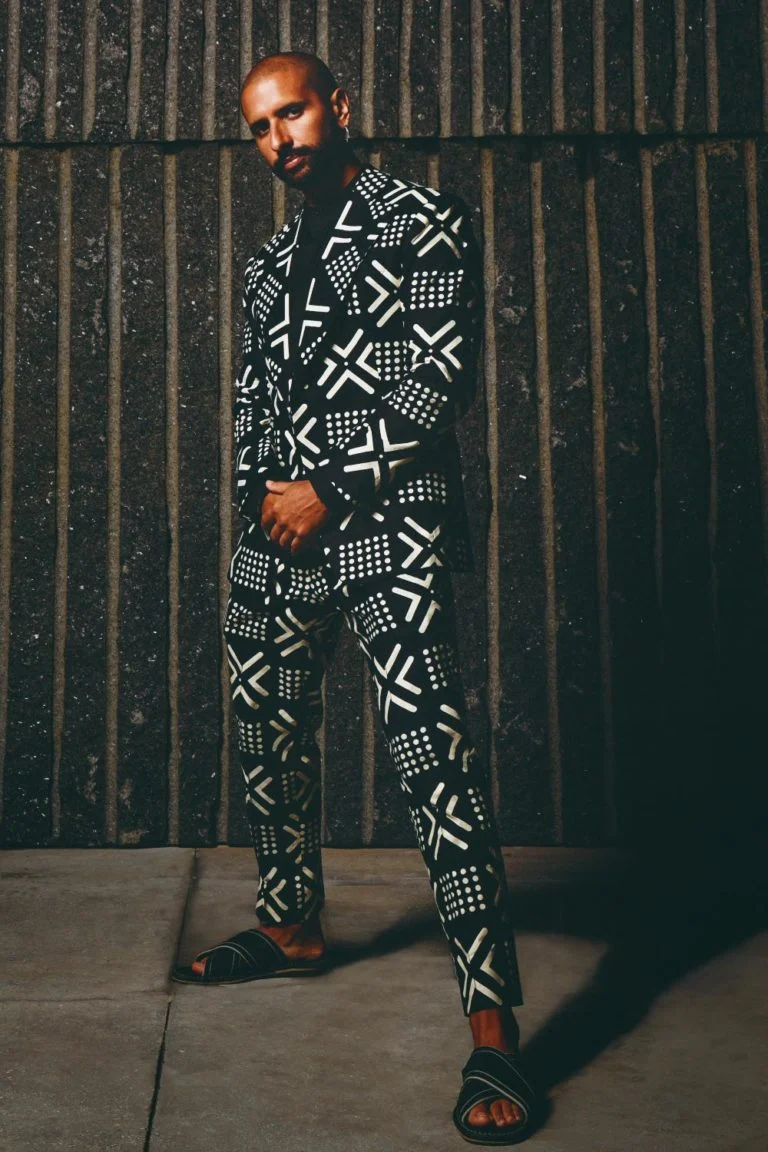
His style is refined; he designs his own printed and colorful clothes, which he wears with a modern tailor who has become his friend.
In parallel, he runs his gallery, which is also his studio, to verticalize the production process and activate relationships with partners and collectors.
He also developed a table of progressive values to sell his photos, which was undoubtedly a great idea.
In most cases, there are five copies of each of his photos. Number one is worth less and costs R$45 thousand.
The second costs R$55 thousand, and the third R$65 thousand. The fourth costs R$85 thousand, and the fifth jumps to R$150 thousand.
Those who buy the last copy know that this work has an outlet and a market value because four copies have already been sold.
Other investors prefer to bet on the first part of the series, which may or may not be a hit.
With this formula, where the value of the reward appears as in a game, Wickbold managed to attract Faria Lima’s group of investors to his client portfolio.
“They are people who do nothing without investing. They think, ‘If I spend R$1.5 million on a car, it will be a numbered collector car that will go up in value, and I will sell it for R$1.8 million.'”
“If I buy an apartment, it will be in a building designed by a renowned architect and not on the first floor. This way of thinking affects the buyer of my work”.
Recently, one of his paintings reached the value of R$1 million at auction, with the proceeds going to the non-governmental organization Amigos do Bem, which carries out initiatives to educate and support the needy population in the hinterland of the Northeast.
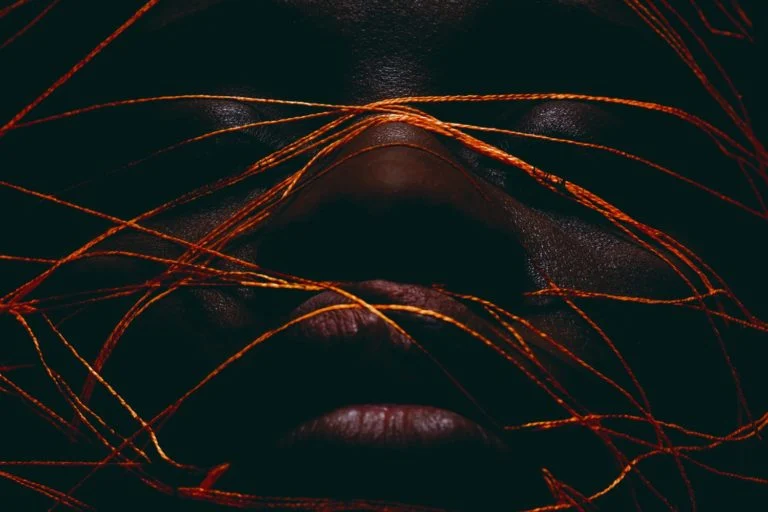
The work is part of the “Sexual Colors” series, in which the artist used bodies as canvas, covered the models with paint, and photographed them.
After winning in São Paulo, he is now aiming for international expansion.
In London, with an investment of about R$1.4 million and an expected return in six months, he opened his gallery in Ham Yard Village, a prime location among stores, restaurants, and studios in the Ham Yard Hotel in Soho – the neighborhood is one of the epicenters of London art.
Initially, works from his sizeable photographic series were exhibited at prices ranging from 8,000 to 35,000 pounds.
Among them is the series “Sans Tache,” with images of naked bodies subjected to the technique of grillage (an ancient practice of leaving works in contact with crickets, which gives the paper marks and scratches).
Later this year, Wickbold plans to open galleries in Portugal, where he is already negotiating a location, and Miami, where he will participate in Art Basel in December.
He also plans to open a gallery in Brasilia and Balneário Camboriú in Santa Catarina.
The 37-year-old Carioca Gabriel Wickbold began his career in 2006 and has participated in exhibitions in New York, Stockholm, Lisbon, London, and Miami.
“My taste for the arts has come since a boy.”
“My mother is an artist, and there was paint everywhere in our home. That sense of colored dirt is a part of me, a childlike desire to throw paint everywhere.”
“My father was a businessman, and he died when I was 18. And that gave me a huge responsibility,” he says, who is part of the founding family of the Wickbold bread company, of which his brother Pedro is CEO.

Currently, 15 of his works are part of the permanent collections of museums such as Erarta (Saint Petersburg, Russia) and MAB (São Paulo, Brazil).
In 2019, Wickbold exhibited his work during the opening week of Paris Photo as part of a partnership with BMW and received an honor at the Xposure International Photography Festival in the United Arab Emirates that same year.
There, Sheikh Al Qasimi bought one of his paintings, which now adorns the entrance to his palace in Sharjah.
“The big “core” right now is the security I’m in with my path of exhibitions, projects, books, and the recognition I’ve achieved. Now I want to stabilize myself internationally.”
The universe of photography opened for Gabriel Wickbold during a 45-day exploration mission that covered the course of the river from its source to the mouth of the São Francisco.
When he returned, he decided to become a photographer.
“There I met simple illiterate people forgotten by society,” he says, who exhibited the series at this year’s SP Arte and presented the book “Brasileiros,” in which the images are collected.
“I invited Emicida to write the foreword, and in conversations with him, we talked about time travel and photography’s ability to break down barriers. This social abyss, which was already gigantic 15 years ago, has become much worse,” he says.
This abyss is also part of the general idea of “Partida,” the installation that saw the Brasilia car split in half at SP Arte. “The trip there became a source of inspiration that further shaped my view of colors and textures.
With information from Forbes Brasil
More: Brazil news in English, every day from The Rio Times.
This article was produced by The Rio Times’ automated newsroom system. How we use AI · Report an error
Read More from The Rio Times