Three Post-Confinement Phobias (and When Being Fearful is Normal)
RIO DE JANEIRO, BRAZIL – Confinement isn’t easy. Too many hours within four walls, too much uncertainty in the environment, and too much time to worry about everything. But if for the vast majority it is taking too long, there are also those who, whenever they can, refuse to leave home. In many cases, it is a normal reaction, in many others, it is due to some kind of phobia. What are the most common issues? How do they express themselves?

Images of crowds in the streets and in stores in recent days have been obliterating the desire to leave home, but there are people for whom, on the other hand, the need for social isolation was the perfect excuse to at last escape what they least like: to go out into the street. Being in contact with other people and losing control of what happens around them is stressful.
Many of them are diagnosed with obsession-related syndromes, social phobias or agoraphobia. These are the very disorders that will increase in the coming months, according to experts, bearing in mind that “everything depends on each person, their personality and their experience,” says Antonio Cano, president of the Spanish Society for the Study of Anxiety and Stress. This increase will be greater “among people with prior disorders,” says the psychology professor at the Complutense University of Madrid.
The mental traces of Covid-19
“There are people who feel very comfortable in quarantine and may feel very uncomfortable when it is over,” explains clinical psychologist Arun Mansukhani. Although it’s too early to be certain, the specialist points out several pathologies that could escalate in the coming months. He does so based on the care he has been providing as part of a program to assist health professionals, security forces, people affected by the coronavirus crisis, and their families in Spain, one of the world’s most afflicted countries by the pandemic. The initiative comes from the EMDR Spain association, which has been extended to other professional groups in recent weeks.
One such disorder is agoraphobia, which makes people feel insecure in certain places that cause them anxiety, where they fear a panic attack. It is an anticipated fear of a situation that has no reason to occur. According to the Mayo Clinic, some of the risk factors for this are “experiencing stressful events in life” and ” having an anxious or nervous temperament”. These are situations that all of us are experiencing during the confinement, whether it is due to losing our jobs, uncertainty about the future, fear of personal or family contagion, and many other issues.
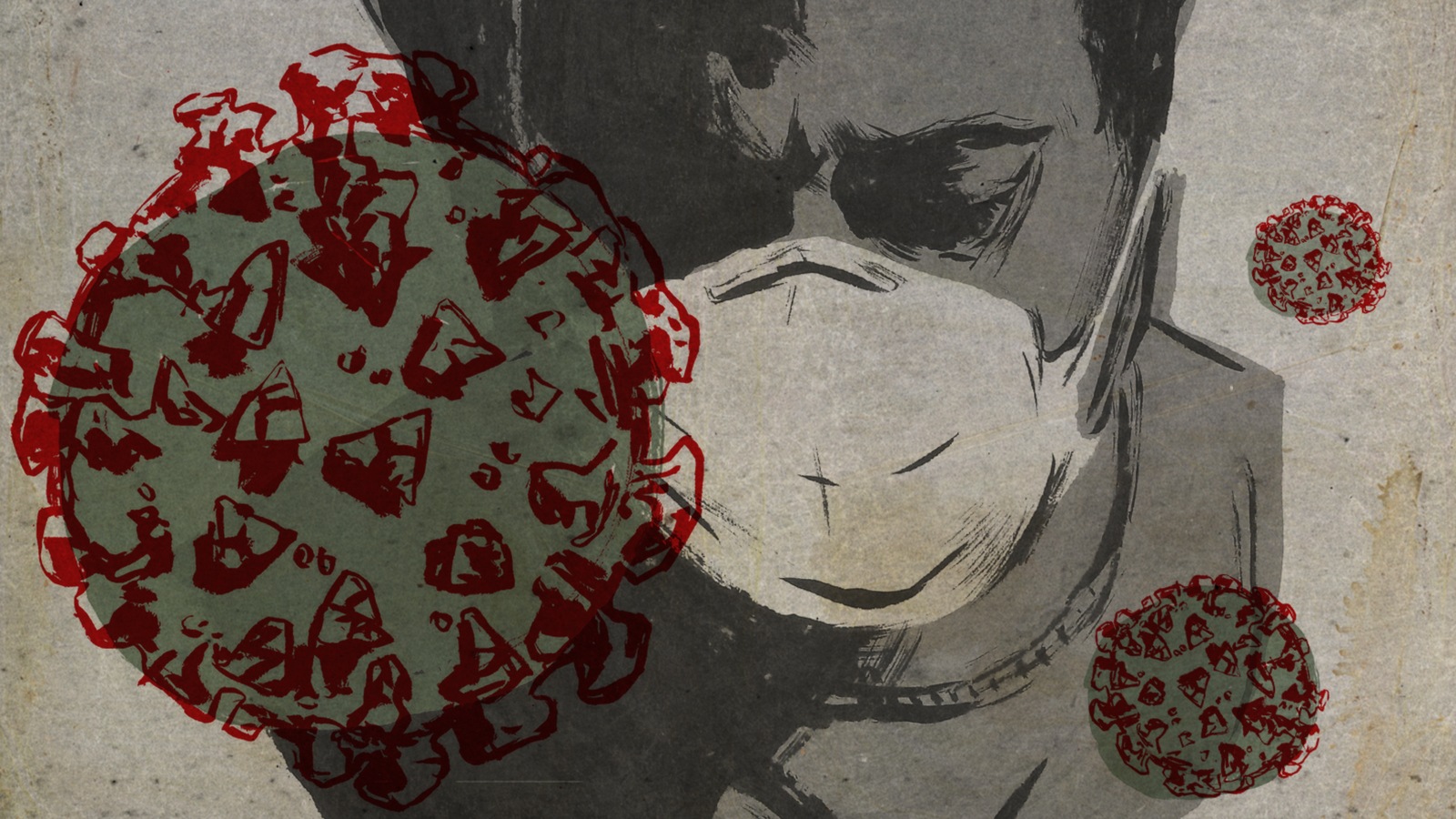
Among the symptoms are fear of leaving home alone, waiting in line, using public transports, and attending public areas, the very ones that surround us today. With aggravating factors such as masks, fear of contagion, and the feeling that at any moment someone may be acting irresponsibly, such as disrespecting the physical distancing rules.
Another problem tending to increase are obsessive spectrum disorders, related to the control we have over our environment. During quarantine, this is a simple task: without interaction with other people (or just family members or cohabitants), with defined rules and times and ease of cleaning every corner of the house, keeping each thing in its place is effortless. But the situation is complicated with de-confinement, in which many of those who felt mastery over the situation lose this feeling because everything is less predictable outside the home.
“Issues like hypochondria will increase, so many will think they are safer at home, and although they may, they won’t want to go out,” Mansukhani explains. The obsession with hygiene to avoid contagion will be one of the pathologies to grow in the short term. The fear that the slightest symptom will mean having coronavirus, the panic of contracting it or of performing many tests, such as constantly checking one’s temperature, will be more common than before.
Finally, there is a third set of pathologies on an upward trend: the elusive patterns related to social phobia. That is, the propensity to social inhibition, to avoid contact with other people because they do not trust the other much or believe they are the target of constant scrutiny. Anxiety, the desire to get away from crowded places, and the anxiety of going somewhere where there may be a crowd are symptoms of disorders related to social phobia. Among its risk factors are negative experiences, such as the current one, where going out on the streets can lead us to believe that the mass will inevitably infect us with Covid-19.
Persistence, crucial to determine whether asking for help is required
“Resistance to going out now is only natural, we’ve been home a long time and there’s a real risk, but that doesn’t mean everything is pathological,” says Juan Francisco Rodríguez Testal, professor of psychopathology at the University of Seville. “It’s like when you go back to work after a month of vacation: the preceding afternoon you take a deep breath, you feel anxious… but finally you go.
This is a normal reaction, just like now, with the only difference that there is a real risk of contagion,” says the professor. Then the question arises. If I feel anxious, I don’t want to go out and I tend to avoid crowded places, do I suffer from some pathology?
The boundary is difficult to define, not even the experts themselves can clearly define it. But Rodríguez Testal points out that there are some questions that can help us determine what happens to us. The main one is persistence.
That is, if the possible anxiety caused by going out does not end by staying home, if we have trouble sleeping and eating, anxiety attacks, if when we go out to work we do not succumb to all the worry and we even ask permission not to go? These are issues that produce a pattern that suggests that something is happening and that, when they interfere in our daily life, they are a reason to ask for help.
“One should not succumb to the temptation to see pathologies in everything,” says Rodríguez Testal, because in these days of so much change and uncertainty occur “absolutely normal reactions that include bad moments,” without necessarily meaning that we have a problem.
“The human being has a great capacity for adapting and enduring. Therefore, it is necessary to try to differentiate between suffering and bad moments and a pathology”. He offers two tips to those who have doubts these days. The first, do not give it much relevance: sooner or later you will return to normal activity and the anxiety will end. The second, plan progressive outings, brief at first, the next day a little more, and so on.
In any event, professionals recall that social relationships are vital to the well-being of humans. And not only with friends and family, but also with the group in general. Over the past weeks, we have kept the balance thanks to new technologies, but in the long run they cannot be a substitute. “The human being has a tremendous capacity to adapt, and in the short term, to relate less is not a problem, but in the long term, it is,” says Arun Mansukhani.
According to Rodríguez Testal, the consequences of the absence of relationships “are very many” for human beings, a species “essentially social and not by habit”. The first of these is an impoverishment from the cognitive and behavioral perspectives. It is, therefore, better to go back to the street as soon as possible, even if little by little. But responsibly.
Source: El País
More: Brazil news in English, every day from The Rio Times.
This article was produced by The Rio Times’ automated newsroom system. How we use AI · Report an error · Editorial responsibility: Matthias Camenzind, Editor-in-Chief