IBOV 177,866 ▲ 2.97% IPSA 11,057 ▲ 0.28% IPC MEX 66,496 ▲ 0.59% MERVAL 3,280,224 ▲ 2.43% COLCAP 2,307.67 ▲ 0.65% BVL PERÚ 56,194.27 ▲ 1.29% USD/BRL5.11▼ 0.17% USD/MXN17.46▼ 0.49% USD/CLP923.90▼ 0.41% USD/COP3,240▼ 3.09% USD/PEN3.39▼ 0.31% USD/ARS1,487▼ 0.03% USD/UYU40.22▲ 1.20% USD/PYG6,055▲ 1.53% USD/BOB10.14▲ 4.01% USD/DOP58.48▼ 0.12% USD/CRC448.82▲ 1.40% USD/GTQ7.63▲ 2.28% USD/HNL26.72▲ 1.50% USD/NIO36.62▲ 0.23% USD/VES707.92▼ 0.13% USD/PAB1.00— 0.00% USD/BZD2.00— 0.00% USD/JMD158.07▲ 0.80% USD/TTD6.75▲ 1.32% EUR/BRL5.83▼ 1.07% BRENT 76.00 ▼ 0.39% WTI 71.51 ▼ 0.79% IRON ORE 161.91 — — COPPER 6.29 ▲ 1.13% GOLD 4,129 ▼ 0.04% SILVER 60.30 ▼ 0.13% SOY 1,190 ▲ 0.83% CORN 460.25 ▲ 7.60% WHEAT 639.25 ▲ 4.58% COFFEE 318.60 ▼ 10.74% SUGAR 14.86 ▼ 1.72% ORANGE JUICE 143.25 ▼ 4.44% COTTON 80.87 ▲ 6.18% COCOA 6,100 ▼ 3.31% BEEF 235.00 ▼ 0.11% CATTLE 354.38 ▼ 0.50% LITHIUM 72.32 ▼ 0.69% PETR4 39.65 ▲ 1.12% VALE3 74.18 ▲ 1.41% ITUB4 44.30 ▲ 4.02% BBDC4 18.86 ▲ 4.78% ABEV3 15.82 ▲ 0.64% BBAS3 20.58 ▲ 2.90% B3SA3 15.42 ▲ 4.26% WEGE3 46.51 ▲ 1.68% PRIO3 55.45 ▼ 0.29% SUZB3 41.55 ▲ 1.27% RENT3 41.10 ▲ 4.31% AZZA3 19.10 ▲ 3.47% CSAN3 4.07 ▲ 5.44% RAIZ4 0.35 ▼ 5.41% PCAR3 2.73 ▼ 1.09% GMAT3 3.97 ▲ 1.02% PSSA3 54.97 ▲ 3.04% CVCB3 1.25 — 0.00% POSI3 3.97 ▲ 3.12% SLCE3 14.02 ▲ 1.67% NATU3 8.68 ▲ 2.60% BRKM5 6.63 ▲ 4.25% RANI3 8.01 ▲ 1.91% CSNA3 5.18 ▲ 7.92% CMIN3 5.23 ▲ 8.28% USIM5 8.45 ▲ 1.20% GGBR4 23.01 ▲ 2.36% ENEV3 27.55 ▲ 5.15% CPFE3 47.87 ▲ 3.41% CMIG4 11.38 ▲ 2.71% EQTL3 40.91 ▲ 3.54% LREN3 14.62 ▲ 3.32% VIVT3 35.75 ▲ 3.62% RAIL3 14.36 ▲ 4.44% KLABIN 17.54 ▲ 0.80% RAIA DROGASIL 18.77 ▲ 3.53% RDOR3 36.02 ▲ 2.48% HAPV3 10.60 ▲ 5.26% FLRY3 16.42 ▲ 4.25% SMTO3 16.37 ▲ 1.99% UGPA3 30.71 ▲ 2.03% VBBR3 33.00 ▲ 2.80% BBSE3 40.35 ▲ 2.72% BPAC11 58.73 ▲ 5.48% CURY3 34.21 ▲ 4.62% AERI3 2.09 ▲ 1.46% VIVARA 23.53 ▲ 4.21% COMPASS 25.50 ▲ 3.32% VAMOS 3.06 ▲ 3.38% SANB11 27.62 ▲ 5.22% ASAI3 8.87 ▲ 4.85% SBSP3 31.11 ▲ 3.70% WALMEX 49.31 ▲ 0.59% GMEXICO 198.62 ▲ 1.68% FEMSA 223.20 ▲ 0.37% CEMEX 21.82 ▲ 0.51% GFNORTE 186.51 ▲ 0.63% BIMBO 56.06 ▲ 0.23% TELEVISA 9.74 ▲ 2.63% AMX 22.70 ▲ 0.27% GAP 412.01 ▼ 0.41% ASUR 285.12 ▲ 0.53% OMA 235.73 ▼ 0.95% KOF 182.08 ▲ 0.65% GRUMA 282.99 ▲ 0.14% KIMBER 38.13 ▼ 0.81% SQM-B 67,750 ▼ 1.95% COPEC 6,139 ▲ 1.98% BSANTANDER 79.00 ▲ 1.94% FALABELLA 5,905 ▲ 0.92% ENELAM 85.40 ▲ 1.47% CENCOSUD 2,045 ▼ 0.55% CMPC 1,109 ▲ 1.32% BANCO CHILE 188.88 ▲ 1.01% LATAM AIR 26.26 ▼ 0.53% YPF 74,450 ▼ 1.75% GGAL 8,350 ▲ 5.96% PAMPA 5,185 ▼ 0.38% TXAR 671.00 ▲ 0.98% ALUAR 978.00 ▲ 0.98% TGS 9,610 ▲ 3.22% CEPU 2,405 ▲ 3.89% MIRGOR 17,375 ▲ 1.02% COME 45.90 ▲ 1.06% LOMA NEGRA 3,583 ▲ 2.43% BYMA 314.00 ▲ 1.37% TELECOM ARG 4,248 ▲ 3.09% ECOPETROL 15.59 ▲ 1.27% BANCOLOMBIA 82.95 ▲ 2.50% GRUPO AVAL 5.08 ▲ 1.20% CREDICORP 400.81 ▲ 2.27% SOUTHERN COPPER 175.83 ▲ 0.80% BUENAVENTURA 30.00 ▲ 1.52% MERCADOLIBRE 1,852 ▲ 2.46% NUBANK 13.76 ▲ 0.66% XP 16.92 ▲ 3.11% PAGSEGURO 9.25 ▲ 2.78% STONE 11.21 ▲ 2.28% GLOBANT 29.96 ▼ 4.25% TECNOGLASS 43.90 ▲ 1.76% GAP AIRPORT 235.64 ▲ 0.50% ASUR 285.12 ▲ 0.53% OMA AIRPORT 108.09 ▼ 0.22% AMX ADR 26.04 ▲ 0.77% FEMSA ADR 127.70 ▲ 0.55% CEMEX ADR 12.48 ▲ 0.89% PETROBRAS ADR 17.32 ▲ 1.70% VALE ADR 14.46 ▲ 1.69% ITAU ADR 8.62 ▲ 4.11% SANTANDER BR 5.39 ▲ 4.86% AMBEV ADR 3.07 ▲ 0.99% CSN 1.01 ▲ 5.79% GERDAU 4.50 ▲ 2.04% LATAM ADR 56.45 ▼ 1.03% BTC 64,143 ▲ 0.02% ETH 1,796 ▲ 0.01% SOL 77.85 ▼ 0.28% XRP 1.11 ▲ 0.23% BNB 577.13 ▲ 0.36% ADA 0.17 ▲ 0.29% DOGE 0.07 ▲ 0.22% AVAX 6.69 ▼ 0.70% LINK 7.97 ▲ 0.15% DOT 0.88 ▲ 0.41% LTC 44.89 ▲ 0.31% BCH 245.56 ▲ 0.12% TRX 0.33 ▼ 0.33% XLM 0.19 ▼ 0.22% HBAR 0.07 ▼ 1.93% NEAR 1.89 ▼ 0.20% ATOM 1.59 ▲ 0.41% AAVE 96.56 ▲ 0.85% SELIC 14.25% EMBRAER 84.60 ▲ 0.88% EMBRAER ADR 66.01 ▲ 0.72% JBS 11.91 ▲ 1.53% JBS BDR 60.78 ▲ 1.22% MBRF3 15.55 ▲ 0.91% MBRFY 2.97 ▼ 1.00% INTER 5.82 ▲ 1.93% IBOV 177,866 ▲ 2.97% IPSA 11,057 ▲ 0.28% IPC MEX 66,496 ▲ 0.59% MERVAL 3,280,224 ▲ 2.43% COLCAP 2,307.67 ▲ 0.65% BVL PERÚ 56,194.27 ▲ 1.29% USD/BRL 5.11 ▼ 0.17% USD/MXN 17.46 ▼ 0.49% USD/CLP 923.90 ▼ 0.41% USD/COP 3,240 ▼ 3.09% USD/PEN 3.39 ▼ 0.31% USD/ARS 1,487 ▼ 0.03% USD/UYU 40.22 ▲ 1.20% USD/PYG 6,055 ▲ 1.53% USD/BOB 10.14 ▲ 4.01% USD/DOP 58.48 ▼ 0.12% USD/CRC 448.82 ▲ 1.40% USD/GTQ 7.63 ▲ 2.28% USD/HNL 26.72 ▲ 1.50% USD/NIO 36.62 ▲ 0.23% USD/VES 707.92 ▼ 0.13% USD/PAB 1.00 — 0.00% USD/BZD 2.00 — 0.00% USD/JMD 158.07 ▲ 0.39% USD/TTD 6.75 ▲ 1.44% EUR/BRL 5.83 ▼ 1.07% BRENT 76.00 ▼ 0.39% WTI 71.51 ▼ 0.79% IRON ORE 161.91 — — COPPER 6.29 ▲ 1.13% GOLD 4,129 ▼ 0.04% SILVER 60.30 ▼ 0.13% SOY 1,190 ▲ 0.83% CORN 460.25 ▲ 7.60% WHEAT 639.25 ▲ 4.58% COFFEE 318.60 ▼ 10.74% SUGAR 14.86 ▼ 1.72% ORANGE JUICE 143.25 ▼ 4.44% COTTON 80.87 ▲ 6.18% COCOA 6,100 ▼ 3.31% BEEF 235.00 ▼ 0.11% CATTLE 354.38 ▼ 0.50% LITHIUM 72.32 ▼ 0.69% PETR4 39.65 ▲ 1.12% VALE3 74.18 ▲ 1.41% ITUB4 44.30 ▲ 4.02% BBDC4 18.86 ▲ 4.78% ABEV3 15.82 ▲ 0.64% BBAS3 20.58 ▲ 2.90% B3SA3 15.42 ▲ 4.26% WEGE3 46.51 ▲ 1.68% PRIO3 55.45 ▼ 0.29% SUZB3 41.55 ▲ 1.27% RENT3 41.10 ▲ 4.31% AZZA3 19.10 ▲ 3.47% CSAN3 4.07 ▲ 5.44% RAIZ4 0.35 ▼ 5.41% PCAR3 2.73 ▼ 1.09% GMAT3 3.97 ▲ 1.02% PSSA3 54.97 ▲ 3.04% CVCB3 1.25 — 0.00% POSI3 3.97 ▲ 3.12% SLCE3 14.02 ▲ 1.67% NATU3 8.68 ▲ 2.60% BRKM5 6.63 ▲ 4.25% RANI3 8.01 ▲ 1.91% CSNA3 5.18 ▲ 7.92% CMIN3 5.23 ▲ 8.28% USIM5 8.45 ▲ 1.20% GGBR4 23.01 ▲ 2.36% ENEV3 27.55 ▲ 5.15% CPFE3 47.87 ▲ 3.41% CMIG4 11.38 ▲ 2.71% EQTL3 40.91 ▲ 3.54% LREN3 14.62 ▲ 3.32% VIVT3 35.75 ▲ 3.62% RAIL3 14.36 ▲ 4.44% KLABIN 17.54 ▲ 0.80% RAIA DROGASIL 18.77 ▲ 3.53% RDOR3 36.02 ▲ 2.48% HAPV3 10.60 ▲ 5.26% FLRY3 16.42 ▲ 4.25% SMTO3 16.37 ▲ 1.99% UGPA3 30.71 ▲ 2.03% VBBR3 33.00 ▲ 2.80% BBSE3 40.35 ▲ 2.72% BPAC11 58.73 ▲ 5.48% CURY3 34.21 ▲ 4.62% AERI3 2.09 ▲ 1.46% VIVARA 23.53 ▲ 4.21% COMPASS 25.50 ▲ 3.32% VAMOS 3.06 ▲ 3.38% SANB11 27.62 ▲ 5.22% ASAI3 8.87 ▲ 4.85% SBSP3 31.11 ▲ 3.70% WALMEX 49.31 ▲ 0.59% GMEXICO 198.62 ▲ 1.68% FEMSA 223.20 ▲ 0.37% CEMEX 21.82 ▲ 0.51% GFNORTE 186.51 ▲ 0.63% BIMBO 56.06 ▲ 0.23% TELEVISA 9.74 ▲ 2.63% AMX 22.70 ▲ 0.27% GAP 412.01 ▼ 0.41% ASUR 285.12 ▲ 0.53% OMA 235.73 ▼ 0.95% KOF 182.08 ▲ 0.65% GRUMA 282.99 ▲ 0.14% KIMBER 38.13 ▼ 0.81% SQM-B 67,750 ▼ 1.95% COPEC 6,139 ▲ 1.98% BSANTANDER 79.00 ▲ 1.94% FALABELLA 5,905 ▲ 0.92% ENELAM 85.40 ▲ 1.47% CENCOSUD 2,045 ▼ 0.55% CMPC 1,109 ▲ 1.32% BANCO CHILE 188.88 ▲ 1.01% LATAM AIR 26.26 ▼ 0.53% YPF 74,450 ▼ 1.75% GGAL 8,350 ▲ 5.96% PAMPA 5,185 ▼ 0.38% TXAR 671.00 ▲ 0.98% ALUAR 978.00 ▲ 0.98% TGS 9,610 ▲ 3.22% CEPU 2,405 ▲ 3.89% MIRGOR 17,375 ▲ 1.02% COME 45.90 ▲ 1.06% LOMA NEGRA 3,583 ▲ 2.43% BYMA 314.00 ▲ 1.37% TELECOM ARG 4,248 ▲ 3.09% ECOPETROL 15.59 ▲ 1.27% BANCOLOMBIA 82.95 ▲ 2.50% GRUPO AVAL 5.08 ▲ 1.20% CREDICORP 400.81 ▲ 2.27% SOUTHERN COPPER 175.83 ▲ 0.80% BUENAVENTURA 30.00 ▲ 1.52% MERCADOLIBRE 1,852 ▲ 2.46% NUBANK 13.76 ▲ 0.66% XP 16.92 ▲ 3.11% PAGSEGURO 9.25 ▲ 2.78% STONE 11.21 ▲ 2.28% GLOBANT 29.96 ▼ 4.25% TECNOGLASS 43.90 ▲ 1.76% GAP AIRPORT 235.64 ▲ 0.50% ASUR 285.12 ▲ 0.53% OMA AIRPORT 108.09 ▼ 0.22% AMX ADR 26.04 ▲ 0.77% FEMSA ADR 127.70 ▲ 0.55% CEMEX ADR 12.48 ▲ 0.89% PETROBRAS ADR 17.32 ▲ 1.70% VALE ADR 14.46 ▲ 1.69% ITAU ADR 8.62 ▲ 4.11% SANTANDER BR 5.39 ▲ 4.86% AMBEV ADR 3.07 ▲ 0.99% CSN 1.01 ▲ 5.79% GERDAU 4.50 ▲ 2.04% LATAM ADR 56.45 ▼ 1.03% BTC 64,143 ▲ 0.02% ETH 1,796 ▲ 0.01% SOL 77.85 ▼ 0.28% XRP 1.11 ▲ 0.23% BNB 577.13 ▲ 0.36% ADA 0.17 ▲ 0.29% DOGE 0.07 ▲ 0.22% AVAX 6.69 ▼ 0.70% LINK 7.97 ▲ 0.15% DOT 0.88 ▲ 0.41% LTC 44.89 ▲ 0.31% BCH 245.56 ▲ 0.12% TRX 0.33 ▼ 0.33% XLM 0.19 ▼ 0.22% HBAR 0.07 ▼ 1.93% NEAR 1.89 ▼ 0.20% ATOM 1.59 ▲ 0.41% AAVE 96.56 ▲ 0.85% SELIC 14.25% EMBRAER 84.60 ▲ 0.88% EMBRAER ADR 66.01 ▲ 0.72% JBS 11.91 ▲ 1.53% JBS BDR 60.78 ▲ 1.22% MBRF3 15.55 ▲ 0.91% MBRFY 2.97 ▼ 1.00% INTER 5.82 ▲ 1.93%
since 2009
Saturday, July 11, 2026

Central America Latin America

In-depth: The sad story of Nicaragua’s ‘Black Sundays’ and the boundless greed of its presidential family

By · March 21, 2021 · 7 min read

Daily Brief

The morning intel from across Latin America. Free.

By subscribing you agree to our privacy policy. We never share your email.

By Fabián Medina Sánchez

RIO DE JANEIRO, BRAZIL – (Infobae) The population calls them “Black Sundays”. Every Sunday fuel stations in Nicaragua change the prices of their displays. In the past they used to go up or down, according to the behavior of the international hydrocarbons market.

One-stop reference
Company Intelligence
Every listed company in Latin America — financials, ownership and structure for 1,450+ companies across 26 exchanges, in one place.
Browse the directory →

But since 19 weeks ago, fuel prices stopped going down and have only gone up, to become the most expensive in Central America.

The family of Daniel Ortega and Rosario Murillo manages the fuel monopoly in Nicaragua, according to specialists. (Photo 19 Digital)
RT
Ask Rio Times
17 years of Latin America reporting, on demand.
Open the full Ask Rio Times →

None of the commercial reasons given explain these prices, says economist Enrique Saénz who wonders: “How is it that the rest of the countries in the region, which do not produce oil and with conditions similar to ours, have prices 50 cents on average per gallon lower than Nicaragua’s?”

“There is a monopoly in the importation and distribution of fuel and that monopoly is held by the Ortega Murillo family,” assures also economist Oscar Rene Vargas. “They determine the prices as they wish and that money does not go to the State but to the private property of the Ortega and Murillo family.”

Enrique Sáenz thinks the same. According to the economist, in order to demonstrate the overpricing of fuels in Nicaragua, it is necessary to analyze the profit margins of the business in comparison with other countries in the area and not always the final price, because the taxes charged are different in each country.

Read: Venezuela and Nicaragua on fast track to dictatorship, says Freedom House

A study by the Economic Commission for Latin America and the Caribbean (ECLAC) found that Nicaragua’s profit margins began to diverge sharply from the profit margins of other Central American countries in 2007.

“What happened after 2007?” asks Enrique Saenz. “Two things: in the first place, Daniel Ortega came to power and, secondly, they took over the monopoly of imports and part of the distribution of hydrocarbons.”

Sáenz insists that the explanation for the current prices can be found in the past. He recalls that in the government prior to Ortega, with the presidency of Enrique Bolaños, the hydrocarbons business in Nicaragua was also in private hands and the profit margins were more or less the same as in other Central American countries.

After Ortega came to power in January 2007, an agreement with Venezuela was established and Albanisa was created, a powerful bi-national company that would handle almost all imports of oil and finished fuels, some six million barrels per year.

According to Albanisa’s articles of incorporation, 49 percent of the shares belonged to state-owned Petróleos de Nicaragua (Petronic) and the remaining 51 percent to Petróleos de Venezuela (PDVSA). However, it was soon questioned that the Nicaraguan state participation basically served to make state resources available to Albanisa, and the secrecy with which the accounts were handled made it impossible to see who kept the profits.

By 2011, Petronic reported profits to the national budget in the order of only two million dollars, when the company was already managing operations in excess of 400 million dollars a year.
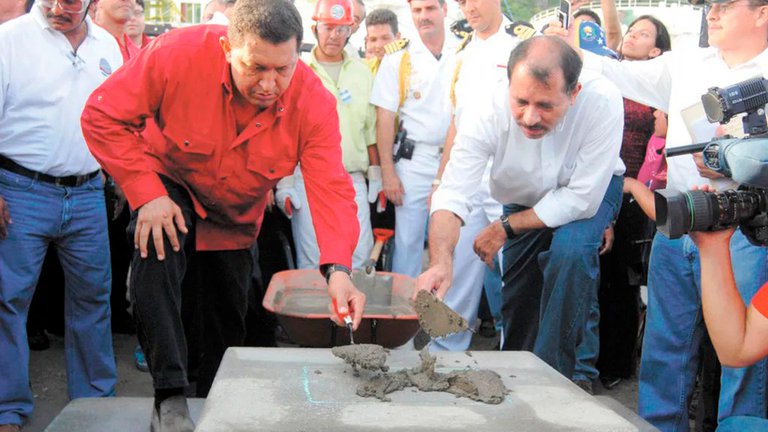
After his arrival to power, Ortega signed an agreement with the late Venezuelan president, Hugo Chávez, which would have left him some six billion dollars of free use. In the photo, when they presented in August 2007 the project for a refinery that was never built.
After his arrival to power, Ortega signed an agreement with the late Venezuelan president, Hugo Chávez, which would have left him some six billion dollars of free use. In the photo, when they presented in August 2007 the project for a refinery that was never built. (Photo internet reproduction)

In order to store Venezuelan oil and fuel, Ortega stripped the Esso company of the storage tanks it leased, under the argument that they would be managed by the State. In order to remove the U.S. oil company from the market, it was alleged that it had been charged 5.5 million dollars in unpaid taxes in previous years.

The secrecy with which information is handled in Nicaragua prevents establishing with documents who keeps the profits and who are the owners of the companies created under the shadow of Albanisa. The Public Registry of Property became “clandestine”, in such a way that a citizen cannot know without authorization of the company who are the partners and the capital they manage or simply find the creation of a new company. However, there are many threads that lead to the Ortega Murillo family.

Read: Journalists condemn attacks on freedom of expression and information in Nicaragua

The company Distribuidora Nicaragüense de Petróleo (DNP) acquired in 2009 by Albanisa to distribute fuel in the country, was managed by Yadira Leets until 2018, the then wife of Rafael Ortega Murillo, son of Daniel Ortega and Rosario Murillo.

In December 2019, Nicaraguans learned of the existence of a company called Zanzibar S. A. which was sanctioned by the US Treasury Department allegedly for hiding the profits of DNP, which was also sanctioned on that occasion. The Zanzibar company was managed by Rafael Ortega Murillo and the offices were inside the housing complex that the Ortega Murillo family has established to live and manage the country. This complex has a security perimeter that prevents public access.

“There is a monopoly that they clearly established from oil imports from Venezuela. This control lasted for several years until Venezuelan oil cooperation collapsed. The oil distribution company (DNP) magically, because no one knew the explanation, became the private property of the family in government. For a long time they not only had a monopoly on imports, but also a near monopoly on storage and a slice of distribution,” explains Sáenz.

“With the DNP sanctions they invented some companies to try to cushion the blow,” he adds. “Evidently there is no evidence to prove that they are the ones who are taking this overpricing in the bag, however, it is natural to assume a conspiracy and I can, at my own risk, issue this opinion, there being no other explanation.”

In order to justify the fuel prices in Nicaragua, it has been alleged by the government and the parties involved that Nicaragua has no port in the Caribbean and therefore the fuel coming from the Gulf of Mexico must go around the Panama Canal to be able to unload in the Nicaraguan Pacific. It has also been said that Nicaragua’s reduced storage capacity prevents it from buying more oil when its price is down.

Read: Nicaragua’s Parliament Passes Law to Sideline Adversaries in 2021 Election

“It is not because of oil prices or because Nicaragua has no port in the Caribbean, because in the same situation are El Salvador and Guatemala whose prices are lower,” says the economist. Regarding storage, he recommends that a country’s capacity should be measured by time and not by volume. “How many months of consumption does a country have the capacity to store? There we see that Nicaragua is not the lowest in Central America,” he says.

Engineer César Arévalo, an expert in hydrocarbons, goes further: he assures that there is collusion with the regional oil companies operating in Nicaragua, who, since Albanisa was put out of business by the US sanctions, are in charge of oil imports. “Why in El Salvador does the same company UNO or PUMA sell a gallon of fuel cheaper than in one of their stations in Nicaragua?” he asks.
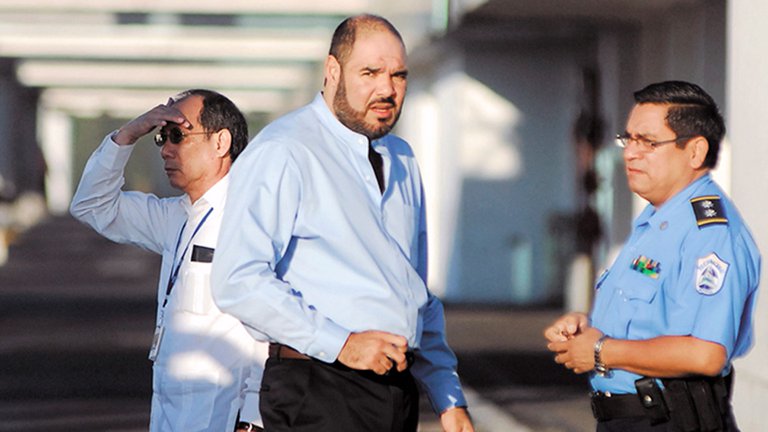
Rafael Ortega Murillo, son of the presidential couple, was sanctioned by the United States for allegedly hiding fuel distribution profits in "front" companies.
Rafael Ortega Murillo, son of the presidential couple, was sanctioned by the United States for allegedly hiding fuel distribution profits in “front” companies.

A Nicaraguan pays about 70 cents more for a gallon of super gasoline and 82 cents more per gallon of regular gasoline than a Salvadoran pays in his country.

Arevalo considers that those who manage the hydrocarbon business in Nicaragua increased their profit margins during the years of low oil prices. They did not lower prices in the same proportion as oil prices fell, and they got used to those margins, he says.

Enrique Sáenz considers that the upward scale suffered by fuels in the country is determined by the blow of the sanctions to what he calls “mafia in power”.

“The sanctions and the financial siege on the mafia in power are causing strong economic damage. As the international financial siege is tightening for these shady businesses, they have to find a way to compensate for those losses and they are doing it in a way that is not only irresponsible, but almost criminal, by unloading the machete on the backs of Nicaraguans”, he affirms.

Read: United States Imposes Further Sanctions on Nicaragua and Cuba

“They are playing with fire,” he asserts. “They are miscalculating the patience of the Nicaraguan people, they are miscalculating the repressive capacity they have, and the intimidating capacity they have because this not only affects the motorcyclist or the cab driver, but it affects the producers. Every Nicaraguan is being robbed of everything he consumes.”

According to Saénz, the oil surcharge punishes an impoverished population. “According to official figures, almost 70 percent of the population is underemployed, that is, they work every other day, or earn less than the minimum wage or are openly unemployed”.

Oscar Rene Vargas, economist and sociologist, considers that the money from the fuel surcharge is destined to cover the expenses of the regime which were previously paid with Venezuelan cooperation, among them the paramilitary payroll, which according to his calculations is between five thousand and ten thousand elements.

“Through this oil surcharge they make Nicaraguans pay their own repressors, the paramilitaries,” he concludes.

Read More from The Rio Times

The Rio Times · Power Map
See who really holds power in Latin America
Click to open the Power Map

Rotate for Best Experience

This report is optimized for landscape viewing. Rotate your phone for the full experience.