Weintraub: “Brazil is Experiencing the Greatest Revolution in Education of Past 20 Years”
RIO DE JANEIRO, BRAZIL – Education Minister Abraham Weintraub said during a meeting of the Education Committee in the Chamber of Deputies that the country “is experiencing the greatest revolution in education of the past 20 years”.

“The greatest symbol of this is that the “gay kit” is out and books are included for children to read with their parents, the children who are not in kindergarten will start next year, we will have Internet in all public schools in Brazil,” he said during the session.
The “gay kit” was, in fact, an educational material called “School without Homophobia”, which aimed to counter violence and prejudice against the LGBT population (comprising crossdressers, transsexuals, gays, lesbians, bisexuals, and other groups).
The material was suspended by then-president Dilma Rousseff after criticism from conservative sectors.
Weintraub was summoned on Wednesday, December 11th to enlighten deputies regarding his allegations that there are marijuana plantations in the country’s federal universities.
Committee points out MEC’s inefficiency and lack of planning
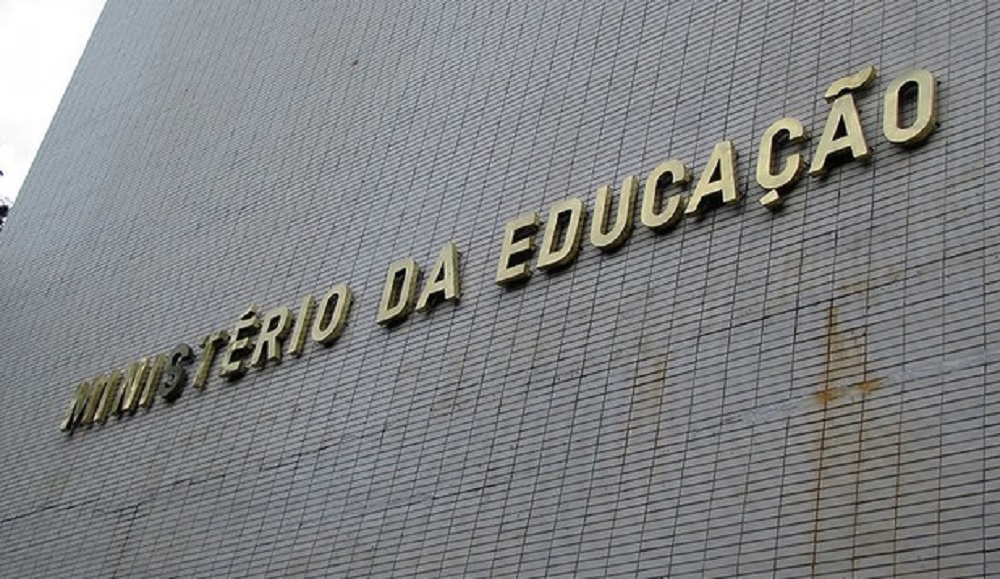
The minister’s statements contradict what was pointed out in the Ministry of Education’s (MEC) External Monitoring Committee’s (COMEX) report submitted on December 3rd.
The working group pointed out that the Ministry of Education’s planning and management are far behind what was expected, it also noted the low budget execution of a number of educational programs, some close to zero, and the failure to publish the strategic planning by the portfolio contemplating the year 2019.
The report also points out among its main conclusions that the secretariats linked to the portfolio failed to publish their work plans and that the ones published do not show prioritization, clarity in goals, deadlines or accountability for the proposed actions.
Also according to the committee, the current management has the lowest number of trusted officials with experience in academic institutions, in education, in subnational public bodies or even bodies linked to the MEC.
According to the group, the current administration has not even advanced on agendas prioritized by the government, such as the National Literacy Policy, which “does not include an action plan and none of the federated bodies knows how and when it will reach schools.
Furthermore, “most of the national literacy policies have not been implemented, which is even more serious,” the document points out.
The Committee’s coordinator, Deputy Tabata Amaral, said when presenting the report: “The MEC has crossed its arms, the minister has crossed his arms. We had several debates, clashes, layoffs, and ideological issues, but students and teachers remain unattended and more (even) than in the past, which is extremely worrying”.
“We want to have a mature, responsible conversation and say that we can disagree on several things, but students and teachers do not care about that. They want something to happen. We will continue fighting for a dialogue with the MEC and within the Chamber,” she said.
“We hope that next year we will be able to correct the detour and recover some of what has been lost,” she added.
The COMEX was created by Chamber President Rodrigo Maia, from a petition signed by 50 deputies from several parties. It also includes Deputy João Campos as vice-coordinator, Deputy Felipe Rigoni as rapporteur and as sub-rapporteurs the deputies Professor Israel, Luísa Canziani, Eduardo Bismarck, Paula Belmonte, Rose Modesto, and deputy Campos.
Deputy João Campos states that the Committee’s work acts as a monitoring system, “leaving populism and inflammatory discourses aside”. “Our efforts are focused on ensuring that the MEC’s work is guided by studies and technical data, and not based on an ideological war,” he said.
Source: Carta Capital
More: Brazil news in English, every day from The Rio Times.
Editorial responsibility: Matthias Camenzind, Editor-in-Chief · Editorial standards · Report an error