Venezuelans Recognized as Refugees by Brazil’s National Committee
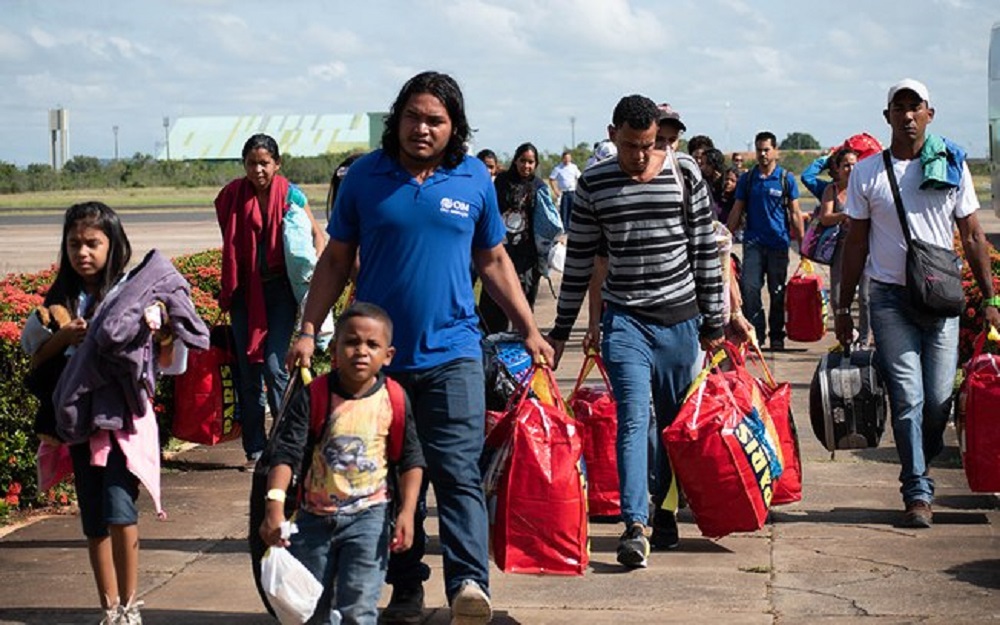
RIO DE JANEIRO, BRAZIL – The National Committee for Refugees (CONARE) granted refugee status to 21,432 Venezuelans who settled in Brazil after fleeing the economic crisis and political instability affecting their country.
According to data published yesterday on the Ministry of Justice and Public Safety website, CONARE has been analyzing 120,469 refugee applications submitted by Venezuelans until the beginning of October this year.

The cases are confidential and the identities of those who have been granted refugee status are not disclosed.
According to the ministry, the outcome of the meeting is “a historic milestone in the area of Brazilian migratory legalization,” since the 21,342 requests for refuge were decided as a whole.
The ministry expects that, soon, CONARE will repeat the same procedure, analyzing a further “considerable number” of applications lodged by foreigners.
The examination of refugee applications goes through several stages before CONARE can reach a decision. According to the Ministry, there is no specific time limit for the conclusion of each procedure, which varies according to the nationality of applicants, the consistency of the contact data provided to the council, the complexity of each case, and the information available from the applicant’s homeland.
On its website, the Ministry states that applications are analyzed over an average period of three years. Among the 120,469 applications under analysis up to October, according to CONARE’s own data, there were at least 47 cases submitted in 2013.
According to the Ministry of Justice and Public Safety, the decision on a large number of requests at once was feasible as a result of the use of new technologies and, mainly, due to recent committee resolutions.
The use of digital tools able to compile large amounts of data and turn them into clear information, enabled more than 129,000 refugee applications submitted by Venezuelans to be cross-checked, thus optimizing CONARE’s work.
In addition, in June this year, the body ruled that Venezuelans are facing a context of “severe and widespread human rights violations”.
The decision produced practical effects, resulting in the publication of a regulatory resolution in October that enabled the adoption of differentiated procedures for the instruction and assessment of duly substantiated applications, removing “obstacles” and easing the process of determining the refugee status of Venezuelans.
In general terms, Law 9.474/97 stipulates that any individual who, due to “justifiable concerns of persecution for reasons of race, religion, nationality, social group or political opinions”, seeks protection to leave his or her country of origin or in which he or she is legally living, shall be recognized as a refugee.
In Brazil, upon applying for refuge, applicants are entitled to obtain the main identification documents, such as the Individual Taxpayer Registry (CPF) and the Work and Social Welfare Registry (CTPS), as well as the right to avail themselves of public services.
Refugees are granted a residence permit for an indefinite period of time, while applicants for refuge have only a provisional residence permit until the final decision regarding their application. The recognition of their condition also allows refugees the option of applying for citizenship as Brazilians, four years after the request for refuge is formalized.
Refugees may also apply for the extension of the effects of their condition to family members and request a family reunification visa for relatives outside Brazil.
On the other hand, they are obliged to respect the Brazilian legislation; not to carry out activities contrary to public order or national security; to keep their documents up to date and to apply to CONARE for authorization whenever wishing to travel abroad – leaving Brazil without prior authorization implies the loss of the refugee status.
Source: Agência Brasil
More: Brazil news in English, every day from The Rio Times.
This article was produced by The Rio Times’ automated newsroom system. How we use AI · Report an error · Editorial responsibility: Matthias Camenzind, Editor-in-Chief