Bolsonaro Is Now Favorite in 2022 Presidential Election Race
RIO DE JANEIRO, BRAZIL – The Jair Bolsonaro government has been through the perfect political storm for the past three months.

The crisis unleashed by the novel coronavirus pandemic, which the president belittled from the outset, was compounded by numerous factors: the resignation of his most popular Minister, Sérgio Moro; two replacements at the Ministry of Health; the opening of an inquiry to investigate political interference in the Federal Police; the video release of a scandalous cabinet meeting; the siege of radical Bolsonarists in two Supreme Court investigations; the arrest of Fabrício Queiroz, former adviser to Senator Flávio Bolsonaro at the home of Bolsonaro’s attorney; the Chief Executive’s Covid-19 diagnosis; and the ominous death toll of over 80,000.
Even amid grave predicaments which could tarnish the popularity of countless politicians, Bolsonaro remains firm, showing once again that he is a political phenomenon. If the Presidential dispute were held today, he would be reelected.
This is one of the main findings of an exclusive survey conducted by the Paraná Research Institute between July 18th and 21st.
Despite being a controversial leader of a nation divided over his government, Bolsonaro leads all first-round scenarios – with percentages ranging from 27.5 to 30.7 percent – and would defeat all six potential adversaries in a second round of the race to the Planalto in 2022: Ex-president Luiz Inácio Lula da Silva (Worker’s Party – PT); ex-Mayor Fernando Haddad (PT); ex-Governor Ciro Gomes (Democratic Labor Party – PDT); ex-Minister Sérgio Moro; São Paulo Governor João Doria (Brazilian Social Democratic Party – PSDB); and TV host Luciano Huck. An impressive achievement, considering that, according to the same survey, 48.1 percent of Brazilians disapprove of his administration (51.7 percent in late April) and 38 percent regard his work as poor or terrible (it was 39.4 percent).
Compared to a former survey by Paraná Surveys, dated three months ago, his approval rate fluctuated positively from 44 to 47.1 percent, while the contingent considering his mandate optimal or good rose from 31.8 to 34.3 percent, a variation above the error margin of two percentage points plus or minus.
The 2022 election is still a long way off, but it underlines the President’s resilience. The ongoing political jolts and string of blunders in leading the pandemic failed to cling to him to the point of undermining his most faithful support base of around 30 percent of voters – a number that is even viewed by opponents as a hindrance to an impeachment process (there are dozens of them in the hands of Chamber president Rodrigo Maia).
Experts say Bolsonaro succeeded in escaping the logic that he would succumb to crises for two reasons: the emergency aid, which mitigated the economic impact of the pandemic on a population indifferent to the turmoil in Brasília, and the president’s more restrained stance in recent times, notably after the escalation of tensions with the Supreme Court. His son and senator Flávio Bolsonaro said on Wednesday, July 22nd, that his “moderate stance” will be permanent. “Since he realized the conflict with the STF was dangerous, the President backed off, stayed quiet, and refrained from making bombastic statements.”
“For some of the voters who support him but were critical of his performance, Bolsonaro’s peace-and-love stance helps to improve his assessment,” says political scientist José Álvaro Moisés of USP (University of São Paulo). “Bolsonaro’s popularity is rising again, primarily with the R$600 (US$120) aid, which now reaches more people. With the money factor, a political crisis is reduced. At the time of the ‘mensalão’, Lula was a hero because pockets were full,” says Murilo Hidalgo, director of Paraná Pesquisas. With Bolsonarists now committed, the government is seeking the “pocket factor” and the extension of social programs to diversify its electoral base.

The survey shows that Bolsonaro’s assessment rates have improved in Brazil’s Northeast, a PT and pro-Lula stronghold. Northeasterners are still the Brazilians least fond of the President, but those who disapprove of the government dropped from 66.1 to 56.8 percent between April and July while those who endorse him rose from 30.3 to 39.4 percent.
From the current perspective, it is difficult to envisage a force that could rival the President. However, the disapproval rate of his government suggests that there is room for an alternative, less radical, and more balanced project. Among the potential center-right names, the person who seems the most likely today is someone who was attached to the President until recently, his ex-Minister Sérgio Moro.
In second round disputes, without the unelectable Lula, Moro is the closest to Bolsonaro (44.7 percent against 35 percent). He finishes second in the first round, when the PT candidate is Fernando Haddad and third, albeit not far behind, when Lula’s name is included.
Viewed as an anti-corruption icon, Moro shows potential for growth in a track currently occupied by Bolsonaro, but which can be won if the disclosures in the Fabrício Queiroz case once and for all tarnish the President’s image regarding the care of public money. This Moro threat has been on the radar of Bolsonarism on social media and in street rallies, electing him as a new member of the “traitors of the homeland” hall.
Moro’s negative point as an alternative to Bolsonaro is that his performance as a judge, markedly against Lula and the PT, will hardly bring him any support from the left-wing. A further hindrance is that no one is aware for certain of the ex-Minister’s economic positions.
After toppling the country’s economy and raiding the Brazilian state, the President’s long-time ideological opponent Lula still has a captive constituency. (In years past, Paulo Maluf also did, even after all the accusations of corruption against the former mayor of São Paulo were proven.) Although he was convicted and imprisoned under Lava-Jato and is unelectable under the ‘Ficha Limpa’ (Clean Record) Law, Lula still enjoys a strong recall among voters of this spectrum.
The leftist has a wide advantage over the President among Northeasterners (34.1 to 18.7 percent) and voters who studied up to elementary school (31.5 to 21 percent). In fact, people’s loyalty to the leftist is similar, in a way, to that of the most ardent Bolsonarists. There is a certain amount of personal identification and sympathy, elements that are more emotional than rational.
“Lula is a leader with very important social roots, he created the ‘Bolsa Família’ (Family Grant), he strengthened universities. He was challenged by corruption, but he didn’t remove that support,” says José Álvaro Moisés of USP. Although the left’s electoral floor is respectable, its ceiling is low. No one in this political camp shows the ability to beat the President in a potential runoff.
Both Lula and Haddad, Bolsonaro’s 2018 opponent, are defeated by Bolsonaro in direct confrontation simulations – in fact, the incumbent beats his rivals, not only the leftists, in all the gender, age and schooling segments, with the exception of the preference for Lula among those who studied until elementary school. “Where are the 48 percent who disapprove of Bolsonaro in the runoff? There is not yet a candidate capable of catalyzing this disapproval,” says political scientist Antonio Lavareda.
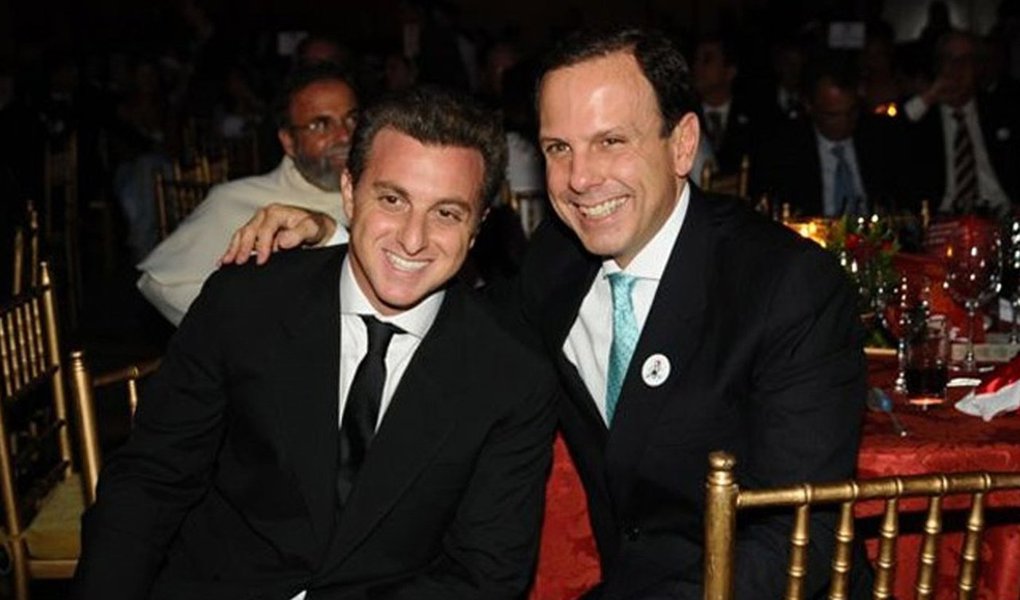
To those who would like to see a Center candidate in the Planalto in 2022, the Paraná Researches survey lacks good news. The two main names in this group, João Doria and Luciano Huck, performed poorly in the research. Even without Moro’s name in the scenario Doria only achieves 4.6 percent of voting intentions. In this same simulation, Huck, who once neared 12 percent, scored only 8.3 percent. In the case of the Globo TV host, this decline is understandable.
Despite his live broadcasts on social networks, some of them showing the dressing rooms in his TV station, Huck has not played any major role in the fight against the pandemic – nor could he. It was inevitable that he would drop (there are people around him who assure he’s not even that excited to run in 2022). Doria, on the other hand, merited greater recognition from the electorate. His performance in the fight against the coronavirus may not be perfect, but it was the best among governors.
The numbers may show that the President’s strategy of placing the health crisis on the shoulders of governors and mayors has apparently worked so far, with his own irresponsibility not being translated into unpopularity.
A ex-governor of Minas, Magalhães Pinto, perfectly defines this moment of the 2022 race: “Politics is like a cloud. You look and it’s one way. You look again and it’s already changed.” Everything can, of course, change until then – and even before that.
There are at least two issues on the horizon that could compromise Bolsonaro’s reelection project: the unpredictable outcome of the Queiroz case and the prospect of an economic storm in the aftermath of the pandemic (a tumble of almost six percent of GDP is projected), aggravated by the emergency aid, which, in theory, runs until September. But it is undeniable that the incumbent remains firm in the fight so far, with an unshakeable resilience and, strictly speaking, no adversary to match.
Source: Veja
More: Brazil news in English, every day from The Rio Times.
This article was produced by The Rio Times’ automated newsroom system. How we use AI · Report an error · Editorial responsibility: Matthias Camenzind, Editor-in-Chief