Brazilian Quarantine Site for Repatriates More Concerned Over Dengue Than Coronavirus
RIO DE JANEIRO, BRAZIL – On the streets of Anápolis, the population is torn between apprehension and cheering for the arrival of 58 Brazilian repatriates, who landed in Brazil on Sunday coming from China due to the epidemic of the new coronavirus.

While residents of areas near the airbase where the group will be quarantined voice concern, professionals in health facilities are more concerned about the spread of dengue fever, which in the first month of 2020 recorded a 71 percent increase in cases compared to January 2019. “The media is only talking about the coronavirus, and I only see cases of dengue growing in my daily life,” said nurse Alessandro Silva, who works in one of the city’s units.
Anápolis is located in the heart of the Midwest, Brazil’s region with the highest proportion of dengue cases in the country: 32.5 cases for each group of 100,000 inhabitants. The country’s average is 14.64. Meanwhile, the coronavirus has reported eight suspected cases in Brazil, none of which have been confirmed, and 34,000 confirmed worldwide, with 723 deaths. All but two deaths have occurred in Chinese territory.
In the Santos Dumont neighborhood, adjacent to the Anápolis airbase, where the Brazilians have landed and will spend 18 days in isolation, some fear the disease will spread. Among them are housewife Cleusa Fátima da Silva, 60, and general services assistant Delcilane Patrícia Ramos, 42, “We are very close to the quarantine site. I even dreamt about the disease last night. I am afraid to get infected, but we have to trust the authorities and believe that nothing bad will happen,” Cleusa said. “I have asthma, and just thinking about the disease, I feel sick. I hope that nothing bad will happen to those who have landed, or to us,” said Delcilane.
Among residents and visitors to the Santos Dumont neighborhood, there are also skeptics about future issues. “I think it’s good they’re coming here. If it were my son, I would want them to come to their country. If I have to be treated, it better be here. I hope everything goes well,” said 40-year-old merchant Alessandra Maria Alexandre.
“I don’t think anything bad is going to happen. The doctors said that if they are isolated, everything is fine. So, let’s trust them,” said 66-year-old cook Maria Neide da Silva. Jokingly, she also says that if she is affected by the coronavirus, she will use the same strategy to heal herself as she usually does when she has the flu. “I sniff a little smoke and take a warm bath afterwards. No virus can survive that”.
For farmer Sebastião Coelho Guimarães, 66, Jair Bolsonaro’s government took the right decision to repatriate Brazilians who expressed interest in returning to the country. A neighbor of the Anápolis airbase, he says his only concern, if he were one of the repatriated, would be to remain isolated in a room – which will not happen. “Can you imagine not being able to talk to anyone for 18 days? God forbid,” he said as he slowly rolled a cornhusk-wrap cigarette on the porch of his house.
In the last three days, health authorities in municipal, state and federal government have reiterated to exhaustion in the main media outlets in Goiás, that there is no risk to the population, since those repatriated will be in total isolation and, so far, are asymptomatic. “There is no need to change anyone’s routine in Anápolis. We are all safe,” a local radio host insistently repeated on Saturday morning.
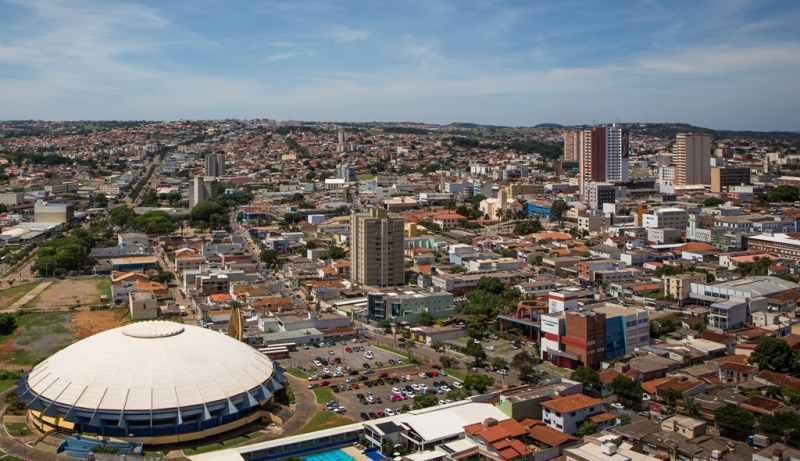
Anápolis is a city of 334,000 inhabitants, with a thriving industry and a pharmaceutical hub that includes more than 20 laboratories. Its routine, so far, has hardly changed at all, in fact. In pharmacies, for instance, there have been no records of an increase in the sale of masks. “Here I haven’t sold any masks in the last week,” said attendant Margarete Alves. Not even the street fruit vendor who has a stall across from the airbase noticed any change in daily life. “Only the number of reporters and inquisitive buyers has increased.”
The repatriates will stay at the Air Force transit hotel, a building with 38 suites that has been specifically prepared to accommodate them. All will be monitored three times a day by the Brazilian health team that traveled from Brasília to Wuhan to pick them up. Among the 58 quarantined are 27 adults (four of them Chinese married to Brazilians) and seven children who were living in China. The other 24 were part of the aircraft’s crew, including 14 health professionals, eight crew members, and two journalists.
Source: El País
More: Brazil news in English, every day from The Rio Times.
This article was produced by The Rio Times’ automated newsroom system. How we use AI · Report an error · Editorial responsibility: Matthias Camenzind, Editor-in-Chief