Mafia Witness Says Bazil’s PCC Funded Half of Europe-Bound Cocaine
A jailed Italian mafia operator told Italian prosecutors that Brazil’s largest criminal faction bankrolled 50% of every cocaine shipment sent from South America to Italy, splitting financing and profits with the Calabrian ‘Ndrangheta in a consortium that delivered tons of the drug through the Mediterranean port of Gioia Tauro.
The delation by Vincenzo Pasquino, held at Brazil’s Brasília federal penitentiary after a 10-year conviction, was disclosed by Estadão on Monday May 12, 2026 and is described by Italian investigators as the most detailed account ever produced by a mafia insider of the operational architecture the PCC built for global trafficking.
Key Points
Key Facts
— Italian witness Vincenzo Pasquino tells prosecutors Brazil’s PCC and ‘Ndrangheta split 50/50 the cost of each cocaine shipment to Italy
— The PCC sold cocaine to the Italians at 5,000 euros (about US$5,400) per kilo, with the Italian wholesale price reaching 23,000 to 25,000 euros
— Cocaine landed at Gioia Tauro, Europe’s biggest container port, and was distributed across Sicily and northern Italy
— Operation Samba, deflagrated in December 2024 in Brazil and Italy, drew its framework from the Pasquino testimony
— The Rio Times, the Latin American financial news outlet, reports the disclosure as Trump pushes Brasília to designate the PCC a Foreign Terrorist Organization
A Consortium Sealed in São Paulo
Pasquino, an officially affiliated ‘Ndrangheta member since 2011, said he organized the São Paulo meeting where the two organizations agreed to share equally the cost of each shipment bound for Italy. He described his own role as the contact point that several Calabrian clans relied on to coordinate with the PCC and as the courier who moved financing from Europe to Brazil. The witness was arrested in Paraíba in 2021 alongside fellow ‘Ndrangheta operator Rocco Morabito, extradited to Italy in March 2024, and convicted to 10 years.
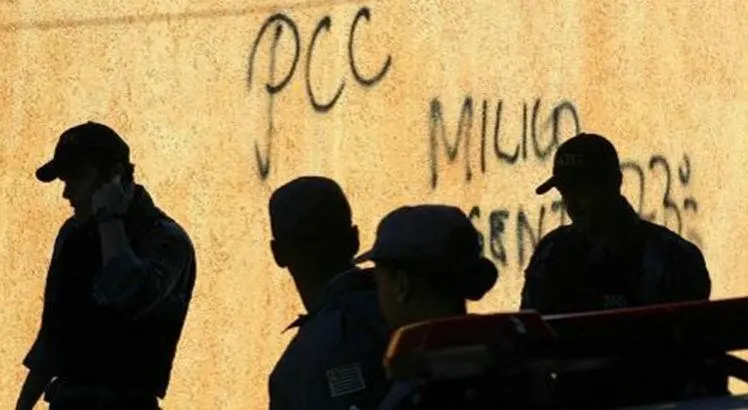
According to the depositions reviewed by Estadão journalist Marcelo Godoy, the PCC sold cocaine to the Italians at 5,000 euros per kilo. Logistics and port bribes pushed the cost to 7,500 euros before European distribution. The PCC’s agreed share of the Italian sale price ranged from 23,000 to 25,000 euros per kilo, a markup that mirrors the kind of margin documented in Rio Times prior reporting on the economics of the PCC’s European cocaine corridor.
Routes, Methods and the Sailboat Network
The witness detailed routes built around the port of Gioia Tauro, the Mediterranean’s largest container terminal and historically the ‘Ndrangheta’s logistical heart. From Calabria, the drug moved north to Sicily and to industrial cities in northern Italy. In 2017, Pasquino said he was dispatched to Brazil to open a maritime corridor using sailboats that left Amsterdam carrying ecstasy and returned loaded with cocaine, and he organized the first containerized shipment from the port of Santos to Italy that same year.
| Stage | Price per kilo (EUR) | Equivalent in USD |
|---|---|---|
| PCC sale to Italians | 5,000 | ~5,400 |
| After logistics and port bribes | 7,500 | ~8,100 |
| Italian wholesale (PCC share) | 23,000 to 25,000 | ~25,000 to 27,000 |
Pasquino also claimed pioneering use of Colombian divers who attached cocaine packages to the keels of cargo ships, a method federal investigators in Brazil have documented across Santos and Paranaguá. Italian prosecutors say his testimony, beginning November 28, 2023 and continuing through 2024, served as the framework for Operation Samba, launched simultaneously in Brazil and Italy in December 2024 against the consortium accused of moving tons of cocaine from South America to Europe.
The PCC’s Crime Tribunal
A lost shipment triggered a PCC sanction against the Italian witness: according to the depositions, Pasquino was summoned to the faction’s internal “tribunal do crime,” given a deadline to repay the value of the missing cargo, and warned he would be executed if he failed. Italian investigators recorded that he was informed he would have to “answer for the shipment,” a phrase that captures how the PCC enforces commercial discipline among foreign partners. The same investigations also touched the Rio de Janeiro Comando Vermelho; Pasquino said Italian operators had contact with the Rio faction but never formalized a partnership comparable to the one with the PCC, an asymmetry consistent with Rio Times reporting on the CV–PCC rivalry along the Rota Caipira corridor.
Why This Lands Now
The disclosure surfaces while the Trump administration is pushing Brasília to designate the PCC and the Comando Vermelho as Foreign Terrorist Organizations. The Lula government has resisted, arguing organized crime is a domestic public-security matter. A Wall Street Journal feature on April 20, 2026 described the PCC as operating at the scale of the ‘Ndrangheta and with “the efficiency of a multinational corporation,” language that mirrors the Treasury vocabulary used in designation decisions and that Rio Times analyzed in coverage of the PCC’s transition into a globalized criminal enterprise.
What to Watch
- Operation Samba spin-offs: additional indictments in Italy and Brazil drawing on the Pasquino corpus could name other Calabrian families and PCC mid-tier operators.
- FTO designation pressure: watch whether the new financial detail accelerates a Trump executive order designating the PCC, a step the Lula government has resisted.
- Santos and Paranaguá controls: Brazilian Federal Police are reviewing diver-attachment cases at both ports, where roughly 60% of Brazil’s container traffic moves.
More: Brazil news in English, every day from The Rio Times.
Frequently Asked Questions
Who is Vincenzo Pasquino?
Pasquino is an Italian ‘Ndrangheta operator who joined the Calabrian mafia in 2011 and was sent to Brazil in 2017 to organize maritime trafficking routes. He was arrested in Paraíba alongside fellow operator Rocco Morabito in May 2021, extradited to Italy in March 2024, and convicted to a 10-year prison sentence. He began cooperating with Italian prosecutors on November 28, 2023, while still detained in Brazil.
What did Operation Samba target?
Operation Samba was a joint Brazil–Italy law enforcement action launched in December 2024 against the PCC–’Ndrangheta consortium accused of moving tons of cocaine from South America to Europe. Italian prosecutors say Pasquino’s depositions, the first detailed insider account of the PCC’s global trafficking architecture, supplied the operational framework for the investigation and led to indictments in both jurisdictions.
How big is the price markup from Brazil to Italy?
According to Pasquino, the PCC sold cocaine to the Italians at 5,000 euros per kilo wholesale at the Brazilian end. Logistics costs and port bribes brought the figure to 7,500 euros before European distribution. The PCC’s agreed share of the Italian wholesale price reached 23,000 to 25,000 euros per kilo, a multiple that Brazilian investigators say has financed the faction’s expansion into 28 countries.
Did the Comando Vermelho participate in the consortium?
Pasquino said the ‘Ndrangheta maintained contacts with members of the Rio de Janeiro–based Comando Vermelho but never formalized a partnership equivalent to the 50/50 split with the PCC. The asymmetry helps explain why the PCC alone is estimated to generate roughly 10 billion reais (about US$2 billion) a year, while the Comando Vermelho operates at a smaller scale and is more concentrated in domestic and regional markets.
Updated: 2026-05-11T16:00:00Z
This article was produced by The Rio Times’ automated newsroom system. How we use AI · Report an error · Editorial responsibility: Matthias Camenzind, Editor-in-Chief