IBOV 177,866 ▲ 2.97% IPSA 11,057 ▲ 0.28% IPC MEX 66,496 ▲ 0.59% MERVAL 3,280,224 ▲ 2.43% COLCAP 2,307.67 ▲ 0.65% BVL PERÚ 56,194.27 ▲ 1.29% USD/BRL5.11▼ 0.04% USD/MXN17.50▲ 0.19% USD/CLP923.90▼ 0.41% USD/COP3,242▼ 0.13% USD/PEN3.41▲ 0.42% USD/ARS1,487▼ 0.03% USD/UYU40.22▲ 1.37% USD/PYG6,055▲ 1.45% USD/BOB10.14▲ 4.01% USD/DOP58.61▲ 0.22% USD/CRC448.82▲ 1.41% USD/GTQ7.63▲ 2.31% USD/HNL26.72▲ 0.09% USD/NIO 36.62 — 0.00% USD/VES719.54▼ 0.13% USD/PAB1.00— 0.00% USD/BZD2.00— 0.00% USD/JMD158.09▲ 0.40% USD/TTD6.75▲ 1.44% EUR/BRL5.82▼ 0.79% BRENT 79.25 ▲ 4.26% WTI 74.51 ▲ 4.34% IRON ORE 161.91 — — COPPER 6.21 ▼ 0.39% GOLD 4,066 ▼ 0.94% SILVER 58.57 ▼ 2.07% SOY 1,196 ▼ 0.04% CORN 467.25 ▲ 6.68% WHEAT 643.50 ▲ 1.82% COFFEE 318.60 ▼ 10.74% SUGAR 14.86 ▼ 1.72% ORANGE JUICE 143.25 ▼ 4.44% COTTON 80.87 ▲ 6.18% COCOA 6,100 ▼ 3.31% BEEF 235.20 ▼ 0.02% CATTLE 354.60 ▼ 0.44% LITHIUM 72.32 ▼ 0.69% PETR4 39.65 ▲ 1.12% VALE3 74.18 ▲ 1.41% ITUB4 44.30 ▲ 4.02% BBDC4 18.86 ▲ 4.78% ABEV3 15.82 ▲ 0.64% BBAS3 20.58 ▲ 2.90% B3SA3 15.42 ▲ 4.26% WEGE3 46.51 ▲ 1.68% PRIO3 55.45 ▼ 0.29% SUZB3 41.55 ▲ 1.27% RENT3 41.10 ▲ 4.31% AZZA3 19.10 ▲ 3.47% CSAN3 4.07 ▲ 5.44% RAIZ4 0.35 ▼ 5.41% PCAR3 2.73 ▼ 1.09% GMAT3 3.97 ▲ 1.02% PSSA3 54.97 ▲ 3.04% CVCB3 1.25 — 0.00% POSI3 3.97 ▲ 3.12% SLCE3 14.02 ▲ 1.67% NATU3 8.68 ▲ 2.60% BRKM5 6.63 ▲ 4.25% RANI3 8.01 ▲ 1.91% CSNA3 5.18 ▲ 7.92% CMIN3 5.23 ▲ 8.28% USIM5 8.45 ▲ 1.20% GGBR4 23.01 ▲ 2.36% ENEV3 27.55 ▲ 5.15% CPFE3 47.87 ▲ 3.41% CMIG4 11.38 ▲ 2.71% EQTL3 40.91 ▲ 3.54% LREN3 14.62 ▲ 3.32% VIVT3 35.75 ▲ 3.62% RAIL3 14.36 ▲ 4.44% KLABIN 17.54 ▲ 0.80% RAIA DROGASIL 18.77 ▲ 3.53% RDOR3 36.02 ▲ 2.48% HAPV3 10.60 ▲ 5.26% FLRY3 16.42 ▲ 4.25% SMTO3 16.37 ▲ 1.99% UGPA3 30.71 ▲ 2.03% VBBR3 33.00 ▲ 2.80% BBSE3 40.35 ▲ 2.72% BPAC11 58.73 ▲ 5.48% CURY3 34.21 ▲ 4.62% AERI3 2.09 ▲ 1.46% VIVARA 23.53 ▲ 4.21% COMPASS 25.50 ▲ 3.32% VAMOS 3.06 ▲ 3.38% SANB11 27.62 ▲ 5.22% ASAI3 8.87 ▲ 4.85% SBSP3 31.11 ▲ 3.70% WALMEX 49.31 ▲ 0.59% GMEXICO 198.62 ▲ 1.68% FEMSA 223.20 ▲ 0.37% CEMEX 21.82 ▲ 0.51% GFNORTE 186.51 ▲ 0.63% BIMBO 56.06 ▲ 0.23% TELEVISA 9.74 ▲ 2.63% AMX 22.70 ▲ 0.27% GAP 412.01 ▼ 0.41% ASUR 285.12 ▲ 0.53% OMA 235.73 ▼ 0.95% KOF 182.08 ▲ 0.65% GRUMA 282.99 ▲ 0.14% KIMBER 38.13 ▼ 0.81% SQM-B 67,750 ▼ 1.95% COPEC 6,139 ▲ 1.98% BSANTANDER 79.00 ▲ 1.94% FALABELLA 5,905 ▲ 0.92% ENELAM 85.40 ▲ 1.47% CENCOSUD 2,045 ▼ 0.55% CMPC 1,109 ▲ 1.32% BANCO CHILE 188.88 ▲ 1.01% LATAM AIR 26.26 ▼ 0.53% YPF 74,450 ▼ 1.75% GGAL 8,350 ▲ 5.96% PAMPA 5,185 ▼ 0.38% TXAR 671.00 ▲ 0.98% ALUAR 978.00 ▲ 0.98% TGS 9,610 ▲ 3.22% CEPU 2,405 ▲ 3.89% MIRGOR 17,375 ▲ 1.02% COME 45.90 ▲ 1.06% LOMA NEGRA 3,583 ▲ 2.43% BYMA 314.00 ▲ 1.37% TELECOM ARG 4,248 ▲ 3.09% ECOPETROL 15.59 ▲ 1.27% BANCOLOMBIA 82.95 ▲ 2.50% GRUPO AVAL 5.08 ▲ 1.20% CREDICORP 400.81 ▲ 2.27% SOUTHERN COPPER 175.83 ▲ 0.80% BUENAVENTURA 30.00 ▲ 1.52% MERCADOLIBRE 1,852 ▲ 2.46% NUBANK 13.76 ▲ 0.66% XP 16.92 ▲ 3.11% PAGSEGURO 9.25 ▲ 2.78% STONE 11.21 ▲ 2.28% GLOBANT 29.96 ▼ 4.25% TECNOGLASS 43.90 ▲ 1.76% GAP AIRPORT 235.64 ▲ 0.50% ASUR 285.12 ▲ 0.53% OMA AIRPORT 108.09 ▼ 0.22% AMX ADR 26.04 ▲ 0.77% FEMSA ADR 127.70 ▲ 0.55% CEMEX ADR 12.48 ▲ 0.89% PETROBRAS ADR 17.32 ▲ 1.70% VALE ADR 14.46 ▲ 1.69% ITAU ADR 8.62 ▲ 4.11% SANTANDER BR 5.39 ▲ 4.86% AMBEV ADR 3.07 ▲ 0.99% CSN 1.01 ▲ 5.79% GERDAU 4.50 ▲ 2.04% LATAM ADR 56.45 ▼ 1.03% BTC 62,768 ▼ 1.55% ETH 1,783 ▼ 1.24% SOL 76.26 ▼ 0.80% XRP 1.08 ▼ 0.86% BNB 568.62 ▼ 0.93% ADA 0.16 ▼ 1.39% DOGE 0.07 ▼ 0.55% AVAX 6.52 ▲ 1.84% LINK 7.94 ▼ 0.68% DOT 0.83 ▼ 1.21% LTC 43.62 ▼ 0.80% BCH 236.98 ▼ 1.24% TRX 0.33 ▼ 0.27% XLM 0.18 ▼ 1.39% HBAR 0.07 ▼ 0.23% NEAR 1.88 ▼ 0.78% ATOM 1.54 ▼ 1.28% AAVE 94.58 ▼ 2.56% SELIC 14.25% EMBRAER 84.60 ▲ 0.88% EMBRAER ADR 66.01 ▲ 0.72% JBS 11.91 ▲ 1.53% JBS BDR 60.78 ▲ 1.22% MBRF3 15.55 ▲ 0.91% MBRFY 2.97 ▼ 1.00% INTER 5.82 ▲ 1.93% EGX 52,256 ▲ 0.44% USD/ZAR16.37▲ 0.29% USD/NGN 1,376 — 0.00% NIKKEI 66,948 ▼ 2.35% CSI300 4,717 ▼ 1.34% HSI 24,149 ▼ 0.11% NIFTY 24,146 ▼ 0.25% KOSPI 6,881 ▼ 7.96% JCI 5,947 ▲ 0.37% USD/JPY161.96▲ 0.15% USD/CNY6.78▲ 0.09% DAX 25,067 ▼ 0.20% CAC 8,339 ▲ 0.15% FTSE 10,497 ▲ 0.24% MIB 52,614 ▲ 0.44% IBEX 19,385 ▲ 0.32% STOXX 641.10 ▲ 0.04% EUR/USD1.14▲ 0.08% GBP/USD1.34▼ 0.01% SPX 7,575 ▲ 0.42% DJI 52,637 ▲ 0.29% NDX 29,825 ▲ 0.33% RUT 2,978 ▼ 0.49% TSX 35,305 ▲ 0.30% VIX 15.03 ▼ 5.11% USD/CAD1.42▼ 0.07% US10Y 4.5690 ▲ 0.66% IBOV 177,866 ▲ 2.97% IPSA 11,057 ▲ 0.28% IPC MEX 66,496 ▲ 0.59% MERVAL 3,280,224 ▲ 2.43% COLCAP 2,307.67 ▲ 0.65% BVL PERÚ 56,194.27 ▲ 1.29% USD/BRL 5.11 ▼ 0.04% USD/MXN 17.50 ▲ 0.19% USD/CLP 923.90 ▼ 0.41% USD/COP 3,242 ▼ 0.13% USD/PEN 3.41 ▲ 0.42% USD/ARS 1,487 ▼ 0.03% USD/UYU 40.22 ▲ 1.37% USD/PYG 6,055 ▲ 1.45% USD/BOB 10.14 ▲ 4.01% USD/DOP 58.61 ▲ 0.22% USD/CRC 448.82 ▲ 1.41% USD/GTQ 7.63 ▲ 2.31% USD/HNL 26.72 ▲ 0.09% USD/NIO 36.62 — 0.00% USD/VES 719.54 ▼ 0.13% USD/PAB 1.00 — 0.00% USD/BZD 2.00 — 0.00% USD/JMD 158.09 ▲ 0.40% USD/TTD 6.75 ▲ 1.44% EUR/BRL 5.82 ▼ 0.79% BRENT 79.25 ▲ 4.26% WTI 74.51 ▲ 4.34% IRON ORE 161.91 — — COPPER 6.21 ▼ 0.39% GOLD 4,066 ▼ 0.94% SILVER 58.57 ▼ 2.07% SOY 1,196 ▼ 0.04% CORN 467.25 ▲ 6.68% WHEAT 643.50 ▲ 1.82% COFFEE 318.60 ▼ 10.74% SUGAR 14.86 ▼ 1.72% ORANGE JUICE 143.25 ▼ 4.44% COTTON 80.87 ▲ 6.18% COCOA 6,100 ▼ 3.31% BEEF 235.20 ▼ 0.02% CATTLE 354.60 ▼ 0.44% LITHIUM 72.32 ▼ 0.69% PETR4 39.65 ▲ 1.12% VALE3 74.18 ▲ 1.41% ITUB4 44.30 ▲ 4.02% BBDC4 18.86 ▲ 4.78% ABEV3 15.82 ▲ 0.64% BBAS3 20.58 ▲ 2.90% B3SA3 15.42 ▲ 4.26% WEGE3 46.51 ▲ 1.68% PRIO3 55.45 ▼ 0.29% SUZB3 41.55 ▲ 1.27% RENT3 41.10 ▲ 4.31% AZZA3 19.10 ▲ 3.47% CSAN3 4.07 ▲ 5.44% RAIZ4 0.35 ▼ 5.41% PCAR3 2.73 ▼ 1.09% GMAT3 3.97 ▲ 1.02% PSSA3 54.97 ▲ 3.04% CVCB3 1.25 — 0.00% POSI3 3.97 ▲ 3.12% SLCE3 14.02 ▲ 1.67% NATU3 8.68 ▲ 2.60% BRKM5 6.63 ▲ 4.25% RANI3 8.01 ▲ 1.91% CSNA3 5.18 ▲ 7.92% CMIN3 5.23 ▲ 8.28% USIM5 8.45 ▲ 1.20% GGBR4 23.01 ▲ 2.36% ENEV3 27.55 ▲ 5.15% CPFE3 47.87 ▲ 3.41% CMIG4 11.38 ▲ 2.71% EQTL3 40.91 ▲ 3.54% LREN3 14.62 ▲ 3.32% VIVT3 35.75 ▲ 3.62% RAIL3 14.36 ▲ 4.44% KLABIN 17.54 ▲ 0.80% RAIA DROGASIL 18.77 ▲ 3.53% RDOR3 36.02 ▲ 2.48% HAPV3 10.60 ▲ 5.26% FLRY3 16.42 ▲ 4.25% SMTO3 16.37 ▲ 1.99% UGPA3 30.71 ▲ 2.03% VBBR3 33.00 ▲ 2.80% BBSE3 40.35 ▲ 2.72% BPAC11 58.73 ▲ 5.48% CURY3 34.21 ▲ 4.62% AERI3 2.09 ▲ 1.46% VIVARA 23.53 ▲ 4.21% COMPASS 25.50 ▲ 3.32% VAMOS 3.06 ▲ 3.38% SANB11 27.62 ▲ 5.22% ASAI3 8.87 ▲ 4.85% SBSP3 31.11 ▲ 3.70% WALMEX 49.31 ▲ 0.59% GMEXICO 198.62 ▲ 1.68% FEMSA 223.20 ▲ 0.37% CEMEX 21.82 ▲ 0.51% GFNORTE 186.51 ▲ 0.63% BIMBO 56.06 ▲ 0.23% TELEVISA 9.74 ▲ 2.63% AMX 22.70 ▲ 0.27% GAP 412.01 ▼ 0.41% ASUR 285.12 ▲ 0.53% OMA 235.73 ▼ 0.95% KOF 182.08 ▲ 0.65% GRUMA 282.99 ▲ 0.14% KIMBER 38.13 ▼ 0.81% SQM-B 67,750 ▼ 1.95% COPEC 6,139 ▲ 1.98% BSANTANDER 79.00 ▲ 1.94% FALABELLA 5,905 ▲ 0.92% ENELAM 85.40 ▲ 1.47% CENCOSUD 2,045 ▼ 0.55% CMPC 1,109 ▲ 1.32% BANCO CHILE 188.88 ▲ 1.01% LATAM AIR 26.26 ▼ 0.53% YPF 74,450 ▼ 1.75% GGAL 8,350 ▲ 5.96% PAMPA 5,185 ▼ 0.38% TXAR 671.00 ▲ 0.98% ALUAR 978.00 ▲ 0.98% TGS 9,610 ▲ 3.22% CEPU 2,405 ▲ 3.89% MIRGOR 17,375 ▲ 1.02% COME 45.90 ▲ 1.06% LOMA NEGRA 3,583 ▲ 2.43% BYMA 314.00 ▲ 1.37% TELECOM ARG 4,248 ▲ 3.09% ECOPETROL 15.59 ▲ 1.27% BANCOLOMBIA 82.95 ▲ 2.50% GRUPO AVAL 5.08 ▲ 1.20% CREDICORP 400.81 ▲ 2.27% SOUTHERN COPPER 175.83 ▲ 0.80% BUENAVENTURA 30.00 ▲ 1.52% MERCADOLIBRE 1,852 ▲ 2.46% NUBANK 13.76 ▲ 0.66% XP 16.92 ▲ 3.11% PAGSEGURO 9.25 ▲ 2.78% STONE 11.21 ▲ 2.28% GLOBANT 29.96 ▼ 4.25% TECNOGLASS 43.90 ▲ 1.76% GAP AIRPORT 235.64 ▲ 0.50% ASUR 285.12 ▲ 0.53% OMA AIRPORT 108.09 ▼ 0.22% AMX ADR 26.04 ▲ 0.77% FEMSA ADR 127.70 ▲ 0.55% CEMEX ADR 12.48 ▲ 0.89% PETROBRAS ADR 17.32 ▲ 1.70% VALE ADR 14.46 ▲ 1.69% ITAU ADR 8.62 ▲ 4.11% SANTANDER BR 5.39 ▲ 4.86% AMBEV ADR 3.07 ▲ 0.99% CSN 1.01 ▲ 5.79% GERDAU 4.50 ▲ 2.04% LATAM ADR 56.45 ▼ 1.03% BTC 62,768 ▼ 1.55% ETH 1,783 ▼ 1.24% SOL 76.26 ▼ 0.80% XRP 1.08 ▼ 0.86% BNB 568.62 ▼ 0.93% ADA 0.16 ▼ 1.39% DOGE 0.07 ▼ 0.55% AVAX 6.52 ▲ 1.84% LINK 7.94 ▼ 0.68% DOT 0.83 ▼ 1.21% LTC 43.62 ▼ 0.80% BCH 236.98 ▼ 1.24% TRX 0.33 ▼ 0.27% XLM 0.18 ▼ 1.39% HBAR 0.07 ▼ 0.23% NEAR 1.88 ▼ 0.78% ATOM 1.54 ▼ 1.28% AAVE 94.58 ▼ 2.56% SELIC 14.25% EMBRAER 84.60 ▲ 0.88% EMBRAER ADR 66.01 ▲ 0.72% JBS 11.91 ▲ 1.53% JBS BDR 60.78 ▲ 1.22% MBRF3 15.55 ▲ 0.91% MBRFY 2.97 ▼ 1.00% INTER 5.82 ▲ 1.93% EGX 52,256 ▲ 0.44% USD/ZAR 16.38 ▲ 0.20% USD/NGN 1,376 — 0.00% NIKKEI 66,948 ▼ 2.35% CSI300 4,717 ▼ 1.34% HSI 24,149 ▼ 0.11% NIFTY 24,146 ▼ 0.25% KOSPI 6,881 ▼ 7.96% JCI 5,947 ▲ 0.37% USD/JPY 161.99 ▲ 0.20% USD/CNY 6.7832 ▲ 0.24% DAX 25,067 ▼ 0.20% CAC 8,339 ▲ 0.15% FTSE 10,497 ▲ 0.24% MIB 52,614 ▲ 0.44% IBEX 19,385 ▲ 0.32% STOXX 641.10 ▲ 0.04% EUR/USD 1.1408 ▼ 0.10% GBP/USD 1.3385 ▼ 0.10% SPX 7,575 ▲ 0.42% DJI 52,637 ▲ 0.29% NDX 29,825 ▲ 0.33% RUT 2,978 ▼ 0.49% TSX 35,305 ▲ 0.30% VIX 15.03 ▼ 5.11% USD/CAD 1.4153 ▲ 0.01% US10Y 4.5690 ▲ 0.66%
since 2009
Monday, July 13, 2026

Life & Society Latest News

Brazil: the challenge to save the last 30 dolphins, symbolic of the seas of Rio de Janeiro

By · May 5, 2022 · 6 min read

Daily Brief

The morning intel from across Latin America. Free.

By subscribing you agree to our privacy policy. We never share your email.

RIO DE JANEIRO, BRAZIL – In a corner of the sea where the tropical paradise of Guanabara Bay is located in the state of Rio de Janeiro, a female Guiana dolphin swims next to a newborn calf.

The only sound is the hiss of the whales’ breath as they rise to the surface. The water looks like a mirror, and time has stopped.

One-stop reference
Company Intelligence
Every listed company in Latin America — financials, ownership and structure for 1,450+ companies across 26 exchanges, in one place.
Browse the directory →

The only movement is the dolphins performing acrobatic feats in the landscape framed by the Serra dos Órgãos (Organ Mountain) – the same landscape that has enchanted generations for centuries. Silence and animals are the last survivors of an almost lost world.

There are no longer 30 dolphins in Guanabara. And they embody the challenges of resilience and survival of the bay itself.

Mother and calf. (Photo internet reproduction)
RT
Ask Rio Times
Latin American culture, food and life.
Open the full Ask Rio Times →

The female is the oldest dolphin and the youngest calf in Guanabara, explain scientists from the Laboratory of Marine Mammals and Bioindicators (Maqua) of the Oceanography Faculty of the State University of Rio de Janeiro (Uerj).

For three decades, Maqua has been involved in the study and rescue of Guiana dolphins (Sotalia guianensis) from Guanabara. There is hope, but the window of opportunity for the porpoises to survive is narrowing as water pollution and noise pollution increase, Maqua scientists warn.

“The waters of Guanabara still hold immense riches, but aggression is increasing and affects us all. At the top of the food chain, the porpoises are their guardians and their greatest symbol. The pollution that affects them also affects us. Saving the oceans is our own salvation, and it is possible,” says José Lailson Brito Junior, oceanographer, doctor of biophysics, and one of the founders and coordinators of Maqua.

The female, nicknamed “Auntie” by scientists, is more than 20 years old and is in the final stages of her life, as her species does not usually live past 30. She has never had offspring, but like the females of her species, she participates in the production of baby groups.

The calf is the firstborn this year, and like most Guanabara dolphins, it has a slim chance of living to six or seven years old, the age at which they begin to reproduce, says Alexandre de Freitas Azevedo, a specialist in cetacean behavior and bioacoustics and also one of the founders and coordinators of Maqua. This early death brings the Guanabara dolphin closer to the end year after year.

The group of the aunt and the baby, not yet “baptized” by the researchers, work together to catch fish in their corner of the sea. They also work together for protection. The baby is permanently attached to the mother and an adult and swims under the adult’s supervision all the time.
The Bay is too busy for dolphins. (Photo internet reproduction)

But some porpoises exhibit strange behavior in the bay. They seem to enjoy catching plastic trash with their snouts or the tip of their tails and throwing it at other group members. It is a dangerous game in which they may learn to chase shoals, but in doing so, they run the risk of swallowing contaminated pieces and choking on them.

When the first Europeans arrived, there were thousands of dolphins. In the 16th century, the French missionary Jean de Léry (1536-1613), author of “A History of a Journey into the Land of Brazil,” wrote that dolphins “often gathered around us in great numbers as far as the eye could reach. ”

The porpoises were hunted to the brink of extinction, and their habitat was gradually destroyed. Until the beginning of the 20th century, however, they were still relatively common, so much so that they even adorned the coat of arms and flag of the city of Rio de Janeiro.

“The strangest inhabitant of our bay, which until today is considered exclusive to Guanabara, is the dolphin. (…) They are the acrobats of our bay, considered friends by the men of the sea,” wrote naturalist and journalist Armando Magalhães Corrêa (1889-1944) in “Águas Cariocas,” a collection of chronicles about Guanabara in the early 1990s.

In the 1980s, however, there were no more than 400 animals. By 1992, when Maqua was founded, that number had dwindled to just over a hundred. In 2014, Maqua scientists recorded only 40.

This year, they are down to 30, the last. And the eye can barely reach them. Scientists use trained eyes and devices like hydrophones to find them as these whales communicate in the water. Seeing them has become a prize, a privilege.

Unlike dolphins, which stay in the sea and have no inhibitions, coastal bottlenose dolphins are shy and avoid approaching humans. They are practically confined to a bay corner next to the Guanabara Ecological Station and the Guapimirim Environmental Protection Area. There was a time when they accompanied the ferry to Paquetá and arrived in Praia de Ramos.
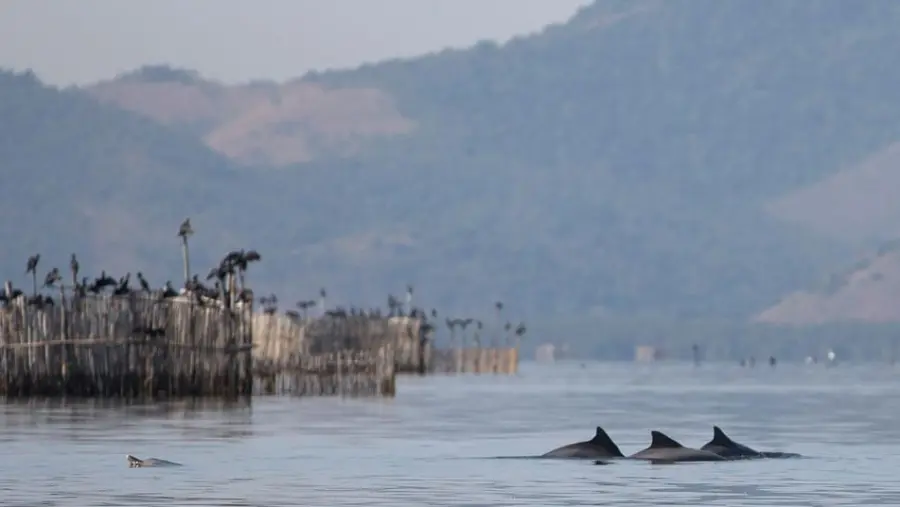
There are less than 30 dolphins in Guanabara Bay today. (Photo internet reproduction)

“Today, it is tough for them to leave the protected areas,” notes Azevedo.

The water is a little less dirty in them, and there is less noise. Boats make the seabed louder than Avenida Brasil in the rest of the bay. An unruly cacophony of droning and buzzing, generated by the constantly running boat engines and the constant rocking of the boats. Scientists point out that the bottom of the water is louder than the surface.

For harbor porpoises, the noise pollution is unbearable. They use echolocation to find their food, especially sea bass and shrimp. And they communicate with a variety of sounds, whether hunting in groups, warning of danger, or in a range of complex social interactions.

Magalhães Corrêa was wrong about the species’ geographic distribution, as it occurs in coastal bays from Honduras to Santa Catarina. Still, in his way, he was right about the special status of Guanabara porpoises.

“They are warriors. They resist and insist. And they fascinate us. We’ve never known the species as well as we do now, thanks to years of research, dedication, and technology. But paradoxically, they have never been so rare and threatened,” emphasizes Maqua researcher Rafael Ramos Carvalho.

Guanabara dolphin babies have little chance of reaching adulthood because they are victims of aggression. The first is bycatch; quite a few suffocate when they get caught in trawl nets.

A much greater enemy, however, is pollution. Mammals and porpoises expend immense amounts of energy to survive in the water. Their metabolism is intense, and they need to eat a lot. As a result, they also ingest large amounts of pollutants in the water and the fish and crustaceans they feed.

The pollutants accumulate in the fatty tissues throughout the animals’ lives. Since mothers pass 80-90% of their fat to their young in their energy-rich milk, harbor porpoise pups are contaminated with pollutants from birth. There is also transmission during pregnancy through the placenta.
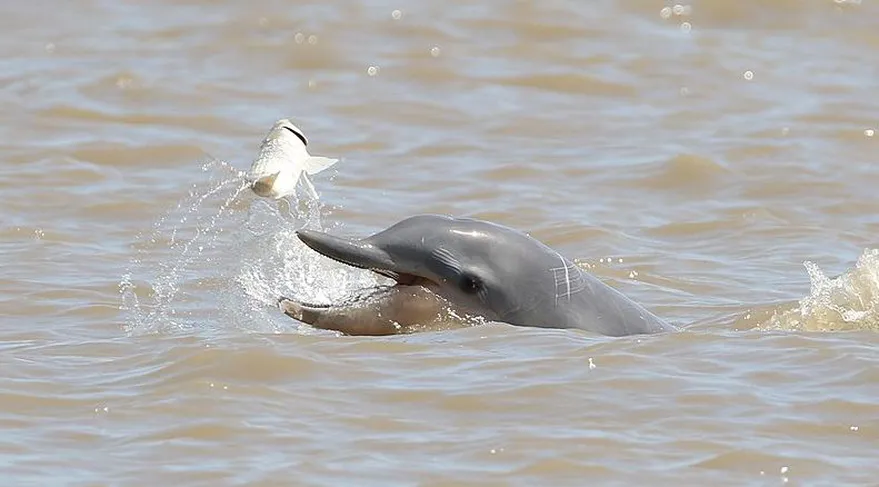
Guanabara dolphin babies have little chance of reaching adulthood because they are victims of aggression. (Photo internet reproduction)

“At six years old, a boto already has a brutal load of contaminants. It’s so bad that females almost always lose their first calf because it’s already born with an immune system weakened by pollution and can’t resist disease,” Brito Junior explains.

At around six years of age, the accumulated pollutants also cause the animals’ defenses to weaken, and most of them die.

In Guanabara, where there are no sanitation facilities, domestic sewage and industrial pollutants are as aggressive and deadly as PCBs, Ascarel, dioxins (from the incineration of domestic and industrial waste), and flame retardants, which are still present years after their release.

“Brazilian whales have the highest contamination rate ever recorded in any animal in the world,” says José Lailson Brito Junior, who stresses that the same pollutants also affect humans exposed to them:

“Everything we see in whales is also happening to us, on a different scale, but it still affects us. The boot warns us,” he adds.

Theoretically, the Guiana dolphin could venture into the sea. However, the species is a resident, living all its life in the bay where it was born. And the Guanabara insists on the bay that Magalhães Corrêa called “a true tropical garden, the largest and most beautiful in the world, where biology is waiting for man to teach it.”

Read More from The Rio Times

The Rio Times · Power Map
See who really holds power in Latin America
Click to open the Power Map

Rotate for Best Experience

This report is optimized for landscape viewing. Rotate your phone for the full experience.