Brazil: how bars and restaurants help to revitalize degraded areas of cities
By Daniel Salles
A small stretch of Barra Funda, in São Paulo, concentrates fundamental municipal services aimed at homeless people.
This is the case of the Special Shelter Center for People in a Period of Convalescence, exclusively for those who have nowhere to live and have been discharged from hospital.
On the same street, Boracéia, by the way, there is a Basic Health Unit and an Ambulatory Medical Assistance. Two blocks away is the Coexistence Center for Homeless Adults.
All this to say that this area does coexist with a reality that many people prefer to ignore or keep their distance from.

But nothing that hindered the construction of a series of high standard residential buildings. Or that it is preventing the region from becoming a stronghold for young people and cool adults.
One of the factors that are attracting this group is a lot of modern gastronomic ventures, such as Trilha Fermentaria.
One block from UBS Boracéia, it is the most recent on the list — it opened its doors in November.
This is the second operation of the Trilha brewery, whose headquarters, in Perdizes, barely have space to accommodate the clientele.
“Gastronomy has enormous power to transform less frequented regions, as it is capable of moving people to any corner”, says Daniel Bekeierman, one of the partners.
“Just by attracting more people to this stretch of Barra Funda we are already contributing to its improvement, which fills us with pride.”
The price of local rents, more affordable than in other neighborhoods, and the size of available properties weighed in on the choice for the neighborhood.
But the brewery also likes the idea of presenting itself as a destination — in other words, it prefers to stay away from the more obvious circuits.
“It is more advantageous to serve customers who plan to visit us, with whom we establish much stronger bonds, than with passers-by who come in by chance”, justifies the same partner.
Trilha Fermentaria occupies a 650 m2 warehouse where up to 100 people can stand or 50 sit. Served by waiters in red overalls, it has 18 taps of draft beer.
A glass of the cheapest option, the pilsner, costs R$15. The most expensive liquids, such as the Russian Imperial Stout aged in a bourbon barrel, cost R$59 a glass.
Currently, all draft beers are made at the Perdizes unit, which is expected to be renovated in 2023 to accommodate more people and say goodbye to production.
In the coming weeks, however, the new brewery factory, on Rua Anhanguera, also in Barra Funda, should start operating.
With the change, production, in charge of brewmaster Beto Tempel, will jump from 7,000 to 13,000 liters per month.
Unlike the head office, the branch has a kitchen. It sells snacks like cured fish, served with fennel pickles, green apple and yogurt (R$29) and a dozen pizzas that have malt in the dough and the same yeast as the beers.
One of the toppings combines beetroot, goat cheese, radicchio and almonds (R$50).
“Usually, everyone turns up their noses at the opening of a bar on the street where they live,” notes Bekeierman.
But he says that the neighbors comment on how they like having the Trilha close by, also because it is another option.
The novelty is next door to Komah, the most praised Korean in the city. The other gastronomic attractions in the neighborhood, however, are on the other side of the Metro and CPTM rails.
Gastronomy is one of the main ingredients of a real estate project that plans to redesign the region of Largo da Batata, in Pinheiros.
Developed by Jacarandá Capital, a real estate investment manager, it was named Lapi, a combination of the first syllables of Largo and Pinheiros.
For the first stage, which will cost R$270 million, around 40 properties were acquired, many of which are in poverty. All in all, there are more than 20,000 m2.
The goal is to lease all these properties, by 2024, to gastronomic ventures, clothing and accessories stores, art galleries and the like.
Only 11 properties will be demolished due to structural damage. And the goal is to use waste as much as possible — in making the floor in common areas, for example.
The other properties will be refurbished and interconnected, as the complex provides access through streets and pedestrian-only routes that will be built within the acquired blocks.
“The public of the developments that will be installed in Lapi will help to occupy Largo da Batata at different times and days of the week, changing the dynamics of the region a little”, says Eduardo Cytrynowicz, one of the founders of Jacarandá Capital.
According to him, the region was never really revitalized because, despite improvements such as the Metro station on Avenida Faria Lima, the occupation progressed at timid steps.
“We are occupying a prime space in São Paulo, through which thousands of people pass daily, and expanding its usefulness”, completes the investor.
“We focus on upgrading properties and integrating them with the surroundings. We are taking advantage of opportunities that are usually overlooked by traditional developers.”
Ventures such as the New York-based Chelsea Market and the London-based Borough Yards — which in the past became magnets for tourists in uninviting regions — served as inspiration for the novelty in São Paulo.
Lapi’s architecture is in charge of the Superlimão office and the masterplan was prepared by SPOL Architects and Metamoorfose Studio.Almost a third of the properties will be occupied by gastronomic ventures.
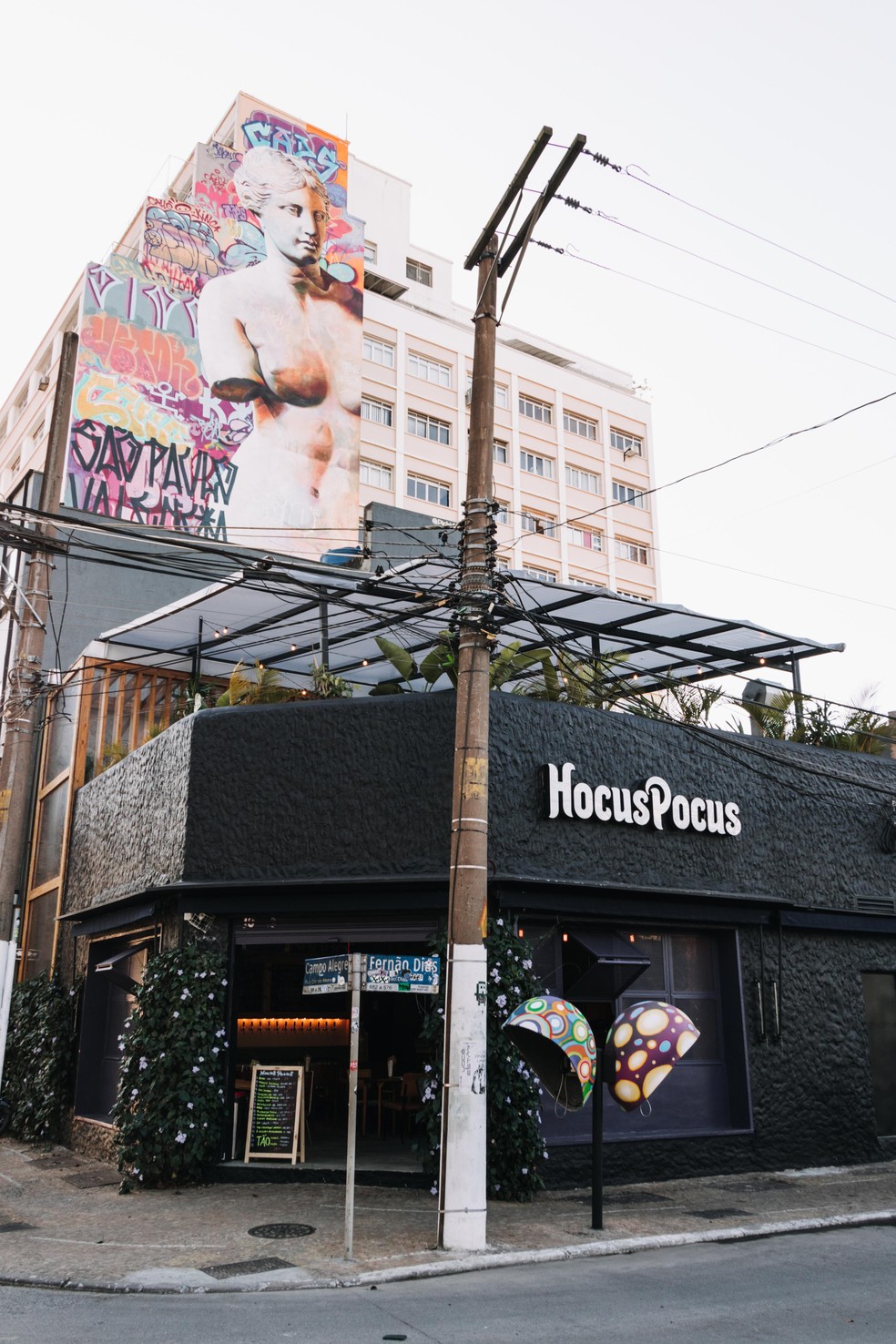
This is the case of the first and only branch of the Rio de Janeiro brewery Hocus Pocus.
It has been open since October in a large corner house painted black. With the right to a rooftop, it has large windows that allow you to contemplate the Largo da Batata — historically neglected — and spreads tables along the sidewalk.
The novelty has 18 draft beer taps and also serves drinks and natural wines, in addition to snacks such as meat croquette cooked in beer with onions, peppers, tomatoes and greens (R$35).
“Gastronomy is a tourist attraction”, recalls Cytrynowicz. “We want people to feel welcomed and use the space to live a new experience in the city, with the possibility to have lunch, dinner, see an exhibition and go shopping.”
Ambev’s Hoegaarden beer bar and the Cartel 011 store are also part of Lapi, in addition to Hocus Pocus. The next tenant whose name is already confirmed is the Oriba brand.
Anyone who doubts what gastronomy can do for abandoned regions should visit Mercado Novo, in the center of Belo Horizonte.
Until 2018, it was known for an undeniable air of neglect, despite selling items such as candles and uniforms and offering all sorts of graphic services, as well as hosting a night market.
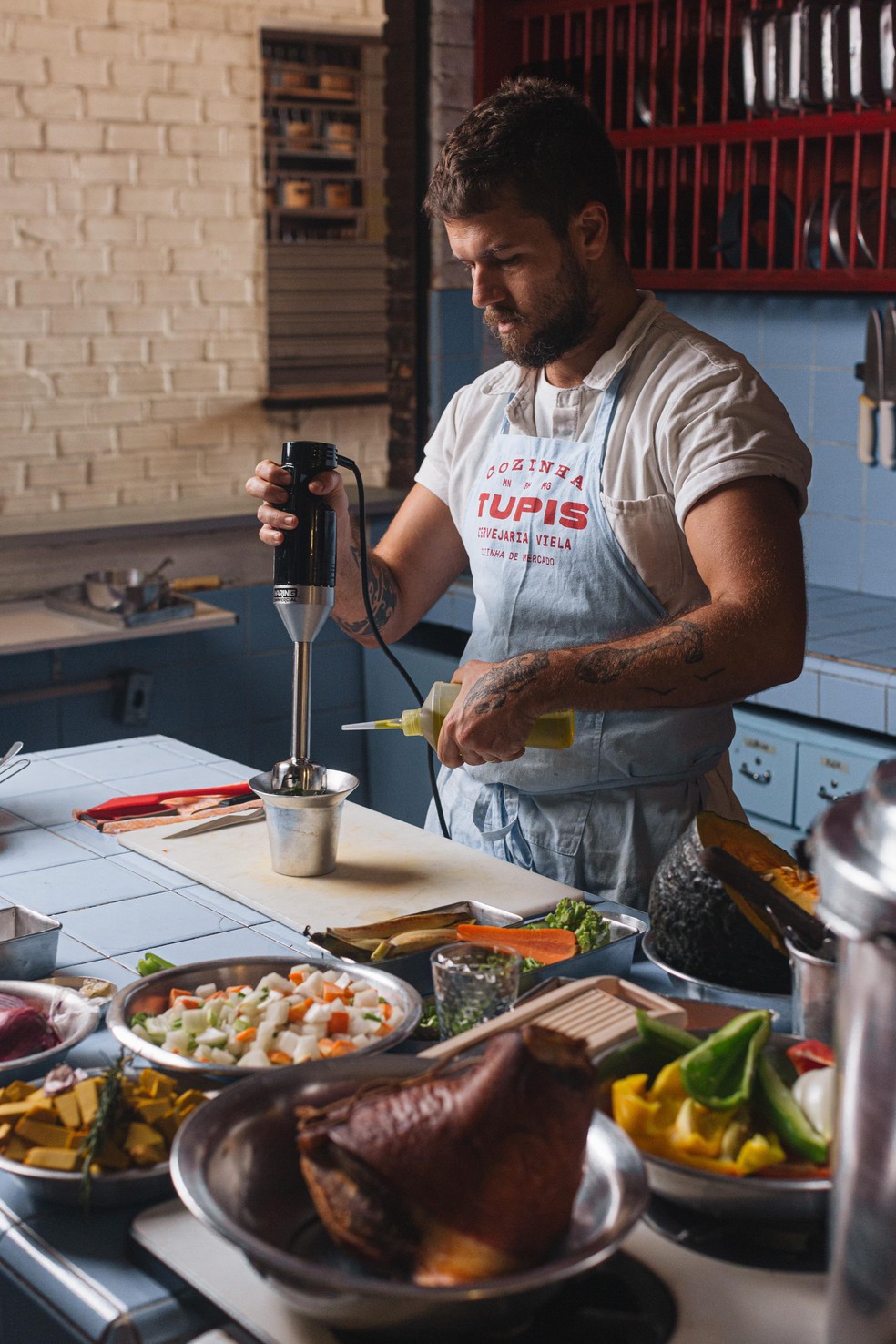
On the second floor, where about 40 businessmen were resisting, a group of young businessmen inaugurated that year a bar and a restaurant — Distribuidora Goitacazes and Cozinha Tupis —, in which R$160,000 were invested.
The group also owns the Juramento 202 bar and the Viela brewery, located in a neighborhood that is not part of Belo Horizonte’s trendy axis.
The brewery costs R$200,000. The bar, a kind of headquarters for Distribuidora Goitacazes, costs R$56,000.
Casual, Juramento 202 started selling draft beers for R$5 or R$7, depending on the glass.
The mission of the address, after all, is to democratize the consumption of craft beer and bring the drink closer to the bohemia of Minas Gerais.
At Mercado Novo, success was immediate, which led a hundred similar businesses to settle in the place — and make it one of the busiest at night in Belo Horizonte.
The setting and visual communication adopted by most of the new developments, starting with Cozinha Tupis and Distribuidora Goitacazes, were inspired by the vintage atmosphere of the market itself.
Even the third floor, before the flies, gained new stores. And the pits, which cost around R$15,000, today cost R$120,000 due to the success.
One of the novelties on the market is the YVY Herbarium. All clad in wood, like a pharmacy from the past, it is the bar of the artisanal gin brand YVY.
With walls covered in retro tiles, the Odeon brewery is an imperious scale, as well as the Lamparina cachaça factory and the Café Jetiboca store.
Charcutaria Tapera, Painço bakery and Rotisseria Central, led by chef Djalma Victor, are some of the good options to satisfy hunger.
The resounding success of Mercado Novo motivated other similar initiatives in the city.
Facing Raul Soares square, also in the center of Belo Horizonte, Galeria São Vicente was known, until recently, only for the workshops that repair sewing machines.
At night it lived on the flies. With the opening of two cool bars on the second floor — Palito and Pirex —, it receives an intense flow of young people until the early hours of the morning. It has everything to attract new entrepreneurs in the field.
Enthusiastic about the trajectory of the Mercado Novo, the Cozinha Tupis group bet on yet another abandoned address in the city, Praça Pisa na Fulô, in the Carlos Prates neighborhood.
In mid-2022, they opened a pizzeria there with a name that already says what it came for: “Forno da Saudade” (Nostalgia Oven).
Nostalgia, obviously, for a time when the region was experiencing better days. The recipe for revitalizing the region, however, the group already has on the tip of their tongue.
With information from Valor Econômico
This article was produced by The Rio Times’ automated newsroom system. How we use AI · Report an error · Editorial responsibility: Matthias Camenzind, Editor-in-Chief