
In the five centuries that separate the beginning of the colonial project and the present day, three cities were chosen as the administrative headquarters of Brazil.
However, a curious fact may cause some confusion: Curitiba, Paraná state capital, was instituted as the capital of Brazil for only three days, from March 24 to 26, 1969. It was a measure to strengthen support for the military dictatorship in the region.
Since the decision was more symbolic than practical, this survey focuses on the three de facto capitals: Salvador, Rio de Janeiro, and Brasilia, in that order.

SALVADOR (1549-1763)
Although the Portuguese arrived in Brazil in 1500, the project to colonize the territory only began effectively 49 years later. On March 29, 1549, the Portuguese soldier Tomé de Sousa landed in Bahia state to found the city of São Salvador.
The mission represented a new step by the Portuguese administration after the failure of the hereditary captaincies model, large strips of land that, at first, were donated to noblemen from Portugal for settlement and economic development.
“There was an attempt to centralize the colonial territory in Salvador,” says geographer Pedro Vasconcelos, professor of graduate programs at the Federal University of Bahia (Ufba) and the Catholic University of Salvador. To this end, Tomé de Sousa was appointed Brazil’s first governor-general.
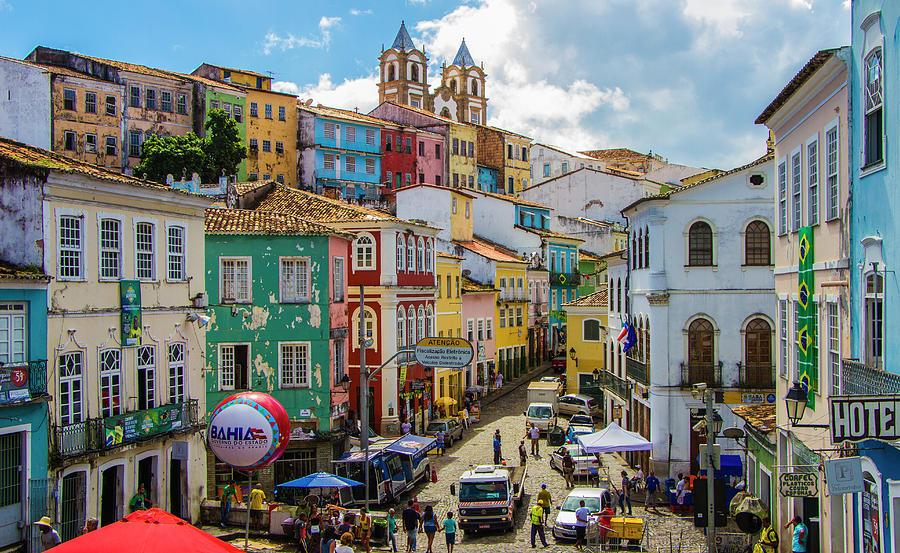
Salvador acquired such importance during the colonial period that it became the second most economically relevant city in the Portuguese Empire, second only to Lisbon.
Agricultural production, mainly sugarcane and the slave trade, were the engines of the economy, which benefited from its privileged location, with communication with Europe and Africa.
As Vasconcelos, author of the book “Salvador – Transformations and Permanences (1549-1999)” explains, the wheel started turning with the discovery of gold in Minas Gerais. This activity added to strategic interests in occupying the southern part of the colony, threatened by conflicts with the Spanish, which led the Portuguese to move the administrative headquarters to Rio de Janeiro in 1763.
“The change of capital is a political decision, but economic change does not happen quickly,” says the geographer. For him, Salvador maintained its importance in the territory for the following decades. No wonder that, between 1822 and 1823, the city was the stage for decisive battles during Brazil’s war of Independence.
RIO DE JANEIRO (1763-1960)
Before becoming the seat of the colonial administration, Rio was already a slave trading post. Its population grew as mining activity increased in Minas Gerais and São Paulo since a port was needed to transport the gold extracted.
The city smelled of whale oil, says Isabel Lenzi, a historian from the Museu Histórico Nacional (National History Museum) in Rio de Janeiro. Since whale fishing had been an economic activity in the captaincy since the middle of the 17th century, Rio used the animal’s oil for public lighting.
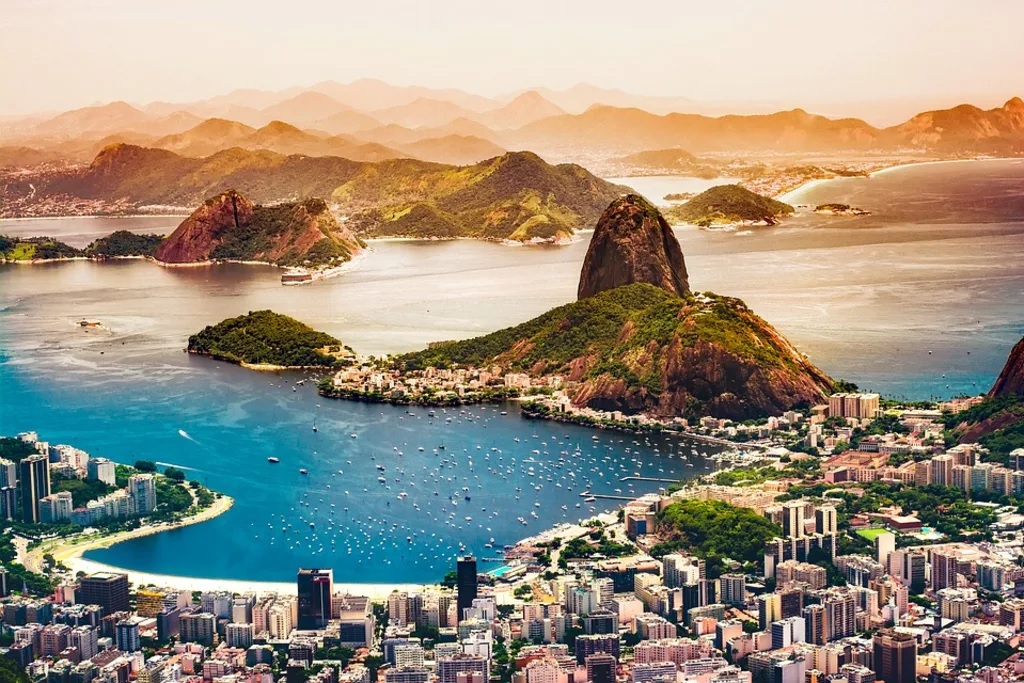
Little by little, it acquired political prominence, consolidated with the arrival of the Portuguese court in 1808. Some Bahians argued that Salvador had a greater capacity to house Don João the 6th and his entourage, but the position of Guanabara Bay, which was less susceptible to falling in the face of a foreign attack, weighed heavily on the royal family’s decision.
“When the court came here, the population grew a lot, in numbers, and also became more cosmopolitan,” says Lenzi. Between 1815 and 1821, the city held the title of capital of the United Kingdom of Portugal, Brazil, and the Algarve. In 1822, with Independence, it officially became the first capital of Brazil.
“It was Brazil’s political and cultural center, and people wanted to imitate Rio. This status went beyond the Empire and was valid for most of the Republican period, especially in the first half of the 20th century.
According to Lenzi, this situation would change, but not only because of the transfer of the capital to Brasília, in 1960: “Brasília was not able to gain a leading role right from its foundation”.
The historian cites two symbolic milestones of this loss of prestige. One is the demolition in 1976 of the Monroe Palace, a sumptuous early 20th-century building that housed the Senate from 1925 to 1960.
The other refers to the merger of the state of Guanabara, which existed in what was then the municipality of Rio de Janeiro from 1960 to 1975, with the state of Rio de Janeiro, a move that shook the centrality of the state capital for the country’s political decisions.
BRASÍLIA (1960-PRESENT)
The city of Juscelino Kubitschek’s dreams, built to house the Brazilian Federal District, was delivered on April 21, 1960, the anniversary of Tiradentes’ death.
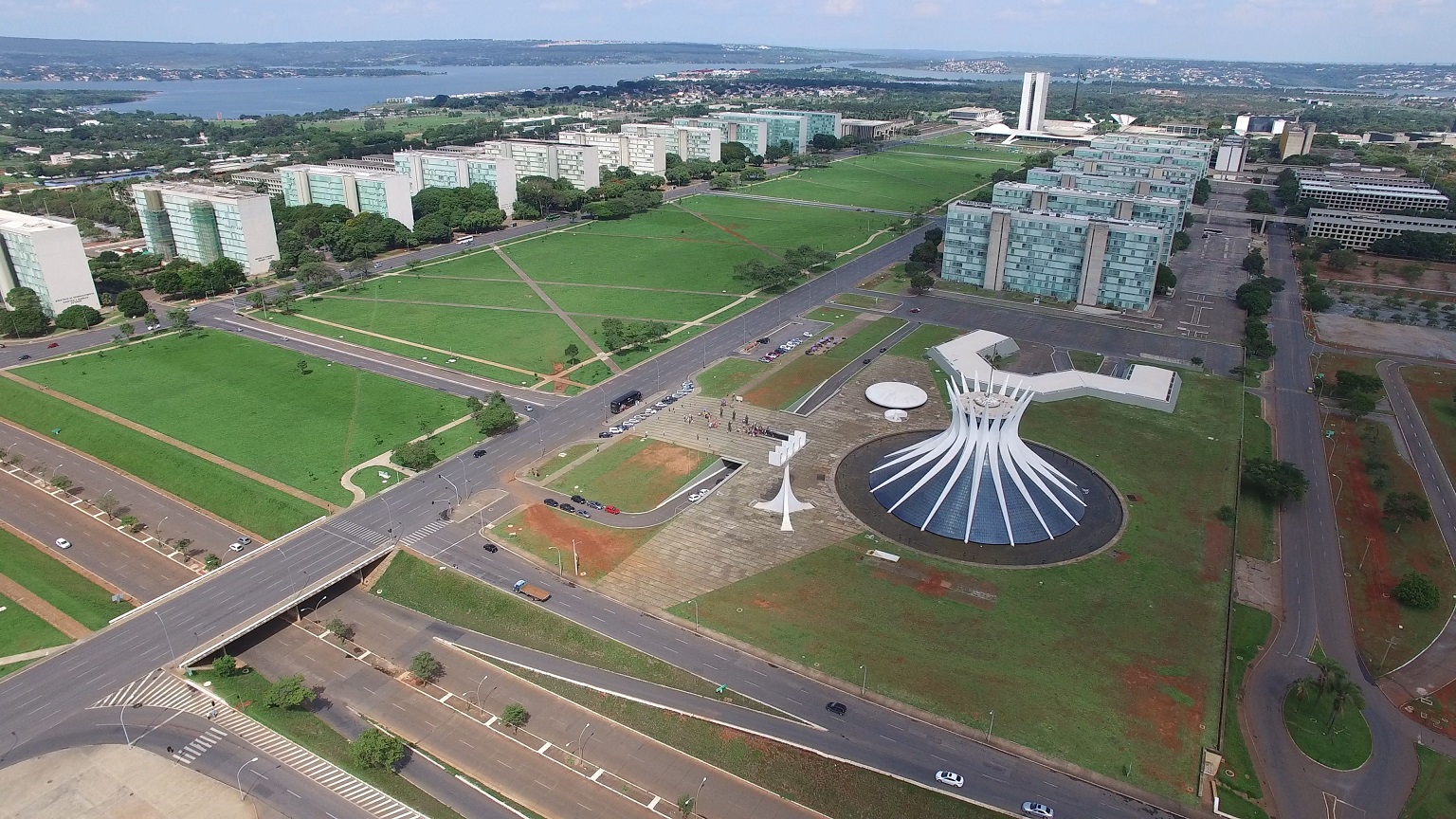
The idea of a capital in the center of the country, however, is much older and dates back to the early years of the 19th century. Since the arrival of the Portuguese court in Brazil, there was a desire to build a capital in the central point of the territory, where three major Brazilian rivers are born, Tocantins, São Francisco, and Paraná.
The reasons for building Brasília were at least three. Being far from the coast, the capital would be better protected in case of war. The federal government would suffer less popular pressure there. And, with the construction, the occupation of the Brazilian interior would be stimulated.
As Juscelino wrote in his book “Por que construí Brasília” (Why I built Brasilia), the impetus came during a rally. A man asked if the candidate intended to put into practice a provision in the Constitution that provided for moving the capital to the Central Plateau.
Juscelino reportedly replied: “If I am elected, I will build the new capital and move the seat of government.”
Today, Brasília houses the headquarters of the Executive, Legislative, and Judicial branches of government. It was designed by architects Oscar Niemeyer and Lúcio Costa and was built in less than four years by more than 60,000 workers.
With information from Folha de S.Paulo
More: Brazil news in English, every day from The Rio Times.
This article was produced by The Rio Times’ automated AI newsroom. Editorial responsibility: Matthias Camenzind, Publisher and Editor-in-Chief. The Rio Times also runs Ask Rio Times, which answers from 100,000+ of our own articles, the daily Latin America Power Map, and prediction-market odds on elections and markets.. How we use AI · Report an error
Brazil runoff, Sunday, October 25: When is the Brazil runoff election. Latest: Brazil runoff polls, Flávio 51%, Lula 49%.