Brazil Debates Its Next Pension Reform as the Last One Unravels
Fiscal Policy
Key Facts
—The bill. Pension spending hit a record R$1.03trn ($200bn) in 2025, about 12 percent of national output across all schemes.
—The gap. To close the accounts the treasury paid in R$320.9bn ($62.3bn), equal to roughly thirty-one percent of total pension spending.
—The courts. In June the Supreme Court struck down the minimum age for hazardous-work pensions, a rule the 2019 reform had introduced.
—The legislature. A Senate committee cleared a special pension for 377,000 community health workers, costed above R$30bn ($5.83bn) over a decade.
—The hidden liability. More than 2,200 state and municipal schemes sit outside the reform, carrying an actuarial hole one professor puts above R$1.4trn ($272bn).
—The dissent. Not everyone accepts the premise. One economist has argued the deficit narrative is misleading and the real problem is informality.
Economists are drafting proposals for the Brazil pension reform they say the next government must pass. Meanwhile the courts and Congress are quietly dismantling the reform Brazil already has.
Seven years ago Brazil passed the hardest fiscal measure of its recent history. It raised retirement ages and rewrote how benefits are calculated, and it was sold as the fix.
The exceptions have been arriving ever since, one ruling and one bill at a time. Each is defensible on its own; together they are undoing the arithmetic.
How the Brazil pension reform is being taken apart
In October 2024 the Supreme Court removed the minimum retirement age of fifty-five for female police officers. That restored a three-year discount against their male colleagues, a rule that had been part of the overhaul.
Last month the same court went further. It invalidated the minimum age for special pensions granted to workers exposed to harmful substances, removing another pillar of the 2019 text.
Congress has been moving in parallel. Last month a Senate committee approved a constitutional amendment creating a special pension for community health workers and endemic-disease agents.
It covers roughly 377,000 professionals at a cost estimated during its passage above thirty billion reais over the coming decade. That works out near eight thousand reais per worker per year.
Luís Eduardo Afonso, a professor at the University of São Paulo, spoke to the newspaper Gazeta do Povo. He said the health-worker pension pushes in exactly the wrong direction, because once one group wins a carve-out, any other group can demand one.
The number that explains the panic
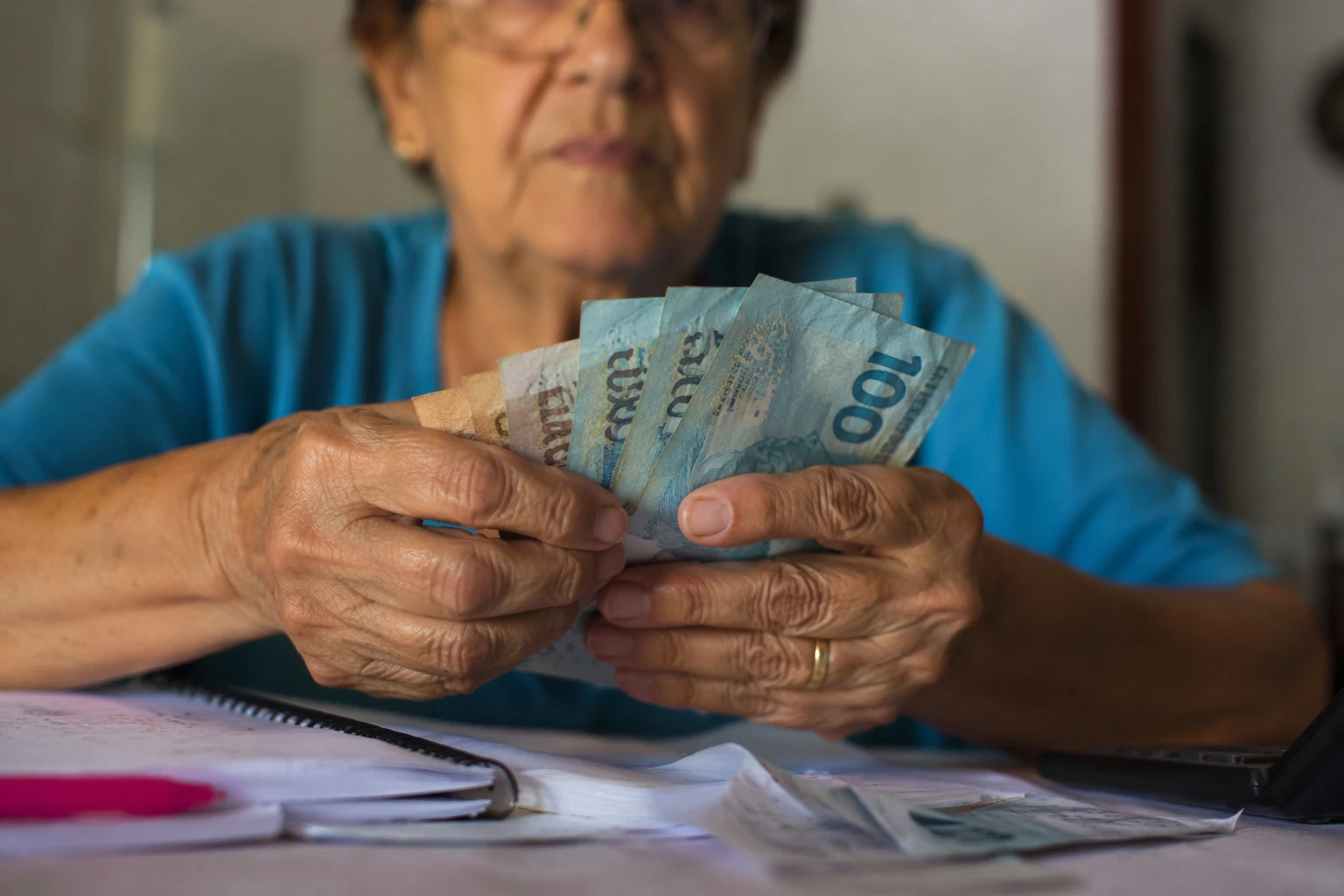
Brazil spent a record one trillion and thirty billion reais on pensions in 2025, close to twelve percent of everything the country produces. Contributions did not come near covering it.
The treasury transferred three hundred and twenty billion reais to close the gap. That sum equals roughly thirty-one percent of the total, money raised from taxes elsewhere or from borrowing.
The demographics move only one way. Life expectancy was around seventy-one in 2000 and should pass eighty-one by 2050.
The ministry projects the number of retirees will double over three decades as contributors stay flat. The contribution base is narrowing at the same time.
Brazil now counts more than thirteen million registered micro-entrepreneurs, up from about eleven and a half million in 2024. Each pays the pension system roughly eighty-one reais a month.
What a Brazil pension reform would have to touch
Three things were cut from the 2019 bill during its passage and remain unfixed. The first was an automatic trigger raising the retirement age as life expectancy rose, which would have removed the need for repeated political fights.
The second was the military, who received what Afonso calls a light reform and still do not contribute to fund their inactive years. The third is the more than two thousand two hundred state and municipal schemes, carrying an actuarial liability he puts above one point four trillion reais.
That single hidden liability exceeds a full year of all Brazilian pension spending. Most of those schemes are too small to employ the specialists needed to manage them.
The case against the panic
A serious dissent exists and deserves stating. Denise Gentil of the Federal University of Rio de Janeiro argued earlier this year that the deficit narrative is misleading and hides the system’s real problems.
On her account the answer is not another reform. She points instead to informality, unjustified payroll exemptions, unpaid social-security debts, and the 2017 labour overhaul that shrank the contribution base.
Both sides agree on one fact, which is the interesting part. Around half of Brazil’s working population does not contribute regularly, and nobody has solved how to bring platform and gig workers into a contributory system.
For an investor the timing matters more than the diagnosis. Both economists expect the subject to stay out of the presidential campaign, because, as Afonso puts it, talking about pension reform wins nobody any votes.
Is a new pension reform actually on the table?
No formal proposal has been tabled and no reform has been approved in 2026. Economists including Paulo Tafner, backed by former central bank governor Armínio Fraga, are preparing alternatives to present to presidential candidates.
The specialists quoted expect the issue to land on the next government rather than on the campaign.
Why does the treasury have to top up the pension system?
Brazil runs a pay-as-you-go system in which today’s workers fund today’s retirees, and contributions no longer cover the payments. In 2025 the treasury transferred three hundred and twenty billion reais against total pension spending of one trillion and thirty billion, a top-up equal to roughly thirty-one percent of the bill.
Do all economists agree a reform is needed?
They do not. Denise Gentil of the Federal University of Rio de Janeiro contends there is no structural deficit, and that the shortfall narrative justifies reforms which deepen exclusion. She argues instead for tackling informality, ending payroll exemptions and collecting unpaid social-security debts.
More: Brazil news in English, every day from The Rio Times.
Frequently Asked Questions
How much did Brazil spend on pensions in 2025, and how large was the government funding gap?
Pension spending reached a record R$1.03 trillion ($200 billion) in 2025, equivalent to about 12 percent of national output across all schemes. To cover the shortfall, the treasury paid in R$320.9 billion ($62.3 billion), representing roughly 31 percent of total pension spending.
What actions have Brazil's courts and Congress taken that are undermining the 2019 pension reform?
In June the Supreme Court struck down the minimum age requirement for hazardous-work pensions, a rule introduced by the 2019 reform. Separately, a Senate committee approved a special pension for 377,000 community health workers estimated to cost above R$30 billion ($5.83 billion) over a decade.
What is the hidden liability posed by state and municipal pension schemes in Brazil?
More than 2,200 state and municipal pension schemes sit outside the 2019 reform entirely. One professor estimates the actuarial hole carried by these schemes exceeds R$1.4 trillion ($272 billion).
Connected Coverage
Brazil’s Pension Deficit Grows 60% in Nine Years
This article was produced by The Rio Times’ automated newsroom system. How we use AI · Report an error · Editorial responsibility: Matthias Camenzind, Editor-in-Chief