Bolsa Mexicana de Valores Operator Beats Q2 Forecasts
Mexico · Business
Key Facts
—Net profit. MX$406 million (US$23.3 million) in Q2 2026, up from MX$400 million a year earlier.
—Total revenue. MX$1,198 million (US$68.9 million), driven by capital markets and derivatives.
—Capital markets income. Rose 16%, supported by a 20% jump in average daily traded value.
—Custody growth. Indeval revenue grew 9% as assets under custody climbed 13%.
—Derivatives boost. Revenue up 9% on stronger demand for dollar-peso futures contracts.
Grupo BMV, the parent company that operates the Bolsa Mexicana de Valores, delivered a modest second-quarter beat as heightened market volatility drove more trading, clearing, and custody business across its platforms.
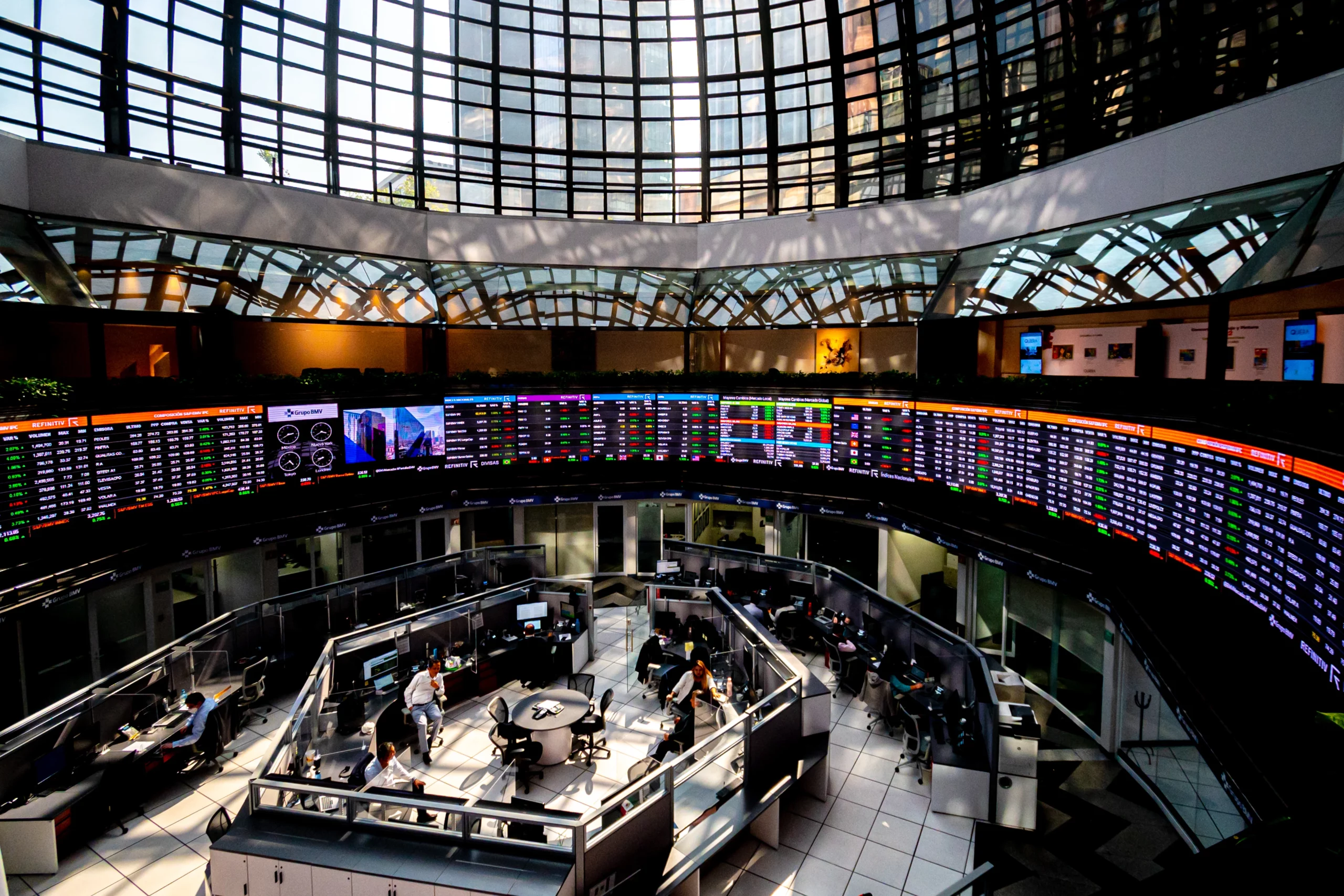
What a Bourse Operator Actually Sells
When a stock exchange reports earnings, the revenue streams can feel opaque to anyone who does not work in finance. Grupo BMV, known by its ticker BOLSAA on the Mexican Stock Exchange, earns its keep from three main activities: listing fees, trading and clearing fees, and post-trade custody services.
Listing fees are what companies pay to have their shares or debt traded on the exchange. Trading fees are the tiny cuts the bourse takes every time a stock, bond, or derivative changes hands.
Custody is the quieter, steadier business of safeguarding financial assets and settling trades through its central securities depository, Indeval. This three-legged model means the exchange can generate income even when markets are not setting records, as long as assets remain in custody and some trading continues.
How Volatility Lifted the Bolsa Mexicana de Valores
The second quarter of 2026 brought exactly the kind of environment where exchange operators thrive. Grupo BMV reported net profit of MX$406 million (US$23.3 million), edging past the MX$400 million (US$23 million) it booked in the same period of 2025.
Total revenue reached MX$1,198 million (US$68.9 million). The company pointed to greater dynamism in capital markets and derivatives, noting that unpredictable markets pushed more participants to hedge and trade actively.
For foreign investors and expats watching Mexican assets, this volatility often translates into currency swings and repricing of local stocks and bonds. The exchange itself benefits from that uncertainty by collecting fees on the surge of transactions.
Live Market IntelligenceMexico — Live Market Board
Rio Times · Live Market Intelligence
Mexico — Live Market Board
-0.01%
172,666.23
-15.81%
69,879.62
-0.01%
10,594.44
-1.41%
3,017,221
—
2,476.96
-2.49%
57,093.72
-0.69%
| Instrument | Last | Change | YoY | Prev. | High | Low | Volume |
|---|---|---|---|---|---|---|---|
| IPC MEX | 69,879.62 | -0.01% | +12.17% | 69,889.73 | 66,121 | 65,405 | 108,886,187 |
| USD/MXN | 17.06 | -0.24% | -8.58% | 17.10 | 17.08 | 17.01 | — |
| WALMEX | 48.07 | -0.62% | -14.38% | 48.37 | 48.65 | 48.02 | 10,781,446 |
| GMEXICO | 223.28 | +0.35% | +73.59% | 222.50 | 226.18 | 222.17 | 1,325,556 |
| FEMSA | 201.19 | -0.24% | +25.67% | 201.67 | 206.71 | 199.56 | 750,706 |
| CEMEX | 19.32 | +0.89% | +19.10% | 19.15 | 19.35 | 19.04 | 14,327,054 |
| GFNORTE | 193.98 | +1.18% | +14.36% | 191.71 | 195.79 | 191.83 | 1,579,115 |
| BIMBO | 60.98 | -0.96% | +11.89% | 61.57 | 61.46 | 60.29 | 1,048,115 |
| TELEVISA | 9.71 | +0.21% | +12.78% | 9.69 | 9.75 | 9.60 | 577,851 |
| AMX | 19.80 | -0.95% | +12.53% | 19.99 | 20.05 | 19.70 | 58,058,525 |
| GAP | 366.23 | +0.43% | -21.21% | 364.68 | 370.85 | 362.82 | 226,946 |
| ASUR | 275.04 | +1.25% | -15.28% | 271.64 | 275.08 | 271.31 | 15,451 |
| OMA | 233.50 | +0.62% | -6.48% | 232.06 | 235.00 | 230.62 | 555,693 |
| KOF | 188.04 | +0.86% | +18.94% | 186.44 | 188.56 | 185.52 | 425,273 |
| GRUMA | 252.90 | +0.11% | -21.85% | 252.61 | 254.74 | 250.36 | 90,048 |
| KIMBER | 39.74 | +0.43% | +8.85% | 39.57 | 40.09 | 39.33 | 490,551 |
| AMX ADR | 23.38 | -0.23% | +22.25% | 23.43 | 23.49 | 23.06 | 1,347,445 |
Trading, Custody, and the Derivatives Engine
The capital markets segment, which captures stock and debt trading fees, posted a 16% revenue increase. That gain was powered by a 20% rise in average daily traded value, a direct reflection of busier trading floors and electronic order books.
Derivatives revenue climbed 9%, fueled largely by heavier demand for dollar-peso futures. When the Mexican peso swings against the US dollar, importers, exporters, and fund managers rush to lock in exchange rates, and the exchange collects a fee on every contract.
This derivatives activity is especially relevant for international businesses operating in Mexico. A sudden move in the peso can erode profit margins, so many corporate treasurers use these futures to stabilize their costs, directly feeding revenue to the Bolsa Mexicana de Valores ecosystem.
Indeval and the Cross-Border Custody Story
Indeval, the group’s custody and settlement arm, recorded a 9% revenue increase. Assets under custody grew 13%, a sign that both domestic and international investors are parking more securities inside Mexico’s central depository.
Cross-border activity through the SIC, the International Quotation System that lets Mexican investors trade foreign-listed securities locally, also contributed. Each additional security held in custody generates recurring fees, making Indeval a reliable anchor for Grupo BMV’s income.
For an expat or foreign retiree holding a Mexican brokerage account, Indeval is the institution that ultimately safeguards those assets. Its growth suggests rising confidence in Mexico’s financial infrastructure, even during periods of market turbulence.
What This Means for Investors and Expats
A profitable, well-capitalized exchange operator is a cornerstone of market stability. For foreigners holding Mexican stocks or peso-denominated bonds, Grupo BMV’s steady earnings indicate that the plumbing of Mexico’s capital markets remains in good working order.
The rise in custody assets also hints that more international players are comfortable keeping securities within Mexico rather than holding them offshore. That can reduce costs and simplify tax reporting for individual investors who use local brokers.
However, the same volatility that lifted Grupo BMV’s revenue can cut both ways. Expats living on fixed incomes in Mexico should watch the peso’s moves closely, as the very dollar-peso futures activity that boosted derivatives fees reflects exchange-rate uncertainty that affects everyday purchasing power.
What Happens Next for the Bolsa Mexicana de Valores
Looking ahead, the exchange operator’s performance will likely track whether market volatility persists. If global interest-rate uncertainty or domestic political events keep traders on edge, trading volumes and hedging activity could remain elevated.
Grupo BMV has also been working to attract more initial public offerings and debt listings to its market. A stronger pipeline of new listings would add to the steady listing-fee income that complements the more cyclical trading and derivatives revenue.
For readers considering Mexican investments, the exchange’s health is one factor to weigh. A liquid, efficiently run bourse makes it easier to enter and exit positions, which matters whether you are buying a few shares of a local retailer or allocating a larger portfolio to Latin American equities.
More: Latin America news in English, every day from The Rio Times.
Frequently Asked Questions
What does Grupo BMV do?
Grupo BMV is the holding company that runs the Bolsa Mexicana de Valores, Mexico’s main stock exchange, along with derivatives, clearing, and custody businesses. It also operates Indeval, the central securities depository that settles trades and safeguards financial assets.
How does a stock exchange make money?
It earns revenue from listing fees paid by companies, transaction fees on every trade executed, and custody fees for safeguarding and settling financial assets through its depository. This diversified model means the exchange can generate income from both active trading and the long-term holding of securities.
Why did Grupo BMV’s profit rise in Q2 2026?
Higher market volatility boosted trading volumes in stocks and dollar-peso futures, while assets under custody at Indeval grew 13%, lifting recurring fee income. The combination of busier markets and a larger custody base pushed net profit to MX$406 million (US$23.3 million).
Connected Coverage
Sources: Grupo BMV.
This article was produced by The Rio Times’ automated newsroom system. How we use AI · Report an error · Editorial responsibility: Matthias Camenzind, Editor-in-Chief
In depth
LatAm Markets: Live Signals → — real-time movers, turnover leaders and FX across Latin America.