
BOLIVIA · ECONOMY
Key Facts
- The country Bolivia is a landlocked South American nation that exports natural gas and minerals and holds about 23 million tons of lithium resources.
- What happened The International Monetary Fund (IMF) forecast on 13 October that Bolivia’s economy will shrink 3% in 2026 and 1.5% in 2027.
- Alone in South America Bolivia is the only South American economy the IMF expects to shrink in both years; across the wider region, only Haiti joins it.
- The trend Output already fell 1.6% in 2025, so the IMF now sees at least three straight years of decline through 2027.
- Prices and jobs The IMF sees average inflation at 12.7% this year and 15.8% in 2027, with unemployment rising to 5.2% by 2027.
- Power Index Bolivia ranks 12th of 14 in The Rio Times Latin America Power Index, with 28.4 points (October 2026 edition).
- Still open A US$1.9 billion IMF loan approved on 2 October pays out in stages, and the IMF sees growth of only 0.5% in 2028.
The International Monetary Fund (IMF) expects Bolivia’s economy to shrink 3% this year and another 1.5% in 2027. Its October World Economic Outlook, released on Tuesday, makes Bolivia the only South American country forecast to contract in both years.
The gloomy outlook for Bolivia’s economy matters to foreign investors because Bolivia sold about US$1 billion of dollar bonds on international markets in May. It also follows the IMF’s approval on 2 October of a US$1.9 billion loan to rebuild reserves after years of dollar and fuel shortages.
What the IMF Forecast Says
The IMF now sees Bolivia’s output falling 3% in 2026, slightly less than the 3.3% drop it forecast in April. For 2027 it expects a further 1.5% decline, a year for which it gave no Bolivia figure in April.
Bolivia’s economy already shrank 1.6% in 2025, according to IMF data. Falls in 2026 and 2027 would make at least three straight years of contraction, before growth of just 0.5% in 2028.
Average consumer prices should rise 12.7% this year, down from 19.5% in 2025, before speeding up again to 15.8% in 2027. The IMF also expects unemployment to climb from 3.3% in 2025 to 4.5% this year and 5.2% next year.
Why Bolivia Stands Alone in South America
Every other South American economy is set to grow this year, from oil-rich Guyana at 22.3% to Paraguay at 4.5% and Chile at 0.6%. Chile’s figure, after an IMF cut, is the weakest positive forecast on the continent.
The IMF expects South America as a whole to grow 2.1% in 2026 and 2.4% in 2027. Bolivia’s economy faces the deepest contraction it projects for any country in the Americas this year.
Across Latin America and the Caribbean, only Haiti is also forecast to shrink in both years, by 1.7% in 2026 and 0.5% in 2027. Puerto Rico, a US territory, dips 0.1% this year but returns to growth in 2027.
What Is Behind the Slump
The IMF’s loan document blames falling natural gas output, budget deficits financed by the central bank and an overvalued fixed exchange rate. Lower gas income hit both the public finances and the supply of dollars, El Deber, a Santa Cruz daily, wrote after reviewing it.
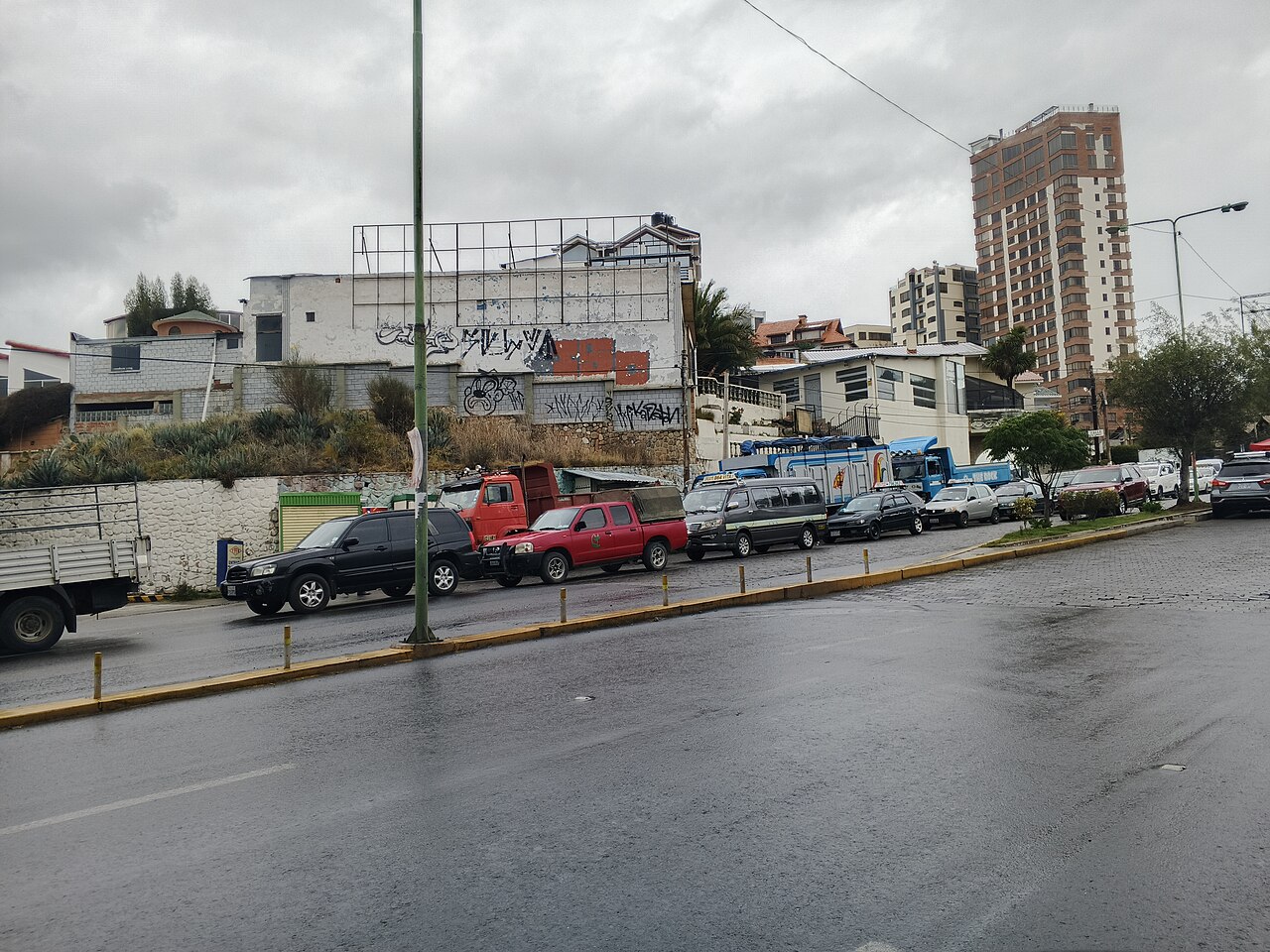
The result was years of dollar shortages and long queues for petrol and diesel. The government has raised diesel prices and, under its IMF deal, domestic fuel prices are due to cover their full cost from January 2027.
It has also cut spending and let the boliviano, the national currency, float after nearly 15 years at a fixed rate. The IMF expects public debt to jump from 83.3% of economic output in 2025 to 100.2% this year.
How Bolivia’s Own Forecasts Compare
In August, Bolivia’s central bank, the Banco Central de Bolivia (BCB), forecast about a 3.6% contraction for 2026, Correo del Sur, a Sucre daily, reported. Its third-quarter report trimmed that estimate slightly on stronger gold and silver mining, the Bolivian news site Eju reported.
The World Bank, in its regional outlook this month, forecast a 2.8% contraction for Bolivia in 2026. El Deber reported that this ranks Bolivia last among the 29 Latin American and Caribbean economies the bank covers.
Government forecasts were far milder only months ago. In July, then economy minister José Gabriel Espinoza told the Spanish agency EFE that protests would push 2026 into a 0.7% to 1% contraction.
Now out of office, Espinoza told the broadcaster Unitel last week that the slump “has nothing to do with a deterioration of the economy”. He said cutting inefficient public spending would slow growth but pay off in two or three years as private business revives.
What It Means for You
For holders of Bolivian dollar bonds, the forecast signals recession into 2027, though Moody’s says the IMF programme could back a better rating. The US rating agency has raised Bolivia to Caa2 from Caa3, a grade that still signals very high credit risk, and keeps a positive outlook.
For travellers and expats, the IMF deal means domestic fuel prices are due to cover their full cost from January 2027. Petrol queues persisted in several regions in early October despite larger deliveries, El Deber reported.
Bolivia holds about 23 million tons of lithium resources, behind only the United States and Argentina, according to the US Geological Survey. Cainco, a Santa Cruz business chamber, wants lawmakers to pass a new investment law by December, El Deber reported on Tuesday.
What Is Not Known
The IMF’s first review of Bolivia’s loan programme is due in December, and the remaining 11 disbursements depend on such reviews. That review will check fiscal targets for the end of September and reforms due by the end of October.
The October outlook gives no reason for average inflation rebounding to 15.8% in 2027, the year cost-covering fuel prices are due to start. How the government of President Rodrigo Paz, in office since November 2025, will respond to a longer recession also remains open.
More: Bolivia news in English, every day from The Rio Times.
Frequently Asked Questions
How much will Bolivia’s economy shrink, according to the IMF?
The IMF expects Bolivia’s economy to fall 3% in 2026 and a further 1.5% in 2027. It sees growth returning only in 2028, at just 0.5%.
Is Bolivia the only Latin American economy shrinking?
It is the only South American economy the IMF expects to contract in both 2026 and 2027. In the wider region, Haiti is also forecast to shrink in both years.
Why is Bolivia’s economy in recession?
The IMF links the slump in Bolivia’s economy to falling natural gas output, deficits financed by the central bank and a long-fixed exchange rate. Those problems led to shortages of dollars and fuel, and former economy minister José Gabriel Espinoza says spending cuts now weigh on growth too.
What does the forecast mean for US investors?
Bolivia’s dollar bonds remain high-risk, with Moody’s rating the country Caa2 even after an upgrade from Caa3. The US$1.9 billion IMF loan helps, but its money arrives in stages tied to regular reviews.
Sources: International Monetary Fund, World Economic Outlook, October 2026 (report, Annex Table 1.1.3), 13 October 2026; International Monetary Fund, DataMapper, Bolivia real GDP growth, World Economic Outlook (October 2026), 14 October 2026; International Monetary Fund, DataMapper, Bolivia inflation, World Economic Outlook (October 2026), 14 October 2026; International Monetary Fund, World Economic Outlook, April 2026 (report), 14 April 2026; US Geological Survey, Mineral Commodity Summaries 2026: Lithium, 2026; Brújula Digital, 13 October 2026; Los Tiempos (sovereign bond), 8 May 2026; El Deber, 13 October 2026; Unitel, 13 October 2026; Los Tiempos, 13 October 2026; El Deber (World Bank outlook), 12 October 2026; El Deber (public debt), 12 October 2026; El Deber (IMF programme document), 8 October 2026; El Deber (Moody’s), 7 October 2026; El Deber (fuel queues), 5 October 2026; El Deber (Cainco investment law), 13 October 2026; Eju (central bank report), 8 October 2026; Eju (José Gabriel Espinoza remarks to Unitel), 8 October 2026; Correo del Sur, 23 August 2026; Swissinfo (EFE interview with José Gabriel Espinoza), 22 July 2026.
This article was produced by The Rio Times’ automated newsroom system. How we use AI · Report an error · Editorial responsibility: Matthias Camenzind, Editor-in-Chief
In depth