Asia Intelligence Brief — Monday, October 12, 2026
Executive Summary
Asia Intelligence Brief for October 12: North Korea fires a suspected ballistic missile; Taiwan monitors Chinese live-fire drills; Kospi falls 3.1%.
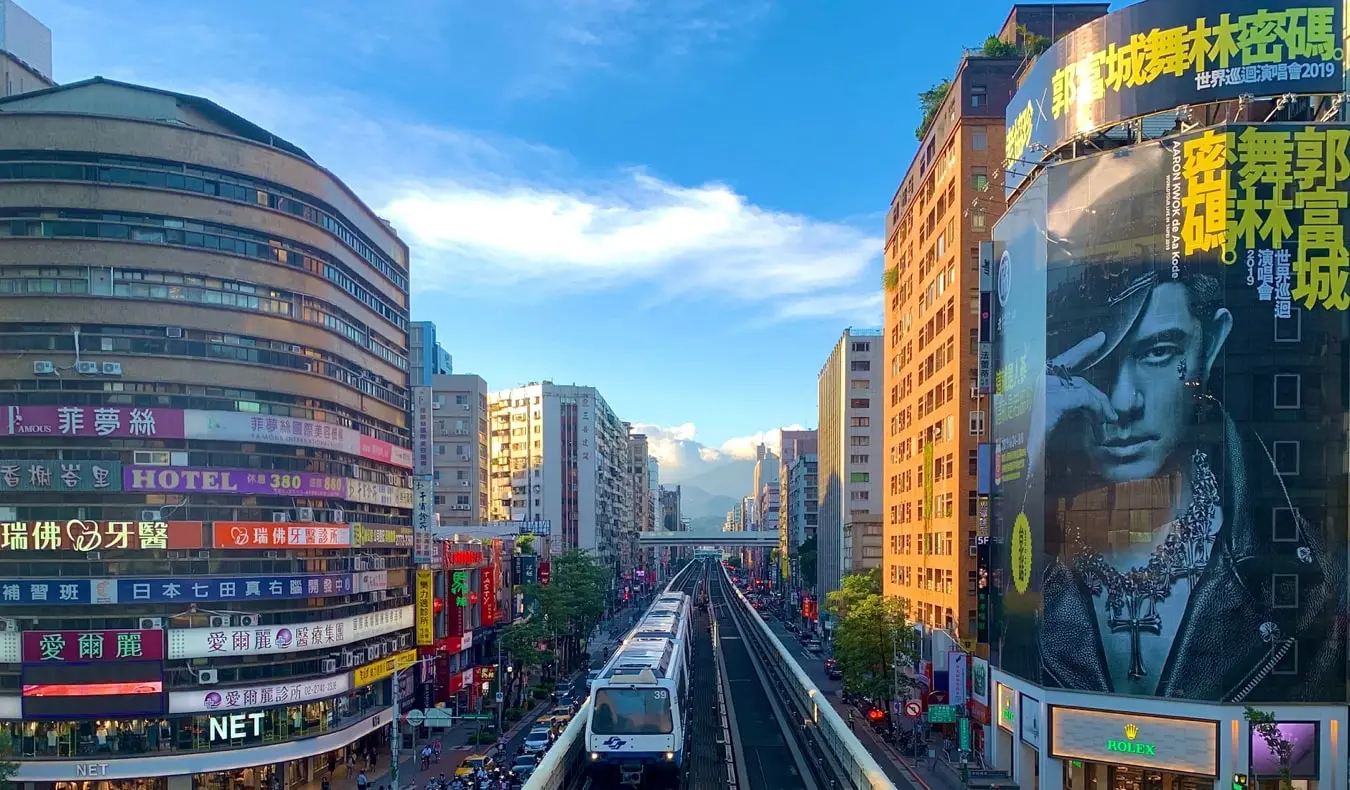
Asia begins the week with the sound of a missile falling into the sea and the sight of warships and aircraft moving along China’s coast. North Korea’s launch of multiple ballistic missiles on Monday morning, one of which flew more than 900 km according to Japan, is the region’s bluntest statement of the day. Taiwan’s defence minister, Wellington Koo, said the island was monitoring Chinese live-fire drills that maritime notices had scheduled through the week, South Korea’s military and Japan’s coast guard reported on 12 October.
The register is one of controlled escalation and watchful resolve. President Lai Ching-te used his national-day speech on Saturday to insist that Taiwan sought peace but would not surrender its freedom, while South Korea’s President Lee Jae Myung ordered firm action over alleged workplace safety deception involving heavy-metal detox injections. Leaders are speaking in the language of sovereignty, deterrence and state protection, even as markets show only partial confidence in the region’s stability.
The through-line is the coexistence of military pressure and selective cooperation. North Korea is demonstrating capability, China is projecting reach through drills while resuming joint patrols with South Korea in the Yellow Sea, and Taiwan is asserting political autonomy under the shadow of coercion. The region is not at war, but it is rehearsing the choreography of conflict while keeping some diplomatic and economic channels open.
Key Facts
—North Korea launch. North Korea fired multiple ballistic missiles towards the East Sea from the Pyongyang area at about 09:20 local time on 12 October.
—Chinese drills. No-sail notices covered five coastal areas from the South China Sea to Liaoning through the week.
—Taiwan speech. President Lai Ching-te said on 10 October that Taiwan would not surrender its freedom.
—Yellow Sea patrols. South Korean and Chinese vessels resumed joint patrols from 8 October in the provisional-measures zone.
—Kospi fall. The index dropped 3.1 per cent to 6,416.17 on 12 October.
North Korea: Signalling Without A Statement
The launch is a reminder that Pyongyang prefers to communicate through trajectories rather than communiqués. South Korea’s military announced the firing, and Japan’s coast guard assessed that the object had already fallen, on 12 October. The absence of an official North Korean statement leaves the region interpreting the event through radar tracks and threat assessments.
The timing matters because it follows South Korea’s test-firing of a domestically developed hypersonic missile the previous week. Pyongyang is responding to what it sees as a shift in the military balance, and it wants Washington and Seoul to register the message. For a US reader, the launch is less an immediate attack than a calibrated assertion that North Korea remains a factor in every security calculation on the peninsula.
Taiwan: Defiance Under A Drilling Shadow
Taiwan’s mood is one of political resolve wrapped in military vigilance. President Lai Ching-te’s national-day speech on Saturday framed the island’s position as a defence of freedom, and Defence Minister Wellington Koo confirmed on Monday that Taiwan was monitoring Chinese live-fire exercises along several coastal zones. The drills, announced through no-sail notices from the South China Sea to Liaoning, are scheduled to continue through the week, Japan’s coast guard reported on 12 October.
The Chinese exercises are not an invasion, but they are a form of coercive geography. By placing live-fire zones near Taiwan and along the coast, Beijing is demonstrating that it can constrict maritime space while keeping the conflict below the threshold of open war. For a US reader, the episode shows how Taiwan’s political calendar and China’s military calendar are now running in parallel, each shaping the other’s sense of urgency.
South Korea: Protection At Home And Abroad
South Korea is asserting itself on two fronts at once. President Lee Jae Myung ordered firm action after workers were allegedly given heavy-metal detox injections to conceal workplace exposure, with lead concentrations reported to have exceeded the legal standard by more than five times, SBS News reported on 12 October. The domestic scandal reveals a government trying to prove that state protection extends beyond the military perimeter to the factory floor.
At the same time, Seoul is pursuing technological ambition through MangoBoost’s plan to deploy 500 megawatts of AI servers across the United States, Japan and Southeast Asia, Seoul Economic Daily reported on 12 October. The juxtaposition of workplace safety enforcement and AI infrastructure investment shows a country that wants to be both a guardian and a global competitor. For a US reader, South Korea is signalling that it can manage internal vulnerabilities while expanding its technological footprint.
China: Pressure And Practicality In Parallel
China’s behaviour on Monday is a study in dual registers. The live-fire drills along multiple coastal zones project military reach and reinforce the message that Beijing will not tolerate what it sees as separatist drift in Taiwan. Yet the resumption of joint patrols with South Korean fishery-guidance vessels in the Yellow Sea provisional-measures zone from 8 October shows that Beijing is also keeping practical cooperation alive, SBS News reported on 12 October.
The combination suggests a leadership that wants to intimidate without isolating itself. By maintaining working-level maritime cooperation with Seoul while conducting drills near Taiwan, China is testing how much pressure it can apply before regional partners recoil. For a US reader, the lesson is that Chinese strategy is not a single lever but a set of calibrated instruments, some coercive and some cooperative.
What This Means From Latin America
The most immediate channel for Latin America is the reminder that Asian security tensions can disrupt the sea lanes on which commodity exports depend. The live-fire zones along China’s coast and the missile activity near Korea do not yet threaten shipping directly, but they raise the risk premium on routes through the western Pacific. Latin American exporters of copper, soy and other raw materials would feel any sustained disruption through higher freight costs and delayed deliveries.
The diplomatic angle is subtler. As Asian powers compete for influence and technological leadership, Latin American governments may find themselves courted for infrastructure, digital and energy partnerships. South Korea’s AI-server expansion and the planned East Asia Summit discussion of green development and nuclear energy on Wednesday suggest that the region’s economic ambitions are turning outward, and Latin America could be a beneficiary if it positions itself as a partner rather than a bystander.
What We Are Watching
- Tuesday 13 October, 01:30 Lisbon time: Australia NAB business confidence — The September figure is forecast at -9, down from -8. A further decline would reinforce the sense that regional economic sentiment is weakening even where equity markets hold up.
- Wednesday 14 October, 01:00 Lisbon time: Singapore GDP growth rate — The third-quarter figure is forecast at 0.9 per cent quarter-on-quarter, down from 1.4 per cent. Singapore is a bellwether for trade-dependent Asia, and a slowdown would confirm the region’s export anxiety.
- Wednesday 14 October, 02:30 Lisbon time: China inflation rate — September consumer inflation is forecast at 0.3 per cent, down from 0.4 per cent. Persistent low inflation would signal weak domestic demand despite Beijing’s military assertiveness.
- Wednesday 14 October, 04:00 Lisbon time: China balance of trade — The September surplus is forecast at 114.5 billion dollars, down from 119.1 billion. A narrowing surplus would show how global demand and Chinese export competitiveness are shifting.
- Wednesday 14 October: East Asia Summit — Leaders of ASEAN states, Australia, China, India, Japan, New Zealand and South Korea are due to meet, with green development and nuclear energy on the agenda. The summit will test whether security tensions can coexist with cooperative economic planning.
- Week of 12–18 October: Chinese coastal live-fire exercises — The drills are scheduled to continue through the week, according to maritime notices. Their duration and proximity to Taiwan will shape the island’s threat perception and any US or allied response.
Frequently Asked Questions
What did North Korea launch on 12 October?
North Korea fired multiple ballistic missiles towards the East Sea on 12 October; Japan said one flew more than 900 km. Japan’s coast guard assessed that the object was probably a ballistic missile and had already fallen, Japan’s coast guard reported on 12 October.
Why is Taiwan monitoring Chinese live-fire drills?
China’s Maritime Safety Administration issued no-sail notices for five coastal areas, from the South China Sea to Liaoning, with drills scheduled through the week. Taiwan’s Defence Minister Wellington Koo said on 12 October that the island was monitoring the exercises, which are seen as coercive pressure on Taiwan.
What did President Lai Ching-te say on 10 October?
President Lai Ching-te said in his national-day speech that Taiwan sought peace but would not surrender its freedom and that the rights of Taiwan’s people must be respected. The remarks were reported by Taiwan’s presidential office on 12 October amid heightened Chinese military activity near the island.
What is the significance of the Yellow Sea joint patrols?
South Korean fishery-guidance vessels and Chinese coastguard ships resumed joint patrols in the Yellow Sea provisional-measures zone from 8 October, according to the South Korean Embassy in China. The patrols show that Beijing and Seoul are maintaining selective practical cooperation even as regional security tensions rise.
This article was produced by The Rio Times’ automated newsroom system. How we use AI · Report an error · Editorial responsibility: Matthias Camenzind, Editor-in-Chief
LatAm Markets: Live Signals → — real-time movers, turnover leaders and FX across Latin America.