Asia Intelligence Brief — Monday, August 24, 2026
Executive Summary
Asia Intelligence Brief for August 24: Samsung promised a record payout of up to 110 trillion won and its shares closed 8.7 per cent lower.
Rio Times · Asia Intelligence Brief August 24, 2026
Asia Intelligence Brief — Monday, August 24, 2026
Giving It Back
Key Facts
- The announcement. Samsung Electronics said it would return as much as 110 trillion won to investors this year, roughly about US$79 billion.
- The reaction. The shares fell 8.7 per cent.
- The index. The Korean market closed 3.1% lower and is now the region’s clearest gauge of artificial intelligence sentiment.
- The region. The broad Asia Pacific measure fell about 1%, with technology shares leading the losses.
- The context. The announcement lands in the middle of the largest capital spending cycle the semiconductor industry has run.
- The week. One American chip company’s results and the Federal Reserve’s annual gathering both fall in the coming days.
Companies return money to shareholders when they have run out of better uses for it. Everybody understands this, which is why the announcement is never received as generosity.
Read in Korean, Japanese and English. Language coverage remains narrower than our standard and the limit is stated in full at the end.
Eighty Billion Dollars, And A Six Per Cent Fall
The reaction is the story
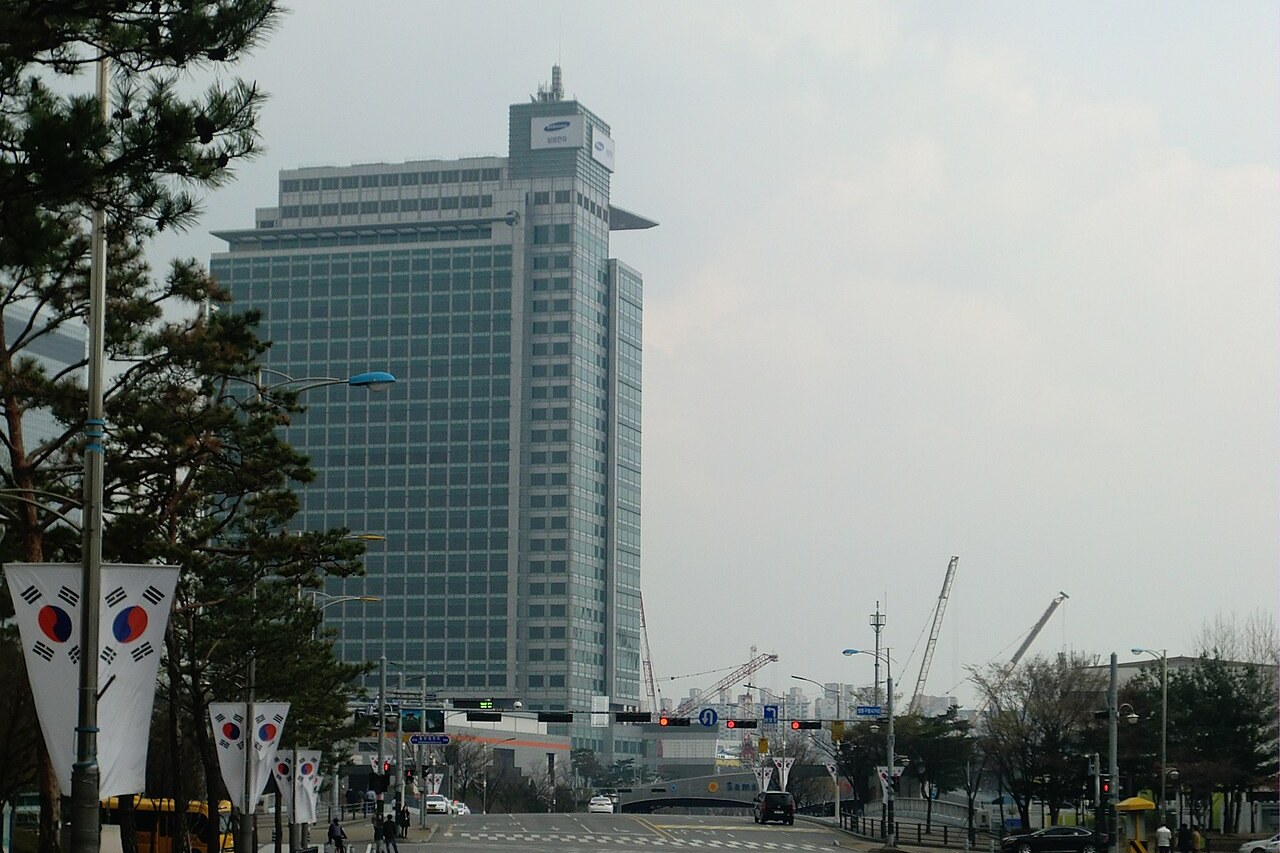
Samsung Electronics said on Friday it would return as much as 110 trillion won to investors this year, a sum of roughly about US$79 billion. The shares fell 8.7 per cent.
A payment of that scale would be welcomed almost anywhere else. In Seoul it was treated as news about the company’s own view of its future.
Because Of When It Arrives
The middle of a build-out
This is the middle of the largest capital spending cycle the semiconductor industry has ever run. Rivals are committing everything they can raise to artificial intelligence capacity.
A company that hands back about US$79 billion in that environment is making a judgement about where the money earns most. Its owners concluded, within one session, that the sum was not large enough. Analysts had looked for as much as 200 trillion won, and there was no committed buyback.
What Korea Is Actually Deciding
A decade of reform, arriving now
For a decade Korean policy and corporate practice have been pushed toward returning more cash to shareholders, and reformers treated that as the mark of a mature market. This is what winning that argument looks like.
It is also a country whose investors now judge a record payout by what it does not contain. SK hynix promised 40 trillion won of buybacks and cancellations on 19 August and its shares rose more than ten per cent; Samsung promised more money and less certainty, and fell. Korean ambition has usually resolved the other way.
Korea spent a decade being told its companies hoarded cash and should return more of it. The advice was taken at the least convenient possible moment.
The Region Followed
And is waiting on one set of accounts
The broad Asia Pacific measure fell about 1% with technology shares leading the losses, and contracts on American shares fell in the same hours. Oil declined.
All of it points at the quarterly result of a single American chip company later this week. Three time zones are now arranged around one set of accounts.
Japan Carries Over
Weather and closures
A typhoon forecast to intensify was expected to approach Okinawa early in the week. It was near the Mariana Islands on Saturday morning.
The wind-up of the Cool Japan Fund and the review of postal services both remain under way, with no published cabinet decision on either.
What This Means From Latin America
The useful part is the mechanism rather than the company. When a national champion announces the largest payout in the country’s history and its shares fall almost nine per cent, the market is not rejecting the money. It is telling the company that the shape of the promise matters more than the size of the numbers get better.
The second consequence is funding. Long American borrowing at its costliest since 2007 raises the price of dollar money for every Asian issuer, and for every borrower in this hemisphere competing for the same capital.
The third is about concentration. When one American company’s quarterly results set positioning in Seoul, Tokyo and New York at once, diversification across those markets buys less protection than it used to.
The Bigger Picture
There are two things a large technology company can do with about US$79 billion. It can build capacity, or it can give the money to its owners.
The case for returning it is respectable: artificial intelligence capacity is being built faster than demand for it has been demonstrated. The case against is that market share in this industry is decided by who has capacity when demand arrives.
We have not been able to establish whether the programme is funded from existing cash or implies reduced capital spending. That distinction changes the interpretation entirely, and the next set of accounts will settle it.
Asia Intelligence Brief August 24, 2026: What We Are Watching
- Samsung’s capital spending plans — The return only means retreat if building slows with it.
- The Korean index — Now moving on single corporate decisions.
- Bank of Korea on 27 August — Decides three days after a large domestic investment signal.
- The American chip results — One company’s quarter setting positioning in three time zones.
- American long borrowing — Raises the price of dollar funding across the region.
- The typhoon — Forecast to intensify before approaching Okinawa.
More from the Rio Times Intelligence Desk on August 24, 2026: Africa · Europe · USA & Canada. For how these stories developed, see the Asia Intelligence Brief for August 23 and August 21.
Asian supply chains and their bearing on this hemisphere run through our pillar coverage of Asia Supply Chains and Critical Minerals.
Frequently Asked Questions
What did Samsung Electronics announce?
That it would return as much as 110 trillion won to investors this year, roughly about US$79 billion. It is among the largest such commitments any listed company has made.
Why did the shares fall?
The market read a large return of capital, arriving in the middle of the semiconductor industry’s largest ever capital spending cycle, as a signal that management does not expect strong returns from building. The shares fell 8.7 per cent.
How did the wider region trade?
The broad Asia Pacific measure fell about 1% with technology shares leading losses, the Korean index fell 1.4%, contracts on American shares declined and oil fell.
What is driving Asian markets this week?
The quarterly results of one American chip company and the Federal Reserve’s annual gathering. Long American borrowing costs, at their highest since 2007, also raise the price of dollar funding across the region.
Sources: Bloomberg, News On Japan, South China Morning Post · 22-24 August 2026.
This article was produced by The Rio Times’ automated newsroom system. How we use AI · Report an error · Editorial responsibility: Matthias Camenzind, Editor-in-Chief