Africa Intelligence Brief — Monday, August 24, 2026
Executive Summary
Africa Intelligence Brief for August 24: Namibia approves a local-content policy it has not gazetted, Libya initials a text nobody will describe.
Rio Times · Africa Intelligence Brief August 24, 2026
Africa Intelligence Brief — Monday, August 24, 2026
What Nobody Has To Do
Key Facts
- Congo. The first verification inspectors of the eastern Congo ceasefire reach Minembwe today, nine months after the Doha framework agreement of 15 November 2025.
- Namibia. An upstream oil local-content policy has been approved by Cabinet but not gazetted that imposes no legal obligation on operators yet.
- Libya. Rival delegations initialled an election agreement in Tunis whose text the United Nations mission disputes.
- Nigeria. A five billion dollar Abu Dhabi facility has been drawn on without explained terms, reportedly via a total return swap.
- Ghana. The central bank lost about 1.7 billion dollars on a gold purchase programme, according to the IMF.
- Kenya. The World Bank barred the builder of the state services platform, and its founder, from Bank-financed contracts for a minimum of five years, with release conditional on compliance.
Every state announces more than it enforces. What distinguishes them is the size of the gap and whether anybody is permitted to measure it.
Read in English, French, Arabic, Portuguese and Swahili, across the continent’s largest outlets and our own Africa desk.
A Ceasefire Nobody Checked For Nine Months
Minembwe, today
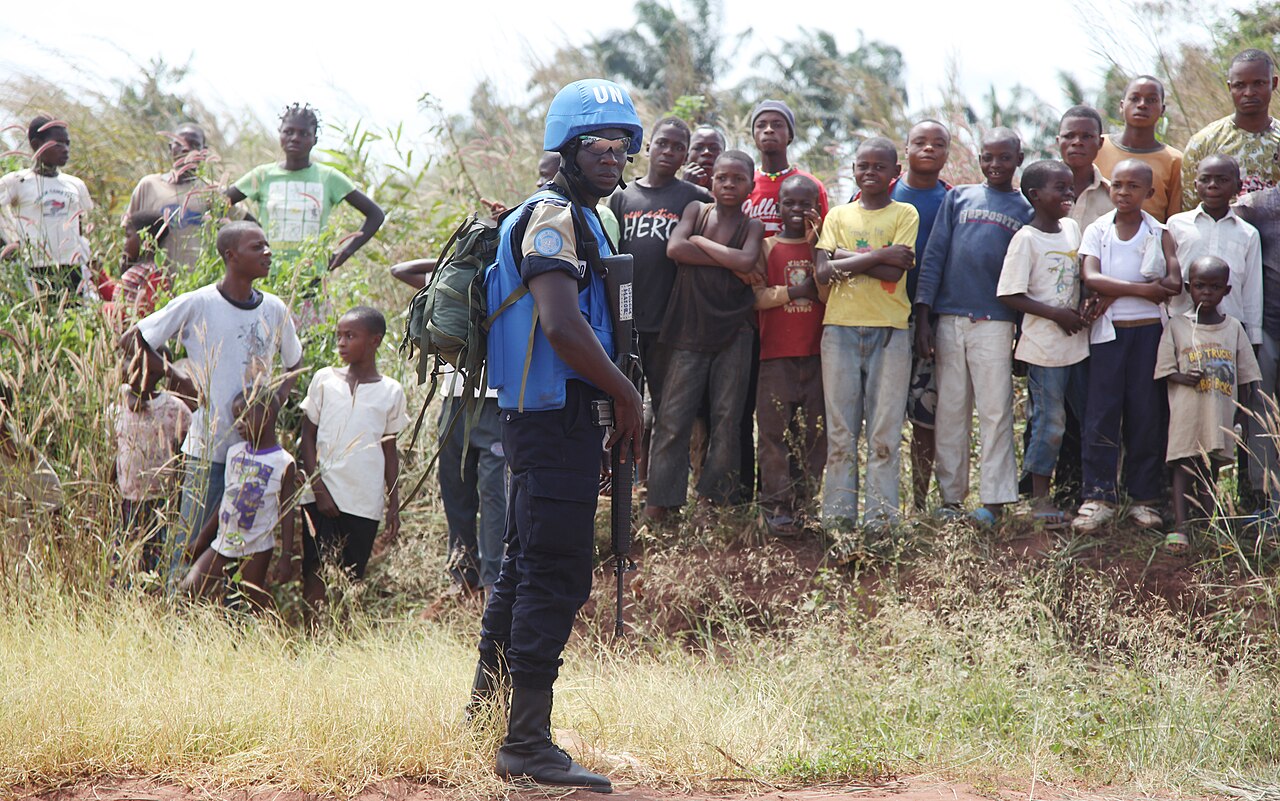
The first verification inspectors of the eastern Congo ceasefire reach Minembwe today. The agreement they are verifying was signed nine months ago.
In the interval it existed as a text and as a claim. Both parties could assert compliance and neither assertion could be tested.
Why that matters
An agreement without verification cannot be violated in any recorded sense, which means the incentive structure it was meant to create does not exist. Inspectors arriving nine months late will document a situation, not a sequence.
A Policy That Binds Nobody
Namibia, approved but not in force
Namibia has gazetted a local-content policy for its upstream oil industry, setting out what operators should do for Namibian workers and suppliers. It currently obliges nobody to do any of it.
That is not necessarily bad faith. Policies are often published before the legislation that gives them teeth, and Namibia is drafting into a basin that has not produced a barrel yet.
An Agreement Nobody Will Describe
Libya, in Tunis
Libya’s rival delegations initialled an agreement on elections, and the committee itself then denied the accuracy of leaked accounts of what it contained.
An agreement whose contents are contested by the body that convened the talks is a document rather than a settlement.
The constraint is rarely the writing of rules and almost always the existence of somebody with both the standing and the appetite to apply them.
And The Numbers Nobody Will Explain
Abuja and Accra
Nigeria has drawn about US$1.5 billion of a US$5 billion facility from Abu Dhabi and has not explained its terms. Reporting describes it as structured through a total return swap, a form that keeps the obligation off the places where obligations are usually counted.
Ghana’s central bank lost about 1.7 billion dollars on a gold purchase programme, according to the International Monetary Fund. That figure exists because an outside body went looking for it.
The One Announcement That Binds
Washington, with a date on it
The World Bank barred a Kenyan technology contractor and its founder from Bank-financed work for a minimum of five years, with release conditional on compliance over a Somalia contract. That is an announcement with an enforcement date attached.
It is also, tellingly, the only one this week issued by an institution that was not a party to the thing it was ruling on.
Elsewhere
Kenyan banks hold about seventeen billion dollars of their own government’s debt. South Africa sells Zimbabwe roughly eight times what it buys back, and French firms booked 532.1 million euros (about US$620 million) of orders from Morocco in 2025, against deliveries of 83.3 million euros, far above the prior year, though the report does not publish a comparable 2024 figure.
What This Means From Latin America
Guyana has moved to reverse four months of falling oil output with a fifth offshore project. Namibia, at an earlier stage in the same story, has just published a local-content policy with no binding force.
The comparison is the useful one. Both are new producers writing the rules for revenue they have not yet earned, and only one of them has production to bargain with.
The wider shape is familiar here. Every resource economy in this hemisphere has a shelf of local-content policies, disclosure requirements and monitoring agreements, and the ones that changed anything were the ones with an enforcement date on the page.
The Bigger Picture
Verification is the cheapest part of any agreement and the part most often deferred. Signing is a political event with cameras; inspecting is a logistics problem with a budget.
Across three very different files this week — a ceasefire, an oil policy and an election deal — the announcement arrived intact and the enforcement arrived late, weak or contested.
A South Sudanese committee has meanwhile ordered the finance ministry to start clearing salary arrears, without setting a date, ahead of a December election. Paying people is the one obligation that cannot be deferred by drafting.
Africa Intelligence Brief August 24, 2026: What We Are Watching
- Minembwe — Whether a second inspection is scheduled matters more than what this one finds.
- Nigeria’s Abu Dhabi facility — The structure is the question, not the size.
- Ghana’s gold inquiry — Watch whether the inquiry is given real scope.
- Libya’s initialled text — An agreement its own convenor disputes is not yet an agreement.
- Namibian local content — The legislation, if it comes, is where this becomes real.
- The World Bank debarment — The week’s only announcement with an enforcement date, and it came from outside.
More from the Rio Times Intelligence Desk on August 24, 2026: Asia · Europe · USA & Canada. For how these stories developed, see the Africa Intelligence Brief for August 23 and August 21.
The competition for African resources and the money behind it runs through our pillar coverage of Africa: The New Scramble.
Frequently Asked Questions
What is happening in eastern Congo today?
The first verification inspectors of the ceasefire arrive at Minembwe, nine months after the Doha framework agreement of 15 November 2025. Nothing had been independently checked in the interval.
What did Namibia announce?
A local-content policy for its upstream oil industry, gazetted, setting out expectations for Namibian workers and suppliers. It carries no legal obligation on operators; legislation would be needed to give it force.
What is the dispute over Libya’s election deal?
Rival delegations initialled an agreement in Tunis, and the committee that initialled it has denied leaked accounts of its contents, and the head of the Presidential Council has criticised the secrecy.
What is Nigeria’s Abu Dhabi loan?
A five billion dollar facility that Nigeria has drawn on without explaining its terms. Reporting describes the arrangement as structured through a total return swap, which the finance minister confirmed publicly on 19 August, while declining to publish a spending breakdown.
Sources: UNSMIL, The Namibian, Reuters, the IMF, the World Bank Sanctions Board, the French Ministry of the Armed Forces and the South African Presidency, including the Minembwe verification report, The Namibian on the Cabinet approval and the Ghana gold programme finding.
This article was produced by The Rio Times’ automated newsroom system. How we use AI · Report an error · Editorial responsibility: Matthias Camenzind, Editor-in-Chief
LatAm Markets: Live Signals → — real-time movers, turnover leaders and FX across Latin America.