Asia Intelligence Brief — Friday, August 28, 2026
Executive Summary
Rio Times Asia Intelligence Brief August 28, 2026 The Missing List Grows Read Asia this morning and the register is the ledger of the missing: thirty flags
Rio Times · Asia Intelligence Brief August 28, 2026
Asia Intelligence Brief — Friday, August 28, 2026
The Missing List Grows
Key Facts
- The toll. The Himalayan flood disaster has reached at least 474 dead across Nepal and China, with more than 1,500 people still missing from more than thirty countries.
- The rescue. Helicopters have lifted 3,253 people out of the valleys, and India’s foreign ministry confirmed 84 of its nationals rescued with a round-the-clock control room running.
- The lake. A barrier lake near the confluence of the Chhochen Khola and Purepu Tsangpo rivers is at risk of breaching, threatening a second flood below the first.
- The inflation. Tokyo’s core consumer prices rose 1.8% in August, above forecasts, strengthening the case for a September rate rise from the Bank of Japan.
- The hold. South Korea’s central bank kept its rate at 3.00% for a second straight meeting on Thursday; the KOSPI fell 1.16% on Friday as markets digested the decision.
- The festival. Raksha Bandhan falls today alongside a deep partial lunar eclipse, a coincidence last matched about seventy years ago, though the eclipse itself is below India’s horizon.
Read Asia this morning and the register is the ledger of the missing: thirty flags on one list, a lake that has not decided whether to fall, and a festival of brothers and sisters arriving on the worst possible week to be unreachable.
Read in English, Hindi, Nepali, Japanese, Korean, Mandarin and Bahasa, across the region’s largest outlets and our own Asia desk.
Nepal: Thirty Flags On One List
Friday’s arithmetic
The Associated Press count this morning stands at at least 474 dead — 469 in Nepal and five in China — up from 359 a day earlier, with more than 1,500 people missing. Nepal’s disaster authority says 3,253 survivors have been lifted out by helicopter and more than 150 are in hospital.
The missing are a map of the world drawn onto one valley: 558 in China’s Gyirong county including 260 foreigners, 288 Indians, 90 Americans, 55 Ukrainians, 51 Malaysians, 39 Australians, 33 Britons, 25 Canadians, and more besides. Nepal’s home minister says 100 Indians and 25 Chinese nationals have been located; the rest are names read aloud on embassy hotlines.
The second wave that has not happened yet
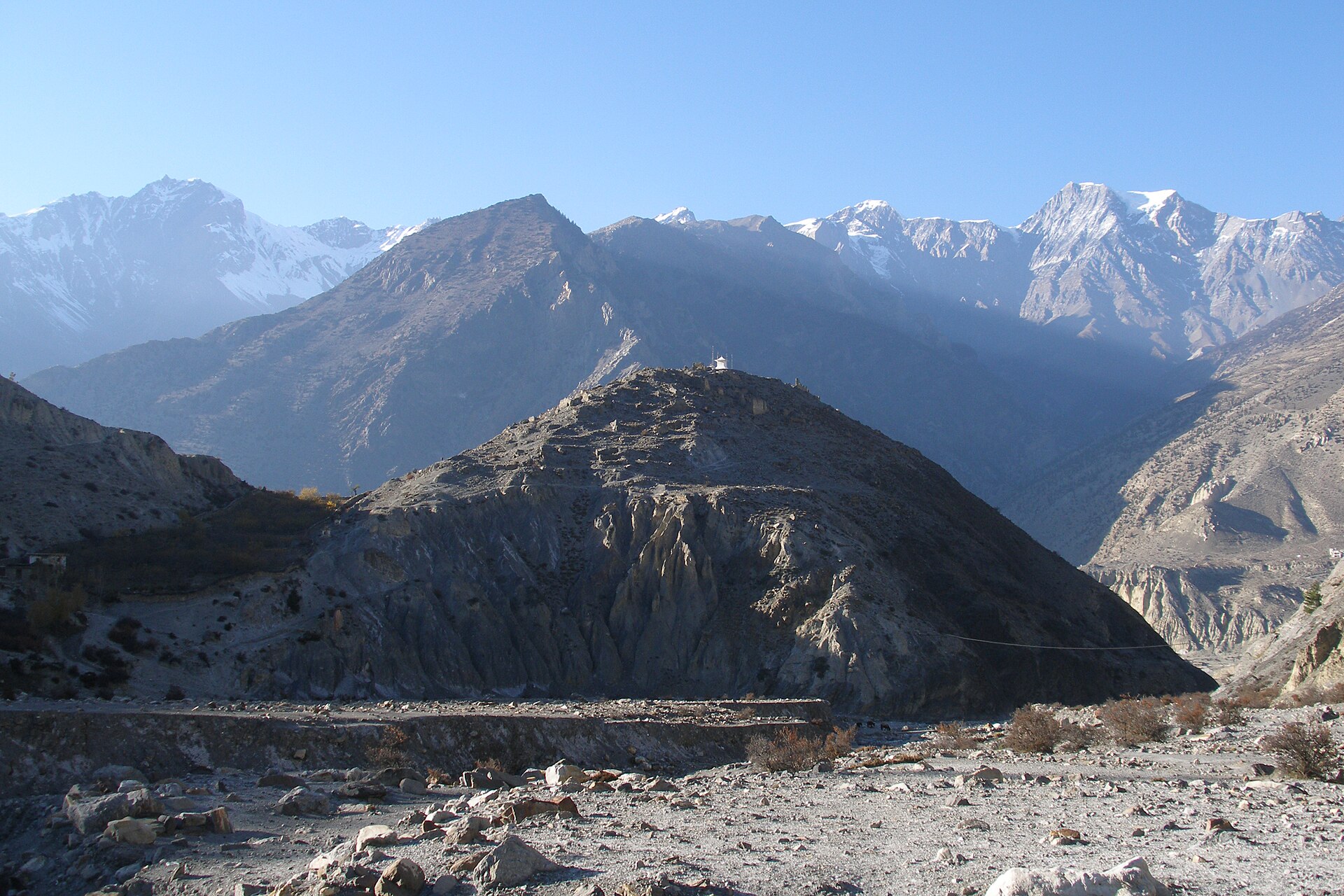
Above the rescue lines, a barrier lake has formed near the confluence of the Chhochen Khola and Purepu Tsangpo rivers, and engineers warn it could breach. Some 35 road bridges and 45 suspension bridges are already gone, along with 40 kilometres of road.
The United Nations has released $2 million for relief; India has flown a second tranche of aid and put Bihar and Uttar Pradesh on alert downstream. Muslim and Christian aid agencies announced joint relief convoys on Friday, a coalition the mountain did not ask for and the moment required.
Japan: The Number The Bank Waited For
Tokyo’s signal
Tokyo-area inflation for August came in at 1.9% headline, with the core measure excluding fresh food at 1.8% against a 1.7% forecast. The core-core reading, the closest thing Japan has to the American core gauge, held at 2.0%.
July unemployment fell to 2.4%, beating expectations, and the jobs-to-applicants ratio held at 1.18. The market’s reading was immediate: the case for a Bank of Japan rate rise at the September 18-19 meeting is stronger this morning than it was yesterday.
The yen and the carry trade
A firmer yen on hike expectations is a global event, not a Japanese one. Money borrowed cheaply in Tokyo funds positions from Seoul to Sao Paulo, and every step toward normal policy tightens the world’s second tap.
The corporate tape points the same direction: Kioxia’s more than 1 trillion yen (about US$6.8 billion) fab expansion in Iwate and SoftBank’s roughly $6 billion robotics bet with 1X are long-dated wagers that Japan’s cost of money is changing for good.
India: Relief Flights And A Record Arsenal
Two registers, one government
India spent Friday as Nepal’s first responder — 84 nationals rescued, a 24-hour control room, a second aid tranche — and as a defence-industrial power announcing a record. Annual defence production reached 1.78 trillion rupees (about US$20 billion) in fiscal 2025-26, up 15.6% in a year and 110% since 2020-21.
Delhi will host the BRICS summit on September 12-13 with Xi Jinping expected, building on this month’s eight-point consensus with Beijing. Finance minister Sitharaman separately pitched an investment partnership with Canada, a door opened while Washington’s tariff war with Ottawa burns.
The neighbourhood shifts
Bangladesh is weighing membership in the mutual defence pact Pakistan signed in Mecca this month, a step Delhi would read as a strategic loss. In Balochistan, activists accused Pakistani forces of enforced disappearances in Shadi Kor, a file that never closes.
And in Delhi itself, the swine flu count passed 2,300 cases, a public-health thread running under the flood headlines. The city is learning, again, that crises queue rather than wait.
Markets: A Region Holding Its Breath
Friday’s closes
The Nikkei added 0.19% on the Tokyo inflation surprise, while the KOSPI fell 1.16% as traders digested the Bank of Korea’s second straight hold at 3.00%. Sydney rose 0.25% despite a sharp 3.6% fall in business investment, and Hong Kong and Shanghai closed modestly lower.
Oil eased through the week as Iran agreed to draft conditions for restoring normal Hormuz traffic after Qatar’s prime minister pressed Tehran on freedom of navigation. Every desk in the region is now angled toward Wyoming, where the Fed chairman speaks today.
A missing-persons list with thirty flags on it is not a natural disaster’s paperwork; it is the Himalaya reminding thirty capitals that the mountain was never theirs to schedule.
What This Means From Latin America
A barrier lake that may or may not breach is a sentence the Andes knows by heart. Peru and Chile keep whole ministries for hanging lakes and glacial outburst floods, and Nepal’s engineers are now reading from that same prayer book.
Japan’s slow walk toward normal interest rates moves Latin American currencies as surely as any Brasilia decree. The carry trade that fills Brazilian bond desks begins life as cheap yen, and the Bank of Japan’s September meeting is now a Latin American date.
And Delhi’s pitch to Ottawa — made while Washington taxes Canadian goods at 50% — is a lesson Latin America wrote decades ago. Middle powers do not wait for permission to diversify; they wait only for the excuse.
The Bigger Picture
Asia’s week ends with a mountain still deciding how much of itself to give back. The dead are counted daily, the missing are counted by embassy, and the lake above the valley is counted in hours of daylight for the rescue crews.
Under the emergency, the region’s slow machinery kept turning: a central bank in Tokyo found its number, one in Seoul chose to wait, and Delhi announced it can now build most of what it once had to buy. Crisis and continuity are not opposites here; they are the same day.
Tonight much of Asia marks Raksha Bandhan while the eclipse passes unseen below the horizon. A festival about the bond of protection, held on the week the region learned how far protection can reach, and where it ends.
Asia Intelligence Brief August 28, 2026: What We Are Watching
- The barrier lake — any breach warning for the Chhochen Khola confluence, and evacuation orders below it.
- The missing list — whether the weekend produces reconciled national counts, starting with India’s 288 and China’s 558.
- The yen into September — positioning for the Bank of Japan’s September 18-19 meeting after the Tokyo print.
- BRICS in Delhi — the September 12-13 summit’s guest list and whether the India-China consensus survives contact with the Pakistan pact question.
- Jackson Hole’s echo — how Monday’s Asian open prices the Fed chairman’s first keynote.
- Delhi’s swine flu — whether 2,300 cases becomes a national count, and what the hospitals say.
More from the Rio Times Intelligence Desk on August 28, 2026: Africa · Europe · USA & Canada. For how these stories developed, see the Asia Intelligence Brief for August 27 and August 26.
The money and minerals behind Asia’s decade run through our pillar coverage of Asia: The Long Game.
Frequently Asked Questions
What is the latest Nepal flood death toll?
As of Friday morning, August 28, at least 474 people are confirmed dead across Nepal and China, with more than 1,500 missing from over thirty countries. Nepal’s disaster authority says 3,253 people have been rescued by helicopter.
What is the barrier lake risk in Nepal?
A landslide-dammed lake has formed near the confluence of the Chhochen Khola and Purepu Tsangpo rivers and could breach, sending a second flood into valleys already hit. Authorities in Nepal and the Indian states of Bihar and Uttar Pradesh are monitoring it.
What did Tokyo’s inflation data show?
Tokyo’s August core consumer prices, excluding fresh food, rose 1.8% year on year, above the 1.7% forecast, with headline at 1.9%. The reading strengthens the case for a Bank of Japan rate rise at its September 18-19 meeting.
What did the Bank of Korea decide?
The Bank of Korea held its base rate at 3.00% on August 27, a second consecutive hold. South Korea’s KOSPI fell 1.16% on August 28 as markets weighed the decision against the Fed chairman’s Jackson Hole speech.
Sources: AP, Nepal NDRRMA, Statistics Bureau of Japan, Bank of Korea, Xinhua, Reuters, NDTV, The Telegraph, UN OCHA · 26-28 August 2026.
This article was produced by The Rio Times’ automated newsroom system. How we use AI · Report an error · Editorial responsibility: Matthias Camenzind, Editor-in-Chief
LatAm Markets: Live Signals → — real-time movers, turnover leaders and FX across Latin America.
Read More from The Rio Times