Argentina’s Peanut Industry: A Global Export Leader Betting on a Bumper Crop
Argentina, earning $1 billion annually from peanuts, plans to expand its planting area for the 2024/25 season. This expansion is attracting farmers who are moving away from traditional crops like soybeans and corn.
The phrase “peanuts always give you another chance” resonates among Argentine peanut farmers. This proved true with the recent harvest, which yielded impressive results.
The Argentine Peanut Chamber reports that the 2023/24 harvest covered 416,000 hectares and produced 1.6 million tons, marking a 70% increase from the previous year’s 940,000 tons.
In the past two seasons, droughts severely impacted Córdoba, Argentina’s main peanut-producing region. The 2022/23 harvest suffered significantly, but the latest crop exceeded the 2021/22 yield by 10%.
Despite its low profile compared to major crops like soybeans, corn, or wheat, peanuts hold significant economic importance in regional economies. Argentina stands as the world’s top peanut exporter, supplying various forms of peanuts to over 100 countries.
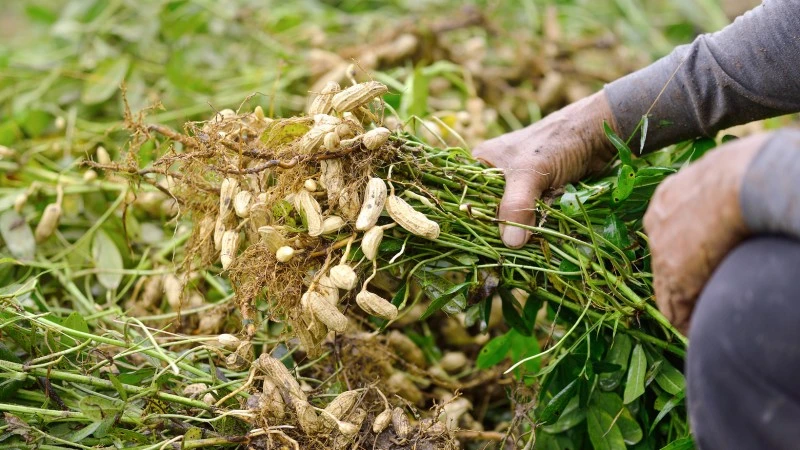
The country exports about 95% of its peanut production, generating approximately $1 billion annually. This makes it one of the few international markets where Argentina plays a price-setting role.
Last year’s drought cut production by 35%, leading to a 30% increase in global prices. In addition to raw peanuts, exports of value-added products like roasted peanuts and peanut butter are rising, now comprising 10% to 12% of total exports.
Strategic Growth in the Peanut Sector
The peanut sector is at a crucial decision-making point for the upcoming planting season, which began in mid-October and will continue until December’s end.
Edoardo Fracanzani, Executive Director of the Argentine Peanut Chamber, expresses optimism about the future. Diego Yabes, President of the Chamber, notes that this year’s planted area will be about 10% larger than last year’s due to market conditions.
Low soybean and corn prices are prompting some farmers to allocate more land for peanuts, which maintain stable prices. Beyond increased acreage, improved yields also drive peanut cultivation.
Leonor Blanco from Córdoba’s Grain Exchange reports that yields reached 4,130 kg/ha in Córdoba—a 76% increase from the previous season.
Other provinces saw slightly lower yields: San Luis at 3,680 kg/ha and La Pampa at 3,090 kg/ha. Blanco attributes these results to peanuts being less affected by droughts since many farmers delayed planting due to dry soil conditions.
For Córdoba’s summer crop in 2024/25, a 29% reduction in corn planting is expected due to pest threats like leafhoppers.
Consequently, peanut cultivation is projected to rise by 7%, with soybean and sorghum increasing by 23% and 24%, respectively.
Industrial facilities currently have more processing capacity than production volume allows. This presents an opportunity for increased processing output.
Market Expansion in Argentina’s Peanut Sector
Diego Yabes highlights this potential as he leads both the sectorial chamber and Olega, a prominent company in the field. Other key players include Aceitera General Deheza, Adecoagro, Maniagro, and Manisel.
In November 2022, MSU Agro announced a $90 million investment to build a peanut agro-industry in Rufino. This project will enhance processing capabilities in Santa Fé province near Córdoba and Buenos Aires.
The sector aims to maintain and expand export markets. Currently, Argentina supplies up to 70% of the European Union’s peanut imports.
However, roasted peanuts and peanut butter face a tariff of 12%, unlike raw peanuts, which enter duty-free. The Mercosur-European Union agreement could reduce this tariff to zero.
Argentina also seeks new markets such as Japan, Korea, and China—the largest global producer yet also a major importer. Other potential markets include the Philippines, Vietnam, Australia, and New Zealand.
Diego Yabes identifies currency exchange delays as a challenge for the industry. Some costs, like rent and agrochemicals, are dollarized and remain unaffected by inflation.
However, peso-denominated expenses, such as utilities and wages, are impacted by inflationary pressures. This situation creates discrepancies with international prices due to intense competition.
More: Brazil news in English, every day from The Rio Times.
This article was produced by The Rio Times’ automated newsroom system. How we use AI · Report an error
Read More from The Rio Times