Argentina IMF Review Begins Under New Mission Chief as Milei Flies to the UN
Argentina · Economy
Key Facts
- —What happened The Argentina IMF review began on 21 September 2026 when a team led by Joyce Wong reached Buenos Aires.
- —What is at stake A tranche of SDR 636 million (about US$869 million), released only after staff agreement and IMF board approval.
- —Why it matters Argentina owes the IMF about US$803 million on 25 September 2026, due well before any new tranche can arrive.
- —The catch The fiscal surplus for the first half of 2026 fell slightly short of its target, according to Argentine press reports.
- —The good news The consultancy Analytica puts 2026 net reserve accumulation near US$9 billion, above the US$8 billion goal.
- —Milei’s week The president flies to New York, is due to meet Marco Rubio on Tuesday and addresses the UN on Wednesday.
Fund staff landed in Buenos Aires on Monday to audit the country’s bailout. For once the central bank has beaten its reserve goal, while the budget has slipped slightly.

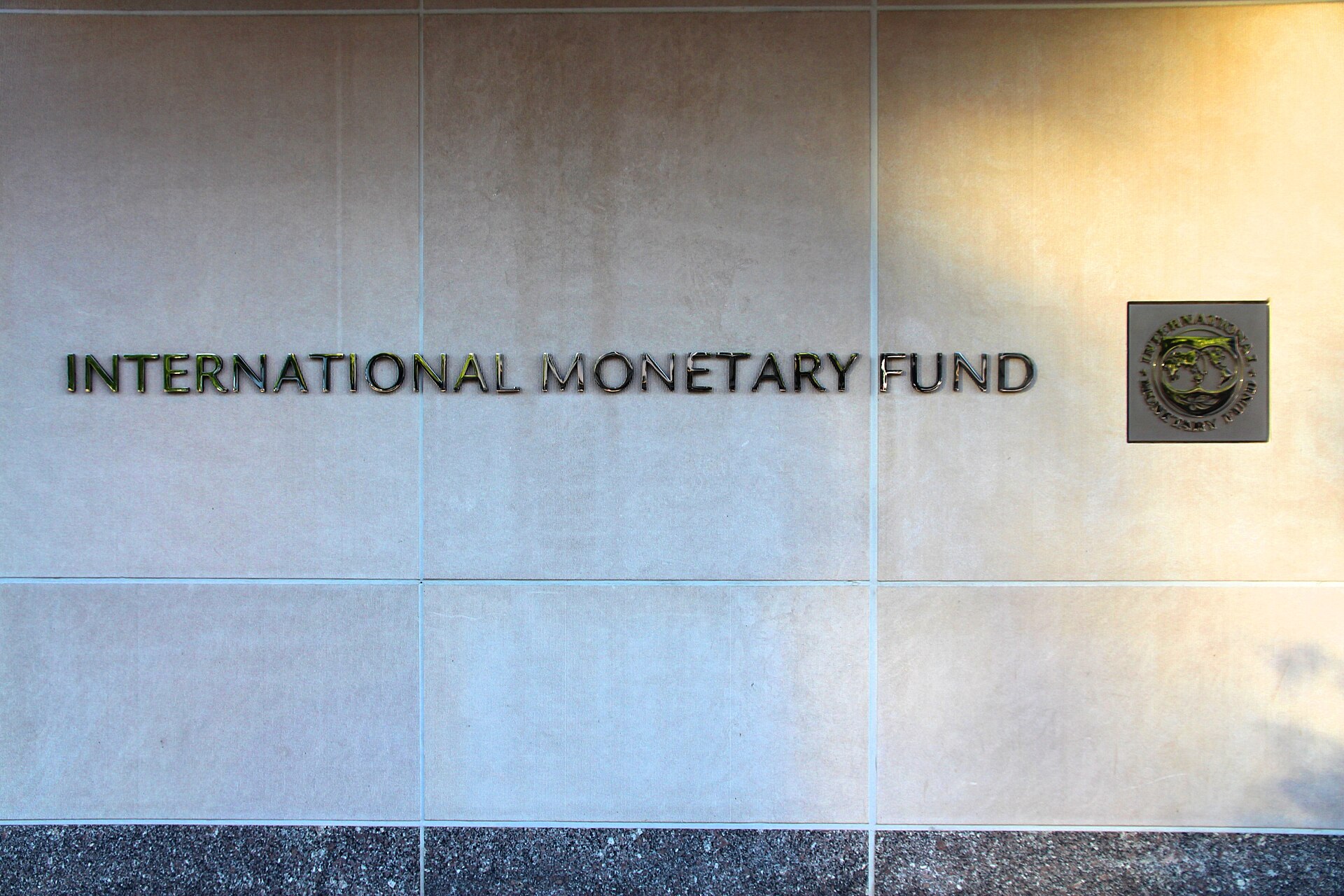
The Argentina IMF review got under way on Monday 21 September 2026, as a Fund team landed in Buenos Aires. It is the third check on the US$20 billion loan that props up President Javier Milei’s economic programme.
The mission is led by Joyce Wong, on her first review since taking over the Argentina file. Roughly US$900 million hangs on the outcome, according to the Argentine news agency Noticias Argentinas.
The timing is awkward. Luis Caputo, the economy minister, is flying with Milei to the United Nations General Assembly and misses the opening meetings.
A new face on the Argentina file
Wong replaced Bikas Joshi, who moves to lead the IMF’s work on Chile, La Nación reported on 4 August 2026. The change surfaced after Kristalina Georgieva, the Fund’s managing director, visited Buenos Aires in late July.
La Nación describes Wong as a Portuguese economist with a doctorate from New York University. She worked on Argentina as a desk economist during the 2018 IMF loan under former president Mauricio Macri.
She has since led IMF missions to Honduras, Yemen and Djibouti and worked at the Inter-American Development Bank. She reports to Luis Cubeddu, a deputy director of the Fund’s Western Hemisphere Department.
What the money is and how it is released
The tranche is SDR 636 million (about US$869 million), La Nación reported. The SDR, or special drawing right, is the IMF’s own accounting unit, built from a basket of major currencies.
Nothing is paid when the mission leaves. Fund staff must first reach a staff-level agreement with the government, and the IMF Executive Board must then approve it.
The tranche would cover less than half of the repayments due to the IMF by the end of 2026. The first is due on Friday 25 September 2026, weeks before any board vote.
That bill is a capital repayment of SDR 583.3 million (about US$803 million). About US$840 million follows in early November and about US$344 million in December, according to Noticias Argentinas.
Ámbito reports the fourth review is pencilled in for February 2027.
The programme, in brief
The IMF board approved the Extended Fund Facility on 11 April 2025. It is a 48-month loan of US$20 billion, of which US$12 billion was paid out at once.
An Extended Fund Facility lends over several years in exchange for reforms, checked at periodic reviews. Each review releases a further slice if targets are met, or if the board excuses a miss.
Why reserves are the sticking point
Argentina’s central bank has long held few dollars of its own once borrowed funds are stripped out. Net reserves are the buffer that lets a country pay creditors and steady its currency.
That weakness dogged the first two reviews. Argentina missed its mid-2025 reserve target and received a waiver, a formal board pardon, at the first review.
It then missed the end-2025 target by more than US$10 billion, according to the consultancy Invecq. The board granted a second waiver when it completed the second review on 21 May 2026.
This year the picture has flipped. La Nación reported that the June 2026 reserve target was met for the first time, citing private estimates.
The central bank has bought more than US$14.2 billion in the currency market, against a goal of US$10 billion. The consultancy Analytica, cited by Noticias Argentinas, puts net reserve accumulation near US$9 billion, above the US$8 billion target.
The fiscal slip
The weak spot now is the budget. The programme requires a primary surplus, the balance before interest payments, of 1.4% of GDP in 2026.
The first half closed at about 0.6% of GDP against a target of 0.7%, according to Noticias Argentinas. Peso figures here use a rate of 1,514.5 to the US dollar, the wholesale close reported by Infobae for 18 September 2026.
El Cronista put the first-half target at 6.9 trillion pesos (about US$4.6 billion), cut in May from 8.5 trillion (about US$5.6 billion). The outcome was 6.3 trillion pesos (about US$4.2 billion).
The government’s 2027 budget draft projects a 1.3% surplus for 2026, the Buenos Aires Herald reported. Ámbito reported the gap could be treated as met with a waiver, though no formal request has been reported.
The government has pledged to delay a labour assistance fund until 1 November and raise more from excise taxes. It also promised to target transport subsidies more tightly.
Milei’s week in New York
Milei was due to leave for New York on Monday night for a trip of about 60 hours, Infobae reported. He is due back in Buenos Aires on Thursday 24 September 2026.
Infobae reported that he will meet Marco Rubio, the US secretary of state, on Tuesday afternoon. Pablo Quirno, the foreign minister, said a meeting with Rubio was scheduled for Tuesday, El Cronista reported.
Milei is scheduled to address the General Assembly on Wednesday 23 September 2026 at noon Buenos Aires time. Infobae said the speech will restate Argentina’s claim to the Falkland Islands, which Argentines call the Malvinas.
No meeting with President Donald Trump was scheduled, though Infobae said the two could meet at a US-hosted gala. The trip also includes a speech at the Economic Club of New York and meetings with investors.
The week sets up a split screen. Wong’s team audits the accounts in Buenos Aires while Milei sells his programme abroad.
More: Argentina coverage, every day from The Rio Times.
Frequently Asked Questions
Who is Joyce Wong?
Joyce Wong is the IMF’s new mission chief for Argentina, the official who leads the Fund’s reviews of the country’s programme. She replaced Bikas Joshi, who moved to the Chile mission, La Nación reported in August 2026. She previously led IMF missions to Honduras, Yemen and Djibouti and worked on Argentina during the 2018 IMF loan.
How much money does this Argentina IMF review unlock?
The tranche is SDR 636 million (about US$869 million), often rounded to US$900 million in the Argentine press. It is paid only after IMF staff and the Argentine government reach agreement and the IMF Executive Board approves the review.
Did Argentina meet its IMF targets?
On reserves, the consultancy Analytica estimates the central bank is ahead of its 2026 goal. On the budget, the first-half primary surplus of about 0.6% of GDP fell short of the 0.7% target. The government projects a 2026 surplus of 1.3% of GDP against a 1.4% target. Ámbito reported that gap could be treated as met with a waiver, a formal pardon from the IMF board.
Why does the Falklands issue come up on this trip?
President Milei is expected to restate Argentina’s sovereignty claim over the Falkland Islands, known in Argentina as the Malvinas, in his UN speech on 23 September 2026. That is separate from the IMF review, which Fund staff are conducting in Buenos Aires.
Sources: Noticias Argentinas on the start of the third review, La Nación on the new mission chief and payment schedule, La Nación profile of Joyce Wong, El Cronista on the first-half fiscal target, Ámbito on a possible waiver, IMF on the April 2025 arrangement, IMF on the second review, Invecq on the missed reserve target, Infobae on Milei’s New York agenda, El Cronista on the trip timetable, Infobae on the exchange rate
This article was produced by The Rio Times’ automated newsroom system. How we use AI · Report an error
In depth
Read More from The Rio Times