Argentina · TECHNOLOGY
Key Facts
- —What happened Argentina and China launched CITAC, a tech cooperation platform, at UBA on 20 August 2026.
- —How big CITAC is not a government body or treaty-created institution, but a flexible platform of existing groups.
- —The real story The cluster aims to move ties beyond trade, focusing on joint research and development.
- —The catch No Chinese university or company was named as a member, despite the bilateral focus.
- —Who is involved Led by ex-ambassador Sabino Vaca Narvaja, with Argentine tech firms and universities like LIFIA.
- —What comes next A technology mission to China runs 18–30 November 2026, visiting Shanghai, Beijing and Shenzhen.
A new platform aims to move Argentina-China ties beyond trade, focusing on joint research and technology development.
The Argentina China technology cluster was launched on Thursday 20 August 2026 at the University of Buenos Aires. The new platform, called CITAC, aims to boost technological cooperation between the two countries.
What Is the Argentina China Technology Cluster?
CITAC is a cluster, platform, and articulation space for universities, companies and public bodies. Its site citac.
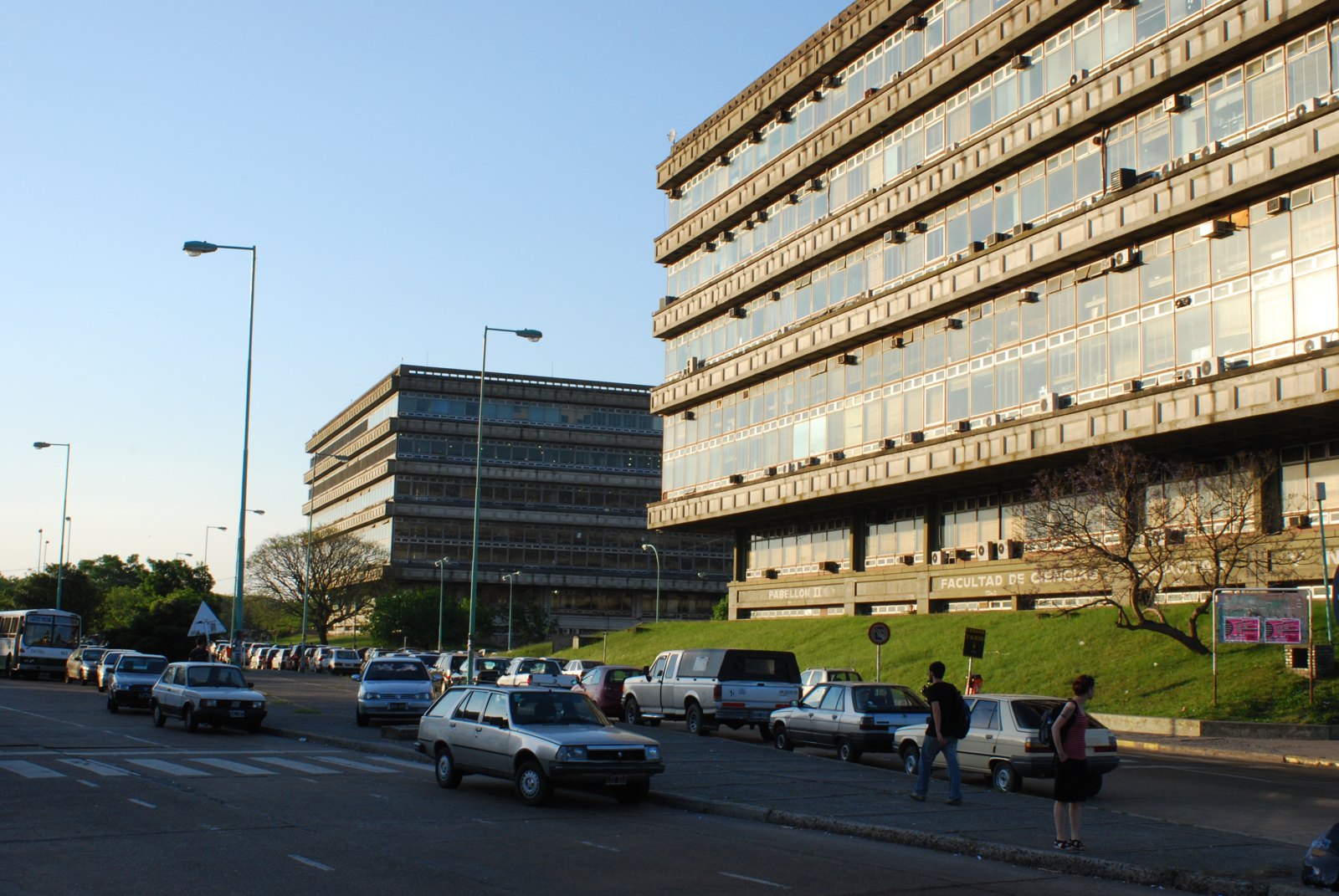
ar calls it the Argentina China technology cluster. The launch occurred in the Aula Estela de Carlotto at the Cero+Infinito building.
The Faculty of Exact and Natural Sciences hosted it with free registration. CITAC is not a government body or treaty-created institution.
Instead, it is a flexible collaboration platform, part of the Argentina China technology cluster. The launch was held on Thursday 20 August 2026 at the University of Buenos Aires.
However, CITAC is not a new legal entity but a flexible platform for existing institutions.
Who Led the Launch Event?
Three people led the presentation. They were Sabino Vaca Narvaja, Wang Xiaoxu, and Guillermo Durán.
Vaca Narvaja served as Argentina’s ambassador to China from 2019 to 2023. Wang Xiaoxu spoke about China’s 15th Five-Year Plan, highlighting frontier sectors.
These include artificial intelligence, quantum technology and humanoid robotics. He said Argentina has significant scientific capabilities and enormous potential to deepen cooperation.
Meanwhile, Wang Xiaoxu, as minister counsellor, represented the Chinese embassy, not the ambassador. His remarks underscored the potential for deeper scientific ties between the two nations.
Vaca Narvaja was Argentina’s ambassador to China from 2019 to 2023. Meanwhile, Wang Xiaoxu, as minister counsellor, represented the Chinese embassy at the event.
Why Science and Technology Matter
Vaca Narvaja said the only genuine way to accelerate development is science and technology. He called CITAC a tool born to foster cooperation with China in those fields.
He also warned about digital dependency. If the Global South contributes minerals while others concentrate algorithms, a new dependency could emerge.
His strategy is to raise the standing of science and technology within the bilateral relationship. In addition, Vaca Narvaja emphasized that cooperation should go beyond trade.
He stressed the goal to research, develop, and produce together with China. Vaca Narvaja warned that without cooperation, the Global South could face a new digital dependency.
Therefore, he stressed the need to research, develop, and produce together with China.
What CITAC Is Not
CITAC is not an intergovernmental centre, a binational institute or a body created by treaty. Its founders describe it instead as a new space for coordination.
Instead, it is a platform of existing institutions. Still, it is separate from existing Argentina-China science bodies, such as the MINCyT-MOST policy centre.
Still, no source places CITAC under any existing bilateral science body. Thus, it operates independently, with no hierarchical link to those programs.
CITAC is not an intergovernmental body or a treaty-created institution. Instead, it is a platform for articulation, separate from existing bilateral science bodies.
First Stage Work Lines
In its first stage, CITAC has four lines of work. These include joint projects, academic links, technology missions and trade fairs.
This was reported by Ámbito Financiero and the cluster’s own website. The announced next step is a technology mission to China from 18 to 30 November 2026.
Activities will take place in Shanghai, Beijing and Shenzhen, including participation in the China Hi-Tech Fair. After the launch, the cluster plans a technology mission to China in November 2026.
This mission aims to turn institutional links into concrete projects and financing. The first stage includes four lines: joint projects, academic links, technology missions, and trade fairs.
After the launch, a technology mission to China is planned for November 2026.
Who Is Involved From Argentina
For example, Argentine institutions include CESSI, CABASE, and LIFIA, a computer science lab at the National University of La Plata. Also involved are Polo IT La Plata, the Red Federal de Economía del Conocimiento and Fundación Blockchain Argentina.
The initiative is backed by the Cámara Argentino China, the Cámara de Empresas Chinas en Argentina and the Consejo Argentino Chino. Officials from the Buenos Aires provincial Ministry of Production also attended.
While the named Argentine groups come from tech and internet sectors, the cluster also includes universities. However, no specific Chinese university or company was named as a member.
Argentine participants include CESSI, CABASE, and LIFIA, among others. Meanwhile, the initiative is backed by three Argentine-Chinese chambers and provincial officials.
The Venue and Its Significance
The launch was held at the UBA’s Faculty of Exact and Natural Sciences, where about 10 percent of CONICET researchers work. The faculty graduates about 25 percent of the country’s doctorate holders.
Dean Guillermo Durán said partnering with a giant like China is truly decisive for a country like Argentina. He listed disciplines under way or starting, including computer science, data science, mathematics, physics, biotechnology, chemistry, materials science, geology and climate change.
Since the faculty hosts many researchers and graduates, it offers a strong base for scientific collaboration. Therefore, the venue choice highlights the academic focus of the cluster.
The venue hosts about 10 percent of CONICET researchers and graduates 25 percent of the country’s doctorates. As a result, the choice highlights the academic strength behind the cluster.
Trade Context Behind the Cluster
In 2025, Argentina exported US$9.799 billion to China and imported US$17.954 billion. Therefore, the deficit was US$8.155 billion.
China took 11.3 percent of Argentina’s exports and supplied 23.7 percent of its imports. The Argentine Foreign Ministry called this the highest bilateral deficit with any partner.
In the first half of 2026, the deficit was US$3.578 billion. Meanwhile, China represented 9.9 percent of exports and 22.5 percent of imports.
Although Argentina’s overall trade surplus was US$11.320 billion in 2025, the deficit with China stood out. As a result, the cluster aims to boost technological cooperation to balance trade.
In 2025, the bilateral deficit with China was US$8.155 billion, the highest with any partner. Meanwhile, the deficit in the first half of 2026 was US$3.578 billion.
Broader Bilateral Ties
Argentina and China describe their relationship as a comprehensive strategic partnership. Argentina has also signed a Belt and Road cooperation plan with China’s National Development and Reform Commission.
In addition, the central bank said on 5 August 2026 that the currency swap line had been renewed. It runs five years at 130 billion yuan, which Argentine media put at roughly US$19 billion.
While the currency swap renewal signals financial cooperation, the cluster focuses on science and technology. Nevertheless, both initiatives reflect deepening ties between the two countries.
Argentina and China have a comprehensive strategic partnership and a Belt and Road plan. In addition, the central bank renewed a currency swap line for five years in August 2026.
Frequently Asked Questions
What does CITAC stand for?
CITAC stands for Clúster de Innovación Tecnológica Argentina-China, which translates as the Argentina and China Technology Innovation Cluster. It is a cluster, a platform and a space for articulation between universities, companies and public bodies.
Is CITAC a government agency?
No, CITAC is not a government agency or an intergovernmental body. It is a platform of existing institutions, without its own legal statute or permanent headquarters.
Who attended the launch?
The launch was led by Sabino Vaca Narvaja, president of CITAC; Wang Xiaoxu. Minister counsellor of the Chinese Embassy; and Guillermo Durán, dean of the Faculty of Exact and Natural Sciences.
What is the next step for CITAC?
The next step is a technology mission to China from 18 to 30 November 2026. The mission will include activities in Shanghai, Beijing and Shenzhen, and participation in the China Hi-Tech Fair.
Connected Coverage
Sources: Xinhua español; China Radio Internacional; Ámbito Financiero; Página/12; DPL News; citac.ar; INDEC; Argentine Ministry of Foreign Affairs; Banco Central de la República Argentina.
This article was produced by The Rio Times’ automated newsroom system. How we use AI · Report an error · Editorial responsibility: Matthias Camenzind, Editor-in-Chief