Analysis: Figures explain why Argentina is in economic trouble
A sizeable fiscal imbalance has led Argentina into a new economic crisis, with a sharp loss of purchasing power for the population and a devaluation of the Argentine peso.
In 2019, R$1 paid 14.9 pesos. Now it is equivalent to 25.1 pesos. The country’s currency has weakened against the Brazilian real, which has also lost value against the dollar in recent years. Eating meat in Argentina, for example, can cost half the price compared in Brazil.
Silvina Batakis took over the country’s Ministry of Economy after Martín Guzmán resigned. But 24 days later, Argentine President Alberto Fernández appointed Sergio Massa as his successor.

The country’s government is also undergoing political upheaval. President Alberto VP Fernández and Cristina Kirchner are not only under pressure from the street but also publicly disagree on how to solve the country’s economic problems.
Kirchner advocates more significant intervention in the economy to mitigate the effects of the crisis on low-income segments of the population. Fernández disagrees.
The economic situation has prompted the population to protest, as have producers in rural areas, who are also struggling with diesel shortages and problems in Argentina’s supply chains. Thousands of Argentine protesters gathered in the streets of the capital Buenos Aires on Thursday (July 28) to demand a universal basic wage and the universalization of social programs.
Batakis was in Washington after meeting with International Monetary Fund (IMF) chief Kristalina Georgieva. Argentina has signed a US$44 billion financing agreement with the international organization.
The IMF said there were “exceptionally high risks” of non-compliance with the economic program in March. The financing was intended to support Argentina’s balance of payments and budget. It would require establishing debt sustainability, fighting high inflation, increasing financial reserves, and promoting growth. It will not be paid until 2026 and will run until 2034.
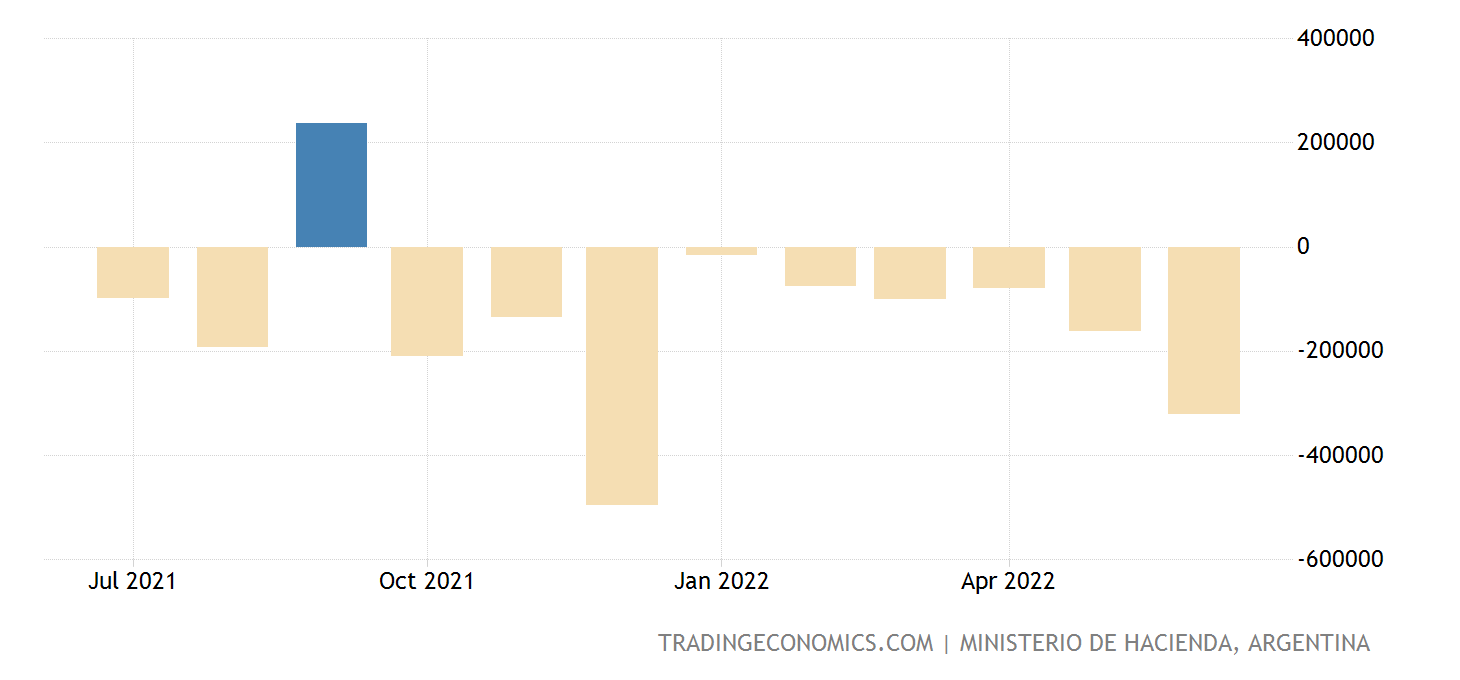
To comply with the agreement, the government must reduce the primary deficit – revenues minus expenditures, excluding debt interest payments – from 3% in 2021 to 2.5% in 2022. By 2024, it should reach 0.9% of GDP.
According to the Ministry of Economy, Argentina’s gross debt was 80.1% of GDP (gross domestic product) in the first quarter of 2022. Brazil has a similar percentage, 78.5% of GDP. What worries Argentina, however, is that 55.5% (Brazil 11%) of its debt is in foreign currency and international reserves are low, at US$39.5 billion, compared to Brazil (US$378.4 billion).
Argentina’s foreign reserves are not enough to cover the country’s imports for a semester. Foreign purchases amounted to US$7.8 billion in the year’s first half.
The scenario is even worse when considering the net concept of foreign reserves; that is, the government can use funds in case of need. Argentina does not disclose this data. The country’s central bank did not respond to Poder360 about this information.
The devaluation of the Argentine peso increases the cost of debt. The informal parallel dollar reached 338 pesos in July, up from 208 pesos at the end of 2021. On Thursday (July 28), the official dollar, which the government controls, cost 131 pesos.
The parallel dollar, or dollar blue, is an informal and illegal exchange rate. Nevertheless, the exchange is standard practice at money changers in Buenos Aires. Argentina residents have a monthly purchase limit of US$200.
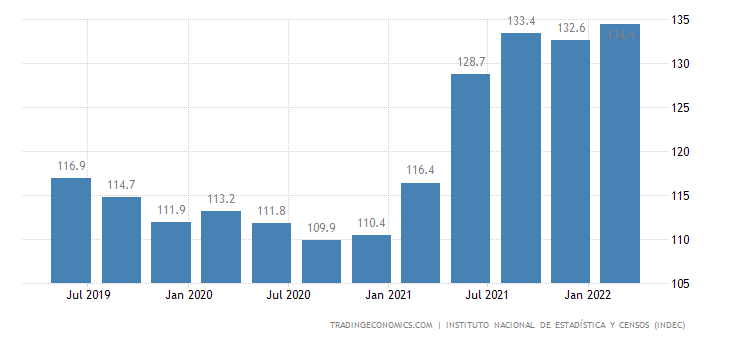
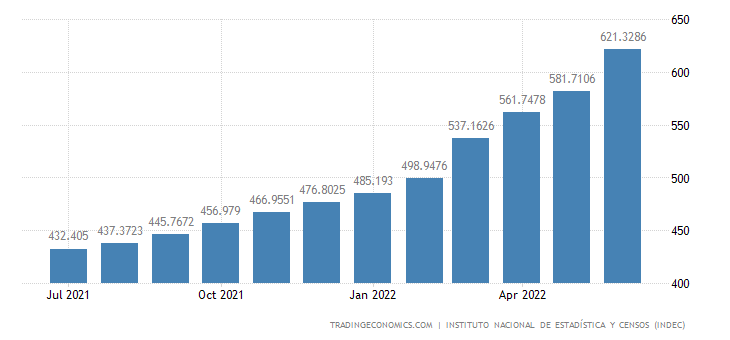
The appreciated U.S. exchange rate is putting pressure on inflation. Argentina’s Indec (National Institute of Statistics and Censuses) rose 64% in the 12 months to June. Not only is this the highest percentage since January 1992 (or more than 30 years), but inflation has also been in double digits for almost ten years (since August 2012).
The IMF’s chief economist, Pierre-Olivier Gourinchas, told La Nación that Argentina’s economic situation is “very worrying” and that reducing inflation must be an absolute priority. It is a contractual obligation with the IMF that inflation should be between 38 and 48 percent at the end of the year.
The country has had to raise the key interest rate to contain inflation. It reached 52 percent per year in June, the highest level since the Covid 19 pandemic. The increase was 22 percentage points. The country has raised interest rates the most in 2022, surpassing even Ukraine, which is at war with Russia.
With the latest hike in the key interest rate, Argentina has overtaken Venezuela to lead the ranking of the highest nominal interest rates in the world. Interest rates already increased in 2019. They reached 83.26% per year. The trend is for the interest rate to increase further in 2022 to curb inflation and attract foreign capital to the country.
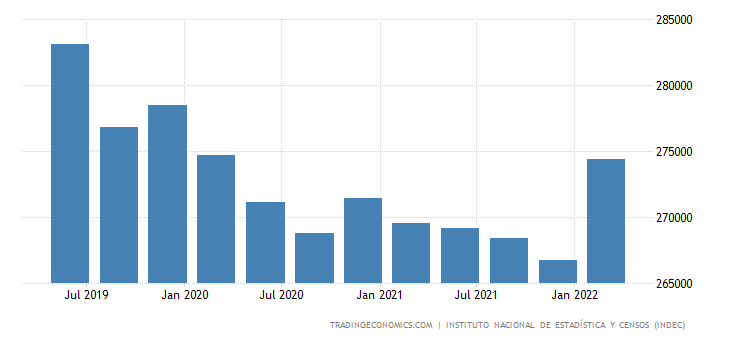
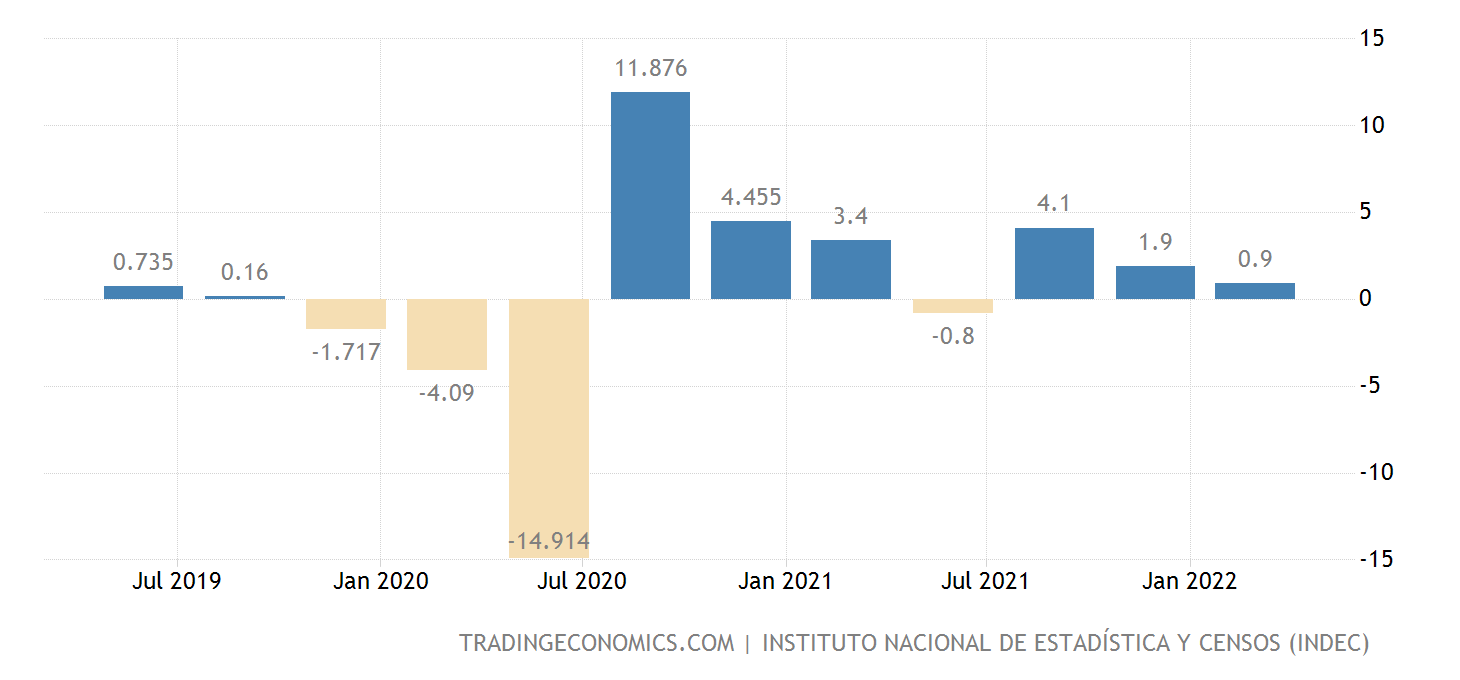
Another concern for the Argentine economy is the country’s low growth. The country’s GDP grew by 0.9% in Q1 2022 compared to the last quarter of 2021. It has slowed down compared to the previous two results. The upcoming results are likely to be affected by deteriorating global financial conditions.
The country’s unemployment rate stands at 7%. It is down from 2020, the year of the Covid 19 pandemic outbreak. However, this figure does not mean that the labor market is buoyant. Argentina has an estimated population of 46.2 million people, but Idec only calculates the rate in urban areas.
The urban population is 29.1 million, and 13.5 (12.6) million are employed, representing 27.3% of Argentina’s total population. Unlike Brazil, which is not the best example because it has a strong labor market, 45.7% of the total population (214.9 million) is employed.
In addition, the country’s population is aging. The number of people over 35 has increased by 17.3% from 2013 to 2022, according to an Indec estimate. The number of young people aged 34 and under increased by 3.8% during this period.
With information from Poder360
More: Argentina news in English, every day from The Rio Times.
This article was produced by The Rio Times’ automated newsroom system. How we use AI · Report an error · Editorial responsibility: Matthias Camenzind, Editor-in-Chief