Amazon Deforestation Hits a Decade Low, and Lula Aims It at Trump
Environment
Key Facts
—The number. About 1,295 square kilometres of Brazilian Amazon were cleared from January to June 2026, the lowest first-half figure since 2016.
—The drop. That is a 38% fall from the same period in 2025, on data from the national space research institute INPE.
—The trend. Clearing peaked around 2022 under Jair Bolsonaro and has fallen each year since Lula returned to office.
—The pledge. Lula has promised to end illegal deforestation by 2030 and framed the fall as his government’s own achievement.
—The tariff link. US officials cited illegal deforestation among reasons for a proposed new tariff round on Brazil.
—The caveat. These are near-real-time alerts; the official annual rate arrives later in the year, and drought and fire risk remain.
The Amazon deforestation figures released this week are good news for the forest. They are also a political weapon, and Lula pointed it straight at Washington.
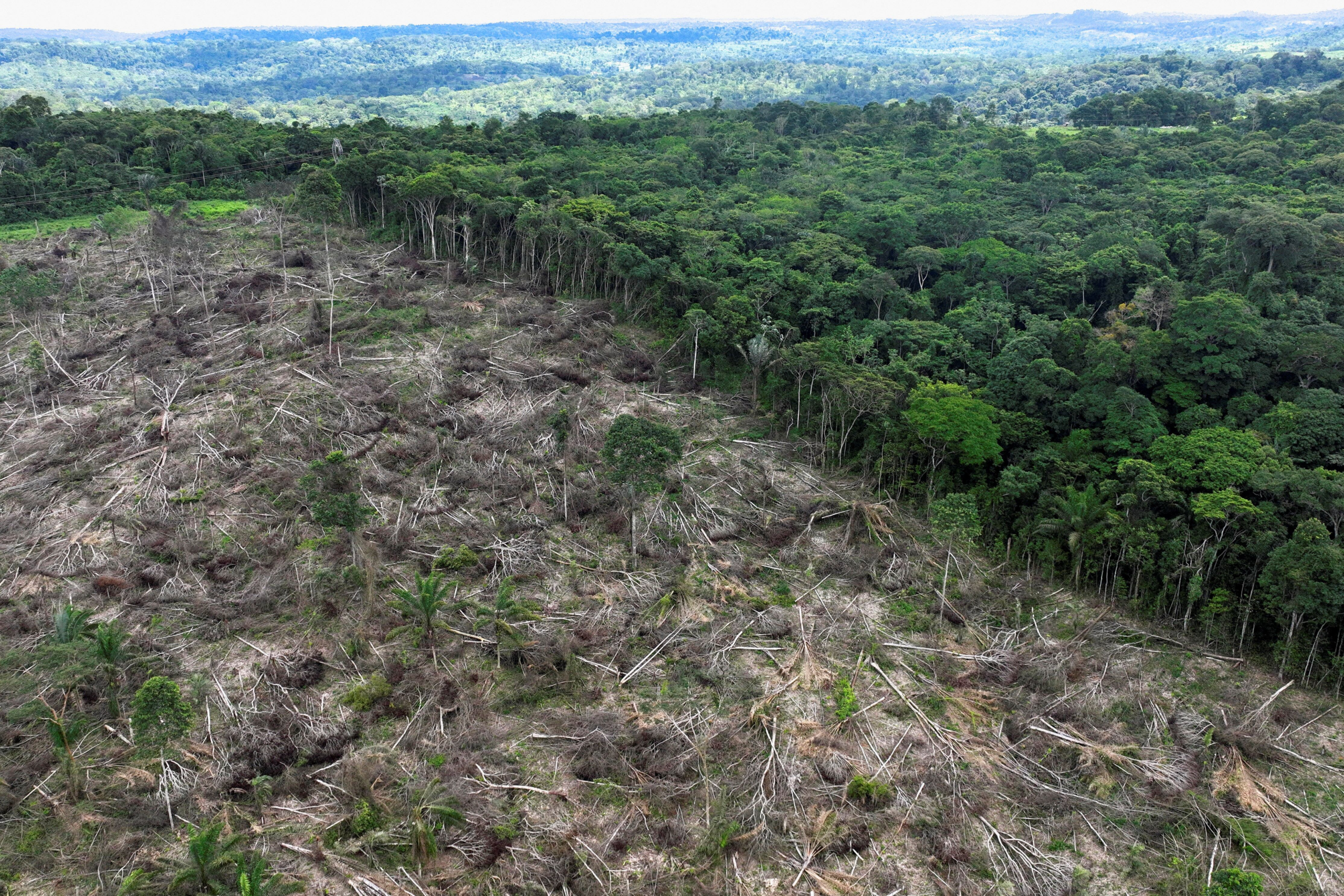
Brazil’s government reported that clearing in the Amazon fell to its lowest first-half level in a decade. The data land in the middle of a re-election campaign and a tariff fight.
That combination turned an environmental statistic into a talking point aimed at the United States. The president made the connection himself.
What the Amazon deforestation data show
The headline figure is concrete. From January to June, roughly one thousand two hundred and ninety-five square kilometres of forest were cleared in the Brazilian Amazon.
According to reporting on the INPE figures, that is a thirty-eight percent drop on the same window in 2025 and the lowest for the period since 2016. The space research institute tracks clearing by satellite.
The longer arc gives the number meaning. Clearing spiked around 2022 under the previous president, when an area many times the size of a major city was lost in a single year.
Since Lula returned to office in 2023, the rate has fallen every year. His first year alone roughly halved the annual figure.
The cumulative shift is large. The government puts the reduction at around half since the 2022 peak, and the most recent official annual rate was the lowest in more than a decade. Our reporting has shown this decline is a direct reversal of the surge seen under Jair Bolsonaro, whose administration presided over a sharp increase in clearing that drew international condemnation.
Why this Amazon deforestation number is also a tariff argument
The political charge comes from Washington. In June, United States officials proposed a fresh round of tariffs on Brazil, listing illegal deforestation among the justifications alongside trade complaints.
Lula’s government seized on the new data to rebut that claim. If the world’s largest rainforest is losing less forest, the argument goes, the environmental grounds for punishing Brazil weaken.
The president framed it as a matter of sovereignty. He said outsiders do not understand the work being done to reach zero deforestation by 2030, and that this was a decision of his government rather than of any climate summit.
The timing is not incidental. Lula is campaigning for a third term against Senator Flávio Bolsonaro, and the forest is one of the few files where his record clearly outperforms his rival’s camp.
The caveats behind the headline
The figure is real, but it is not the final word. These are near-real-time alerts from a rapid-response system, not the official annual rate, which is published later in the year for the cycle ending in July.
Clear-cutting is also only one measure of the forest’s health. Logging, understory fires and drought can degrade standing forest without triggering a deforestation alert, and scientists warn a strong dry season could still bring fires.
Lula’s own record has soft spots too. Critics point to his government’s authorisation of expanded oil exploration near the mouth of the Amazon River, awkward alongside the conservation message.
None of that erases the trend, which independent monitors corroborate. It does mean the number is a snapshot in a longer contest, not a finish line.
Why it matters to an outside reader
For an investor, the forest is now tied to trade access. European buyers face deforestation-free sourcing rules, and a credible downward trend helps Brazilian beef, soy and timber clear those bars.
It also shapes the tariff standoff with the United States, where the environmental argument is one plank of the case. A falling clearing rate is a card Brasília will keep playing.
The forward question is whether the trend survives the dry season and the election. If it does, Brazil enters those negotiations with data, not just promises, on its side.
Frequently Asked Questions
How much did Amazon deforestation fall in early 2026?
From January to June 2026, about one thousand two hundred and ninety-five square kilometres of the Brazilian Amazon were cleared, a thirty-eight percent drop from the same period in 2025. It was the lowest first-half figure since 2016, according to the national space research institute INPE.
Why is Lula linking the data to US tariffs?
US officials proposed new tariffs on Brazil in June, citing illegal deforestation among their reasons. Lula’s government is using the improved figures to argue that the environmental justification no longer holds, framing progress as a decision of his own government.
Is the improvement guaranteed to last?
Not necessarily. These are near-real-time alerts rather than the official annual rate, and clearing is only one measure of forest health, with drought, fire and degradation still posing risks through the dry season.
This article was produced by The Rio Times’ automated newsroom system. How we use AI · Report an error
LatAm Markets: Live Signals → — real-time movers, turnover leaders and FX across Latin America.
Read More from The Rio Times