Global Forest Loss Drops 36% in 2025 as Brazil Leads Decline
Key Facts
— — The global tropical forest loss fell 36 percent in 2025 versus the 2024 record, according to new University of Maryland GLAD Lab data released Wednesday April 29 by the World Resources Institute (WRI) on the Global Forest Watch platform. Total tropical primary forest loss in 2025: 4.3 million hectares (10.6 million acres) — area equivalent to Denmark. Despite the decline, total loss remains 46 percent above the 2015 baseline, with primary forests still disappearing at a rate of 11 soccer fields per minute globally.
— — Brazil drove the global decline. Brazilian primary forest loss dropped 42.4 percent year-on-year — from 2.83 million hectares in 2024 to 1.63 million hectares in 2025 (an area still equivalent to 2.8 times Brasília’s federal district size). Of Brazilian losses: 65.2 percent caused by fires, 34.8 percent by deforestation/land-use conversion. Steepest reductions in Amazonas, Mato Grosso, Mato Grosso do Sul, Acre, and Roraima — all over 40 percent down. Maranhão and Rondônia remained elevated.
— — Concerns: 2026 fire risk likely to intensify with potential El Niño return. Current loss rate still 70 percent above the 2030 zero-deforestation target signed by 140+ countries at the Glasgow Leaders’ Declaration. WRI Brazil director Mirela Sandrini: “Brazil’s progress shows what is possible when forest protection is treated as national priority.” But the EU Deforestation Regulation (EUDR) coming into operation in 2026 and the Tropical Forests Forever Fund (TFFF) framework remain critical implementation tests.
The 36 percent global tropical forest loss decline in 2025 — with Brazil delivering 42 percent reduction — provides the strongest single-year improvement in deforestation tracking history, but climate-driven fire risk could reverse the gains in 2026.
Brazil just delivered the most consequential single-year improvement in global deforestation tracking history. The Rio Times, the Latin American financial news outlet, reports that the global tropical forest loss fell 36 percent in 2025 versus the 2024 record according to University of Maryland GLAD Lab data released Wednesday April 29 by the World Resources Institute (WRI) — with Brazil’s 42.4 percent Amazon deforestation reduction driving most of the global improvement, even as climate-driven fire risk remains the central 2026 concern.
“Brazil’s progress shows what is possible when forest protection is treated as a national priority,” WRI Brazil director Mirela Sandrini said in remarks accompanying the data release. The structural reading: the Lula administration’s environmental enforcement framework — combining IBAMA enforcement, indigenous-territory recognition, and removal of pro-deforestation regulatory exemptions — has produced documented results that match the political rhetoric.
The Tropical Forest Loss Numbers
Total global tropical primary forest loss in 2025: 4.3 million hectares (10.6 million acres) — area equivalent to Denmark. Down from the 6.7 million hectares lost in 2024 (record high). The 36 percent year-on-year decline is the largest single-year improvement since systematic tracking began.
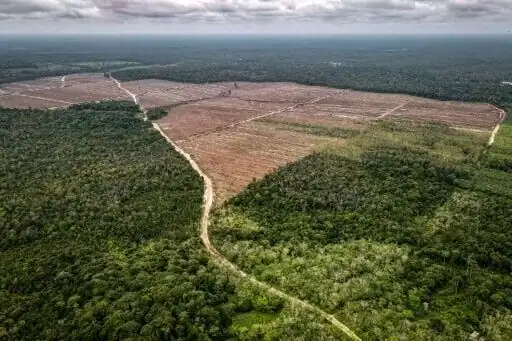
Despite the improvement, the absolute level remains 46 percent above 2015 — meaning 2025 was a recovery year, not a return to historically-low loss levels. Primary forests continue disappearing at a rate of 11 soccer fields per minute globally. The 2030 zero-deforestation target signed at Glasgow by 140+ countries requires loss reductions roughly 70 percent below current levels — meaning 2025’s strong year still leaves the global community well short of trajectory.
WRI’s Elizabeth Goldman noted that part of the 2025 decline reflects a recovery period after the 2024 record fire year. The 2024 spike was driven by extreme drought and El Niño conditions; 2025’s normalization reflects both genuine policy success and weather-related mean reversion. Goldman warned that El Niño’s potential return in 2026 could reverse much of the 2025 progress.
Why Brazil Drove the Global Decline
Brazilian primary forest loss in 2025: 1.63 million hectares — down from 2.83 million in 2024 (-42.4 percent). The reduction marks the lowest absolute Brazilian forest loss since at least 2002 when systematic tracking began. Within Brazilian losses, 65.2 percent were caused by fires and 34.8 percent by deforestation and land-use conversion.
Geographic distribution: steepest reductions in Amazonas, Mato Grosso, Mato Grosso do Sul, Acre, and Roraima — all states recording reductions over 40 percent. Maranhão and Rondônia maintained elevated levels, suggesting localized governance gaps in those two states. The Amazon biome led national reductions, with Cerrado and Pantanal showing more mixed results.
The structural read: Lula’s reactivation of IBAMA enforcement, recognition of new indigenous territories, and reversal of Bolsonaro-era regulatory exemptions produced visible results within 24 months. The 42.4 percent reduction is the most dramatic single-year improvement in Brazilian deforestation tracking history — and it occurred in the most politically contested environmental policy framework in any major democracy.
The Mercosur-EU and EUDR Framework
The 2025 Brazilian deforestation reduction also matters structurally for the Mercosur-EU trade agreement entering force Friday May 1. The agreement’s environmental provisions require Mercosur signatories to demonstrate continued progress on deforestation reduction — and Brazil’s 2025 data provides the strongest possible foundation for the agreement’s first-year compliance review.
The EU Deforestation Regulation (EUDR), set to come into operation in 2026, restricts EU imports of select commodities (beef, soy, palm oil, coffee, cocoa, timber, rubber) produced on land deforested after 2020. Brazilian exporters benefit from the 2025 deforestation reduction directly — Brazilian commodity supply chains can credibly claim post-2020 deforestation-free status more comprehensively than at any time in the past decade.
For Brazilian commodity majors (JBS, Cargill Brasil, Cofco Brasil, ADM Brasil), the deforestation reduction is structurally positive for EU market access. The Mercosur-EU agreement plus EUDR compliance plus 2025 forest data combine to give Brazilian exporters the strongest EU market access framework in 25 years. The strategic positioning over Q2-Q3 2026 will determine which exporters capture the most incremental EU share.
What This Means for ESG Investors
For ESG-focused funds with deforestation-screening mandates, the 2025 data materially expands eligible Brazilian-issuer universe. Companies and supply chains that had been screened out due to high-deforestation-region exposure can now be re-evaluated against the dramatically lower 2025 baseline. The structural rerating of Brazilian commodity exposure could continue through Q2-Q3 2026.
For sovereign-credit ESG investors, Brazil’s deforestation reduction supports continued sovereign-spread compression. ESG-tilted sovereign portfolios that had been underweight Brazil due to deforestation concerns now have data justification to rebalance. The deforestation-credibility hurdle for the country has been meaningfully reduced.
For COP30 and the Belém summit Brazil hosts in November 2026, the 2025 deforestation data provides essential narrative ammunition. Lula’s government can credibly enter COP30 with documented results rather than just commitments — a structurally different negotiating position than any previous Brazilian climate-summit hosting cycle. The combination of trade-deal activation Friday + deforestation data Wednesday + COP30 hosting in November creates a structurally favorable environmental-credibility window through end-2026.
More: Brazil news in English, every day from The Rio Times.
This article was produced by The Rio Times’ automated newsroom system. How we use AI · Report an error
Read More from The Rio Times