Senegal Gets US$35 Million to Fix Public Finance and Cut Debt
Senegal · ECONOMY
Key Facts
—Approval and amount: The African Development Bank (AfDB) Board approved CFAF 20 billion (about $35 million) for Senegal on 17 July 2026.
—Core purpose: The financing aims to strengthen public finance management, boost domestic revenue mobilisation, and support structural reforms under Senegal Vision 2050.
—Debt context: Senegal is under an IMF-supported programme worth SDR 453 million (about $650 million) and faces pressure to put public debt on a downward path.
—Audit response: Reforms respond partly to Court of Auditors findings on public finance management between 2019 and 31 March 2024, aiming to restore confidence.
—Partner alignment: The World Bank approved $115 million for Senegal’s fiscal sustainability programme in June 2025, creating a coordinated multilateral push on PFM reform.
—AfDB relationship: AfDB’s partnership with Senegal dates to 1972, with more than 3.3 billion Units of Account approved for 135 operations by end-2022.
The African Development Bank (AfDB) approved CFAF 20 billion (about $35 million) on 17 July 2026 to strengthen Senegal’s public finance management and domestic revenue mobilisation, as the country works to reduce its debt burden under an International Monetary Fund programme.
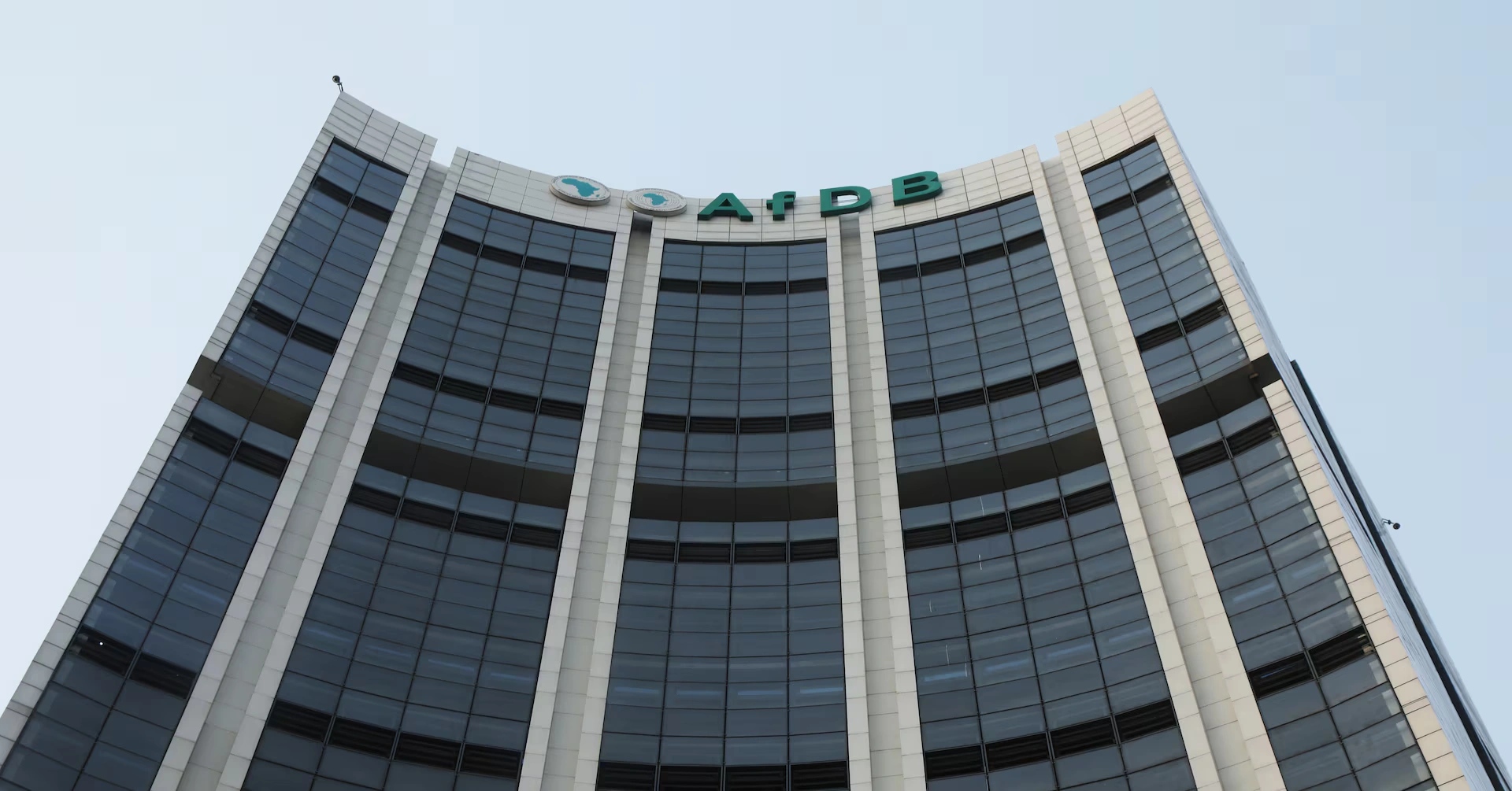
What the AfDB financing will do
The AfDB Board of Directors approved the operation at its Abidjan headquarters, with public reporting emerging in early August 2026. The financing is designed as budget-support funding for an ongoing economic reform programme, though Reuters noted it was not immediately clear whether the package is a grant or a loan.
Wilfrid Abiola, AfDB’s Country Manager for Senegal, said the Bank “reaffirms its commitment to standing alongside Senegal to consolidate economic reforms, strengthen domestic resource mobilisation, and create the conditions for more resilient growth.” The money targets modernisation of tax administration, improved public debt management, and greater efficiency in public spending.
Reforms under the programme also respond to findings by Senegal’s Court of Auditors on the management of public finances between 2019 and 31 March 2024. The aim is to restore confidence in the system while creating fiscal space for national development priorities under the “Senegal Vision 2050” strategy and the National Development Strategy 2025–2029.
Senegal’s debt pressures and the IMF programme
The AfDB operation arrives as Senegal grapples with a mounting debt burden. The country is under an IMF-supported Policy Coordination Instrument and an 18-month Stand-By Arrangement/Standby Credit Facility worth SDR 453 million (about $650 million or CFAF 350 billion).
Under that programme, IMF staff and Senegalese authorities have identified rebuilding fiscal buffers and putting public debt on a downward path as priorities. This is to be achieved through accelerated domestic revenue mobilisation and phasing out costly energy subsidies, for which Senegal has published a roadmap aiming for gradual removal by 2025.
Removing subsidies is politically sensitive, making credible public finance management systems essential to maintaining public trust. Senegal has developed a comprehensive PFM Reform Strategy building on West African Economic and Monetary Union (WAEMU) directives and performance-based budgeting introduced in 2020, targeting stronger fiscal discipline, improved Treasury management, and enhanced transparency around debt and fiscal risks from state-owned enterprises.
A long arc of AfDB-backed Senegal public finance reform
The new $35 million operation sits within a decades-long AfDB partnership with Senegal that began in 1972. By 31 December 2022, the Bank had approved more than 3.3 billion Units of Account—roughly $4.4 billion or CFAF 2,719 billion—for 135 operations in the country.
AfDB has repeatedly used budget support operations in Senegal to push economic and PFM reforms. In December 2023, the Board approved a EUR 74.5 million loan for the Resource Mobilisation and Industrial Development Support Programme, targeting tax base expansion and private sector formalisation. A 2023 mid-term review of Senegal’s Country Strategy Paper noted progress in programme budgeting and a new Public Procurement Code, while flagging remaining challenges in budget discipline and alignment with WAEMU reporting directives.
The current operation carries higher urgency given today’s debt environment and global interest rates. It also complements the World Bank’s $115 million “Strengthening Senegal’s Fiscal Sustainability Program,” approved in June 2025, which supports a 2025–2029 programme for transparency in public financial management and fiscal consolidation.
The great-power dimension of fiscal governance
The AfDB financing sits at the intersection of competing influences over African debt policy. The IMF, World Bank and AfDB—each shaped by Western and African shareholders—are central to setting rules for Senegal’s fiscal consolidation, tax policy, and subsidy regimes. Their programmes give creditors visibility and use over how much Senegal can borrow and which sectors get priority.
China’s role in Senegal’s financing mix is visible through AfDB-linked facilities rather than direct bilateral lending. The People’s Bank of China sponsors the Africa Growing Together Fund, which contributed EUR 46.67 million to an AfDB-financed EUR 166.36 million Dakar–Tivaouane–Saint-Louis highway project. This arrangement lets Beijing remain a key infrastructure financier while AfDB handles environmental and governance standards.
For Western governments, multilateral involvement in Chinese-backed projects increases transparency and aligns them with regional priorities. For investors, the coordinated push on PFM reform reduces sovereign risk and improves data quality, as explored in our pillar Africa: The New Scramble.
ESG markets and sustainable finance credibility
Better fiscal governance also makes Senegal’s entry into environmental, social and governance (ESG) borrowing more credible. In 2023–2024, AfDB’s Board approved a EUR 400 million partial credit guarantee to back Senegal’s inaugural sustainable financing, supporting up to EUR 500 million in loans dedicated to green and social investments.
In March 2024, Senegal raised $500 million in long-term sustainable financing, with AfDB serving as financial advisor and guarantor. The deal won “Sovereign Syndicated Loan Deal of the Year” recognition and highlighted Senegal’s commitment to climate resilience and renewables.
The new PFM programme reinforces this market positioning by standardising debt recording, improving procurement systems, and making it easier for private investors to assess risk and impact. For global banks and asset managers, credible PFM reforms backed by AfDB, World Bank and IMF underpin the investability of Senegal’s future sovereign loans.
What businesses and investors should watch next
The AfDB operation signals intensified efforts against tax evasion and greater digitalisation of tax administration. Businesses operating in Senegal should expect more rigorous tax controls, pressure on informal activities to register, and progressive rationalisation of tax exemptions, particularly around VAT.
World Bank and AfDB support for electronic procurement and modern financial management systems will create opportunities for suppliers who comply with new transparency criteria. At the same time, unified debt recording and annual monitoring of a medium-term debt strategy should improve clarity on Senegal’s total public debt, including obligations of state-owned enterprises and public-private partnerships.
Although $35 million is modest relative to Senegal’s total financing needs, its strategic use is significant. It acts as anchor funding for a wider reform programme, unlocking larger flows from the IMF, World Bank and private markets, while positioning Senegal as a regional model for WAEMU-compliant PFM and ESG-aligned sovereign financing.
Frequently Asked Questions
How much did the AfDB approve for Senegal’s public finance management?
The African Development Bank approved CFAF 20 billion, equivalent to about $35 million, on 17 July 2026.
What is the money intended to achieve?
It aims to strengthen public finance management, boost domestic revenue mobilisation, improve tax administration, and support structural reforms under Senegal Vision 2050.
Is the AfDB financing a loan or a grant?
Reuters reported it was not immediately clear whether the package is a grant or a loan, though AfDB’s recent Senegal operations have typically been sovereign loans in budget-support format.
Connected Coverage
For deeper analysis of how multilateral lenders, China and Western powers compete for influence over African sovereign financing, read Africa: The New Scramble.
Sources
This article was produced by The Rio Times’ automated newsroom system. How we use AI · Report an error
LatAm Markets: Live Signals → — real-time movers, turnover leaders and FX across Latin America.
Read More from The Rio Times