US Money Enters Brazil’s Data Center Race as Ares Breaks Ground

Technology
Key Facts
—The builder. Ada Infrastructure, owned by the US investor Ares Management, has broken ground near São Paulo.
—The bill. The GRU10 campus in Franco da Rocha carries about R$2.7bn ($516m) in investment through 2030.
—The size. The site is designed for up to three buildings and 300 megawatts of power.
—The customers. It targets cloud and artificial-intelligence users such as Amazon, Google and Microsoft.
—The jobs. Construction is expected to run about two years and employ up to a thousand workers.
—The context. It is the American counterpoint to China’s far larger data-center bet in the northeast.
A new Brazil data center has just broken ground near São Paulo, and the name behind it matters as much as the concrete. The money is American, and it arrives to answer a much larger Chinese bet already under way.
The developer is Ada Infrastructure, owned by the United States investment group Ares Management. Its GRU10 campus is the firm’s first project in Brazil and in Latin America.
For a reader abroad, the detail to hold onto is who is spending. After a wave of Chinese money, a major American investor is now planting a flag in the region’s digital backbone.
What the Brazil data center involves
The campus sits in Franco da Rocha, in Greater São Paulo, and will be built in stages. The company plans to invest about two point seven billion reais (around five hundred and sixteen million dollars) by 2030.
At full size, the site would hold up to three multi-storey buildings and draw three hundred megawatts of power, fed by two of its own electrical substations. That scale places it among the country’s larger digital projects, though well short of the giant on the northern coast.
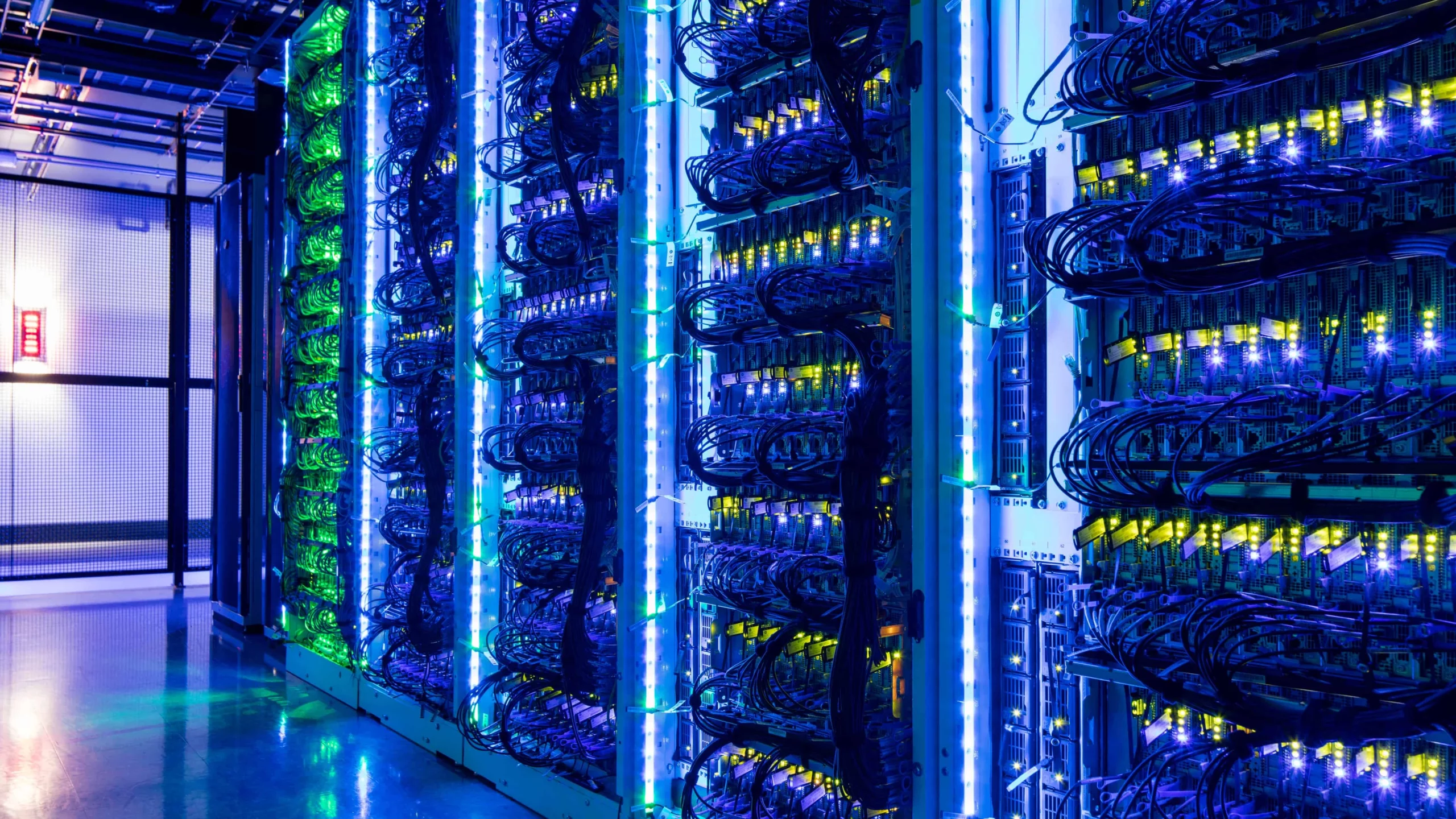
The design is built for the heaviest modern computing. It is aimed at cloud and artificial-intelligence work, the dense server racks that hyperscale customers need as they expand across the region.
Its likely tenants are the American cloud giants. The firm names the kind of customers it wants as the large providers behind Amazon, Google and Microsoft’s cloud platforms.
Why an American investor chose Brazil
Ares is one of the world’s large alternative-investment managers, and Ada’s development pipeline at launch encompassed projects in Japan, the UK and Brazil. Brazil is its entry point into a new continent.
The firm’s executives give three reasons for the choice. They cite a sizeable economy, a mature market for cloud services, and abundant renewable power to run energy-hungry servers.
That last point is the quiet draw. Brazil generates much of its electricity from water and wind, which lets a data center run around the clock without the carbon bill it would carry elsewhere.
The demand behind the bet is real. Industry figures cited alongside the project point to tens of gigawatts of data-center connection requests already lodged with the Brazilian grid.
The bigger contest behind the ground-breaking
This modest São Paulo project reads differently against its backdrop. In the northeastern state of Ceará, the Chinese owner of TikTok is building a campus on a scale of two hundred billion reais, dwarfing anything else in the country.
The Chinese project is export-focused and vast; the American one is smaller and aimed at serving cloud users at home. Together they show Brazil becoming a shared prize in a global race for computing power.
For investors, the read-through is that Brazil’s renewable grid is turning the country into a magnet for both sides of that race. The forward signal is whether the American names follow Ares in, having until now moved cautiously amid trade tension with Washington.
The constraint is the same for everyone. All this computing power needs a grid that can carry it, and Brazil’s ability to expand transmission fast enough is the question hanging over the whole boom.
There is a local dimension too. Franco da Rocha is a mid-sized town on the edge of the São Paulo metropolis, and a project of this weight can reshape its economy for years.
Beyond the construction jobs, the campus would draw suppliers, engineers and connectivity firms to the area. That kind of cluster is exactly what state officials hope these projects will seed.
For now the ground-breaking is a marker more than a finished bet. It signals that Brazil’s pitch, cheap clean power and a large home market, is landing with the world’s biggest pools of capital.
Who is building the new Brazil data center?
The developer is Ada Infrastructure, a digital-infrastructure company owned by the United States investment group Ares Management. Its GRU10 campus in Franco da Rocha is its first project in Brazil and Latin America.
How big is the project?
The company plans to invest about two point seven billion reais, roughly five hundred and sixteen million dollars, through 2030. At full build the campus would hold up to three buildings and three hundred megawatts of power.
Background: Why Trump Has Become a Central Force in Brazil Election.
Background: Brazil Overhauls Tax System: A New Era for Business and Economy.
Background: Brazil Election Polls 2026: All Surveys, All Candidates.
How does it compare with China’s project in Brazil?
It is far smaller. TikTok owner ByteDance is building a campus in Ceará on a scale of two hundred billion reais, while the Ares-backed project is a more modest bet aimed at cloud customers in the São Paulo market.
Connected Coverage
TikTok’s Brazil Data Center Gets $2B Wind Power Deal
How Brazil’s Ceará State Is Betting on the A.I. Boom
Brazil’s Blackout Exposes a Grid Caught Between Renewables and Data Centers
More: Brazil news in English, every day from The Rio Times.
Frequently Asked Questions
Who is building this new data center near São Paulo, and where exactly is it?
Ada Infrastructure, owned by US investment group Ares Management, is building it in Franco da Rocha in Greater São Paulo. This is the company's first project in both Brazil and Latin America.
How much will this project cost and how big will it be?
Ada Infrastructure plans to invest about R$2.7 billion (around $516 million) by 2030. At full size, the campus will have up to three buildings and draw 300 megawatts of power.
How does this American project compare to the Chinese data center being built in Brazil?
It is far smaller — the Chinese project in Ceará, backed by TikTok's owner ByteDance, is on a scale of 200 billion reais, dwarfing the Ares-backed campus. The American project is aimed at serving cloud users in the São Paulo market, while the Chinese one is described as export-focused and vast.
This article was produced by The Rio Times’ automated newsroom system. How we use AI · Report an error · Editorial responsibility: Matthias Camenzind, Editor-in-Chief