BRAZIL · CULTURE
Key Facts
—The event. ArPa Feira de Arte holds its fifth edition in São Paulo from May 27 to 31, 2026.
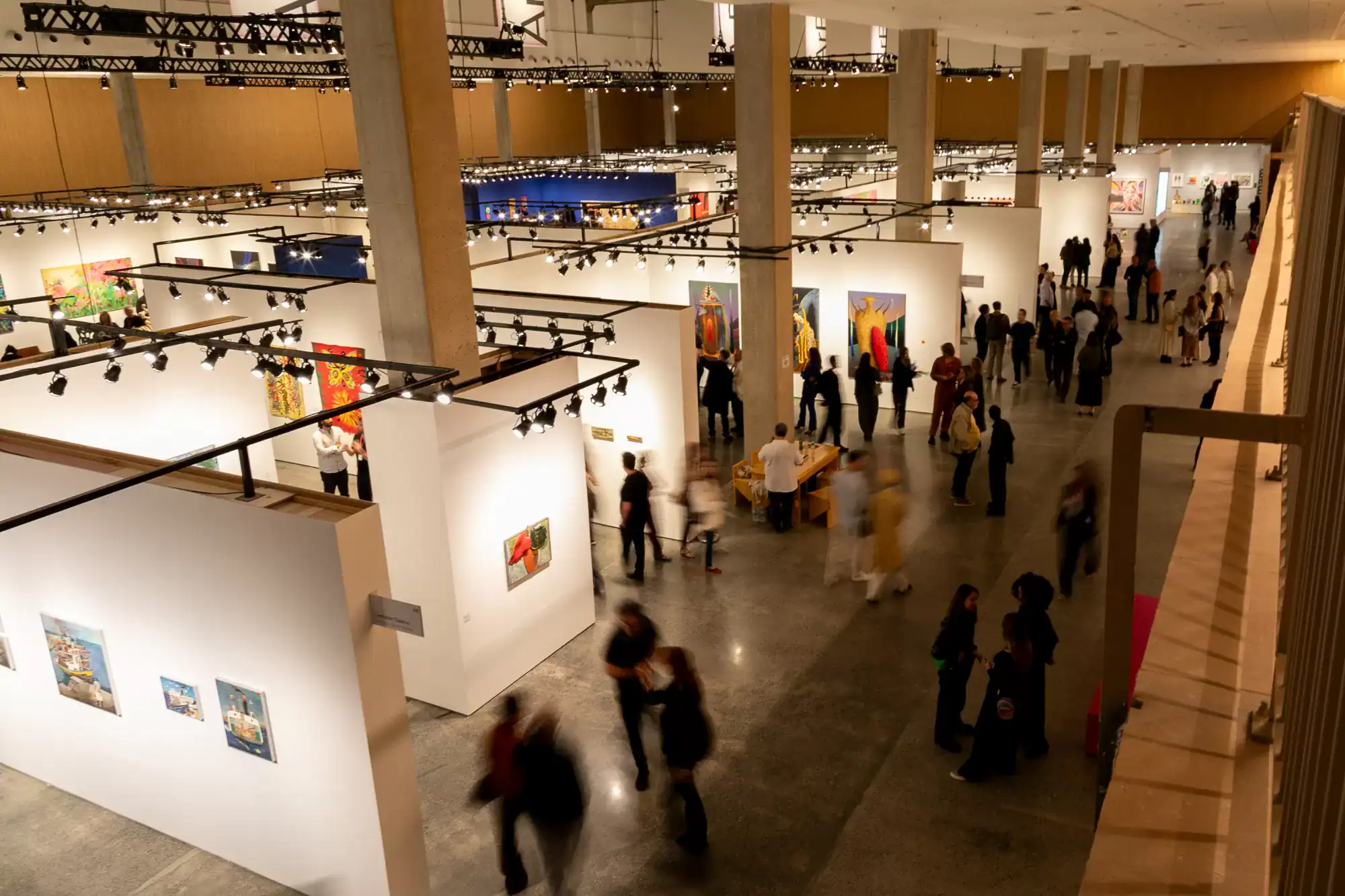
—The venue. It runs at the Mercado Livre Arena Pacaembu, the revamped former stadium that is now a cultural hub.
—The model. The fair keeps a small, curated format, with each gallery showing a few artists as mini-exhibitions.
—The backdrop. Brazilian gallery sales rose 21% in 2025, one of the world’s most dynamic art markets, per Art Basel and UBS.
—Latin American impact. A regional section spotlights Latin American artists, courting collectors beyond the usual European names.
A São Paulo art fair is opening its fifth edition with a deliberate bet on Latin America, favoring careful curation over sheer size as Brazil’s art market enjoys one of its strongest runs in years.
What the São Paulo Art Fair Is
ArPa Feira de Arte is a contemporary-art fair held in São Paulo. Its fifth edition runs from May 27 to 31, 2026. The venue is the Mercado Livre Arena Pacaembu, a former football stadium that has been turned into a cultural and events space.
The fair was created in 2022 and has grown quickly. It deliberately stays smaller than the giant international fairs. Founder and director Camilla Barella describes an approach built around dialogue between works, research and the public.
Galleries are invited by a curatorial committee rather than simply renting space. Each stand shows a limited number of artists. The result is presented as a set of mini-exhibitions rather than a crowded marketplace.
A Bet on Latin America
A dedicated section, called UNI, focuses on Latin American art. It is curated this year by Ana Sokoloff. The aim is to link the region to the wider global circuit.
In 2025 the section drew on themes such as belonging, identity, memory, gender and ancestry. For 2026 the organizers say it widens its reach across the Latin American scene. The pitch is a kind of collecting open to many perspectives.
The 2026 edition also adds new galleries from emerging regional circuits. Names joining include Athena, Pilar, Refresco and Pena Cal. Others broaden the fair’s international mix.
Why the Art Market Backdrop Matters
The fair arrives as Brazil’s art trade expands. Brazilian gallery sales rose 21% in 2025, according to the Art Basel and UBS art-market report. That placed the country among the most dynamic markets worldwide.
The report also found that 83% of Brazilian galleries expect to grow. That optimism feeds directly into events like this one. A confident market makes it easier to bring in new exhibitors and buyers.
The sector still faces hurdles. Organizers point to rising logistics costs and the difficulty of selling abroad. Even so, the mood around the fair is one of expansion.
A Stadium Turned Culture Hub
The Pacaembu is one of São Paulo‘s landmarks. Once a classic football ground, it was leased to private operators and rebuilt for events. During fair week it becomes a focal point for the city’s art crowd.
Holding a curated art fair there signals how the venue is being repositioned. It is no longer only about sport. For five days it anchors a broader cultural calendar in the city.
More: Brazil news in English, every day from The Rio Times.
Connected Coverage
For more on Brazil’s cultural moment, see our coverage of Walter Salles’s first post-Oscar project and our look at the Brazilian Music Awards.
This article was produced by The Rio Times’ automated newsroom system. How we use AI · Report an error · Editorial responsibility: Matthias Camenzind, Editor-in-Chief
Frequently Asked Questions
When and where is the fair?
ArPa runs from May 27 to 31, 2026, at the Mercado Livre Arena Pacaembu in São Paulo. It is the fair’s fifth edition since it began in 2022.
What makes this São Paulo art fair different?
It stays small and curated. Galleries are invited rather than simply renting stands, and each shows only a few artists. The format is meant to feel like a series of mini-exhibitions.
What is the UNI section?
UNI is the fair’s Latin American section, curated in 2026 by Ana Sokoloff. It aims to connect regional artists with collectors and the wider global art circuit.
How healthy is Brazil’s art market?
It is among the most dynamic in the world. Brazilian gallery sales rose 21% in 2025, and 83% of galleries expect further growth, according to the Art Basel and UBS report.
Is the fair open to the public?
Yes. The fair is held at a public-facing venue during its five-day run, with galleries, talks and curated sections. Visitors should check the official site for hours and tickets.