Key Facts
—The award. A consortium tied to Carlos Slim’s Grupo Carso won the contract to build two segments of the Saltillo–Nuevo Laredo passenger railway.
—The price. The package is valued at MXN 31.8 billion (about US$1.67 billion), one of the largest single rail contracts of Claudia Sheinbaum’s term.
—The stretch. It covers 111 kilometres of track linking Saltillo with Santa Catarina, on the industrial approach to Monterrey.
—The build. The route adds 40 bridges and 9 viaducts and runs on a 960-day construction schedule.
—The clock. Works began on 9 September 2025, with the line targeted to enter service from 2027.
—The regulator. Mexico’s rail transport agency, the ARTF, issued the award to a group led by Operadora Cicsa.
—The big picture. The full Tren del Norte will run close to 400 km at up to 200 km/h, carrying about seven million passengers a year.
Grupo Carso, the industrial and construction arm of Mexican billionaire Carlos Slim, has landed the first heavyweight contract on Mexico’s new northern railway: a MXN 31.8 billion (about US$1.67 billion) package to lay 111 kilometres of passenger track between Saltillo and Santa Catarina.
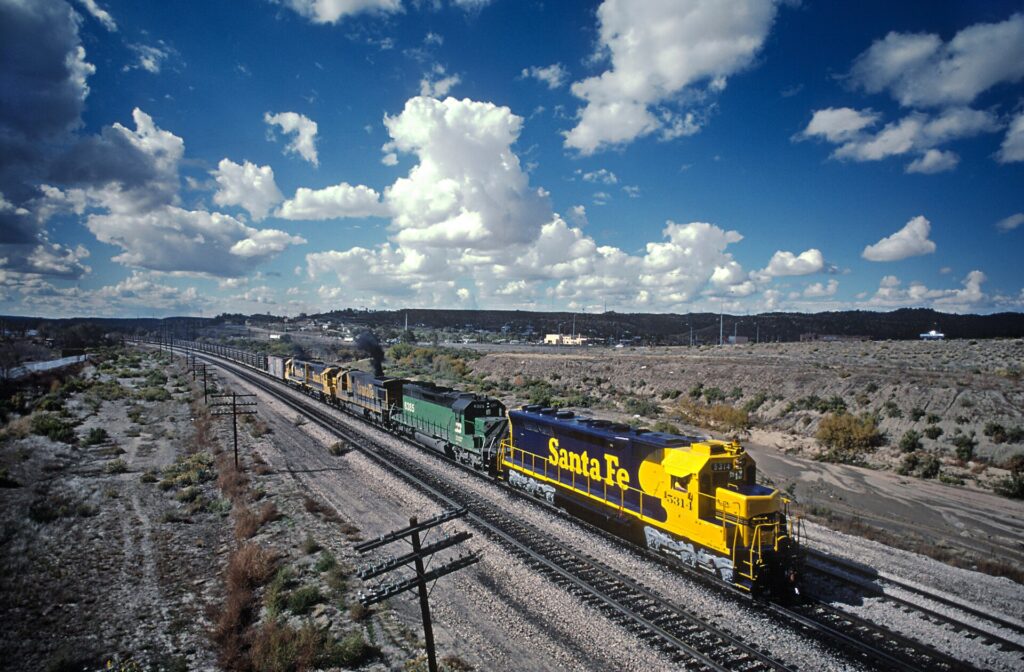
A US$1.67 billion vote in Slim’s builders
The Agencia Reguladora del Transporte Ferroviario (ARTF), Mexico’s rail regulator, awarded segments 13 and 14 of the Saltillo–Nuevo Laredo passenger line to a consortium led by Operadora Cicsa, a company inside Slim’s Grupo Carso. The estimated outlay tops MXN 31.8 billion (about US$1.67 billion).
Operadora Cicsa is Carso’s engineering and construction unit, the same arm that has executed large public works for successive federal governments. Winning the northern package places it at the centre of Mexico’s state-led building programme.
The decision hands Slim a stretch of infrastructure that planners consider central to the movement of both people and goods across Mexico’s manufacturing north. For a group already building the Tren Maya in the south, it deepens Carso’s role as the federal government’s contractor of choice for flagship works.
It also revives an old question in Mexico City. As Slim collects one strategic contract after another, critics ask whether the country’s future infrastructure is becoming too dependent on a single tycoon, while supporters note that few firms can finance works on this scale.
What the Saltillo–Santa Catarina leg involves
The 111-kilometre stretch links Saltillo, the capital of Coahuila, with Santa Catarina in the Monterrey metropolitan area of Nuevo León. Both sit in the heart of Mexico’s industrial belt, close to the automotive, steel and appliance plants that feed cross-border trade.
The engineering is demanding. The route will carry 40 bridges and 9 viaducts across uneven terrain, and the contract sets a 960-day construction window. Works began on 9 September 2025, and authorities say they want trains running from 2027.
That timing carries a tension worth watching. A 960-day programme counted from September 2025 runs into 2028, yet officials have publicly floated a 2027 start for service on the wider line. Reconciling the two will be one of the project’s early tests.
The segment is only one piece of a far larger corridor. When finished, the passenger line will connect Saltillo and Monterrey with Nuevo Laredo, the busiest crossing on the United States–Mexico border for overland commerce.
The long decline, and revival, of Mexican passenger rail
For most Mexicans, a fast intercity train is a novelty. After the freight network was privatised in the late 1990s, passenger services withered, leaving buses and cars to carry the bulk of intercity travel for a generation.
The Saltillo package is part of the first serious attempt in decades to reverse that. It follows the Tren Maya in the south-east and suburban lines around the capital, and precedes planned routes fanning out toward the centre and the northern border.
Reviving passenger rail is politically potent. It promises visible, ribbon-cutting infrastructure and a break with the car-and-bus status quo, but it also demands sustained capital and technical execution that Mexico has rarely marshalled for passengers.
The north is a logical place to start. Its dense industrial corridors and heavy commuter flows give a passenger line a ready market, unlike thinner routes where ridership forecasts are harder to defend.
The Tren del Norte and Sheinbaum’s plan
The project belongs to the Tren del Norte, a passenger network stretching close to 400 kilometres. Trains are designed to reach up to 200 km/h and to carry roughly seven million passengers a year once the full line opens.
It forms part of a broader federal push to bring back passenger rail. President Claudia Sheinbaum has made the revival a centrepiece of her infrastructure agenda, extending a programme that began under her predecessor and now spans several regions.
For northern Mexico, the promise is faster movement of workers between industrial hubs and a modern alternative to congested roads. For the government, it is a test of whether the state can deliver large rail projects on time and within budget.
Delivery risk is real. Big Mexican infrastructure has a history of delays and cost growth, and a high-speed passenger line through demanding terrain is among the more complex undertakings the country has attempted in years.
Why Slim keeps winning the big contracts
Slim, long ranked among the world’s richest people, built his fortune in telecoms through América Móvil. Grupo Carso, his industrial conglomerate, spans construction, energy, retail and manufacturing, giving it the financing and engineering depth to take on state megaprojects.
That reach is also why each award reignites debate. Supporters argue that few groups can fund and deliver works on this scale; sceptics warn that concentration leaves the state exposed if a single contractor stumbles.
Carso’s parallel role on the Tren Maya means it now sits on both ends of the country’s rail revival, north and south. How cleanly it delivers the Saltillo leg will shape how that concentration is judged in the years ahead.
For Slim, the appeal is a long-dated, government-backed revenue stream that complements his other businesses. For the state, his involvement brings capital and know-how, but also a dependency that is hard to unwind once construction is under way.
Trade, logistics and the northern corridor
The corridor’s economic logic is the border. Nuevo Laredo handles the largest share of United States–Mexico overland commerce, and the states the line connects, Coahuila and Nuevo León, are among the most industrialised in the country.
A faster passenger line frees road capacity, eases labour mobility and signals to manufacturers that the north is a priority for federal investment. In a nearshoring era, that message matters to companies weighing where to place new plants.
The timing aligns with a wave of foreign investment in northern Mexico, as firms relocate supply chains closer to the United States. Reliable transport links are part of what those investors weigh alongside power, water and labour.
Analysts caution, though, that a passenger railway alone will not transform freight logistics. The gains depend on how the line integrates with existing cargo networks and border infrastructure already straining under record trade volumes.
What to watch on the road to 2027
The near-term test is the schedule. A 960-day window is tight for a route with 40 bridges and 9 viaducts, and any slippage would push service beyond the 2027 target the government has floated.
Cost discipline is the second test. At MXN 31.8 billion (about US$1.67 billion) for one leg, the full network will run far higher, and Mexican megaprojects have a history of overruns.
Financing and integration are the third. How the passenger line meshes with freight corridors, and how the government funds the remaining segments, will determine whether the Tren del Norte becomes a working system or a highlight stub.
The last is precedent. If Carso delivers cleanly, the model of leaning on Slim for national infrastructure gains credibility. If it stumbles, the railway risks becoming another emblem of costly delay.
The bigger picture for Mexican infrastructure
Beyond the Saltillo leg, the award is a signal about how Mexico intends to finance its infrastructure ambitions: by leaning on a handful of deep-pocketed private groups able to shoulder multi-year construction risk.
Grupo Carso has signalled plans to commit around US$5 billion across Mexican projects, spanning energy, construction and transport, a pledge the railway contract now partly embodies.
The model has advantages. It brings private capital and execution capacity to works the state might struggle to deliver alone, and it ties a marquee investor’s reputation to the outcome.
It also carries risks the government will have to manage. Heavy reliance on one group can crowd out competition, complicate pricing and leave projects exposed if that group’s priorities shift.
For northern Mexico, the immediate stakes are practical. A working passenger line would ease commuting, support industry and validate the revival; a stalled one would reinforce scepticism about megaprojects.
Either way, the Saltillo award turns an abstract plan into a concrete commitment, and puts Slim’s builders at the centre of whether Mexico’s rail comeback succeeds.
Key Facts
— Project Snapshot
—Contractor. Consortium led by Operadora Cicsa, part of Carlos Slim’s Grupo Carso
—Segment. Numbers 13 and 14, Saltillo–Santa Catarina
—Length. 111 kilometres, with 40 bridges and 9 viaducts
—Investment. MXN 31.8 billion (about US$1.67 billion)
—Timeline. Works began 9 September 2025; 960-day schedule; targeted in service from 2027
—Wider line. Tren del Norte, close to 400 km, up to 200 km/h, about seven million passengers a year
— Figures reflect the award by Mexico’s rail regulator and company disclosures as of 3 August 2026.
This is reporting, not investment advice. Confirm current figures with official sources before acting.
Frequently Asked Questions
Who won the Saltillo–Nuevo Laredo railway contract?
A consortium led by Operadora Cicsa, a company within Carlos Slim’s Grupo Carso, was awarded segments 13 and 14 by Mexico’s rail regulator, the ARTF.
How much is the contract worth?
About MXN 31.8 billion (roughly US$1.67 billion) for the 111-kilometre Saltillo–Santa Catarina leg.
When will the line open?
Works began on 9 September 2025 under a 960-day schedule. The government has targeted service from 2027, though the build timetable points toward 2028.
What is the Tren del Norte?
A passenger railway of close to 400 kilometres linking Saltillo, Monterrey and the border city of Nuevo Laredo, designed for speeds up to 200 km/h.
Why does Carlos Slim keep winning these projects?
Grupo Carso has the financing and engineering capacity for megaprojects and is also building the Tren Maya, making it the government’s preferred contractor.
Related reading
- Carlos Slim Wins $1.7 Billion Contract for Mexico’s Northern Rail Line
- Browse Latin America Company Intelligence
- Brazil’s Financial Morning Call for Monday, August 3, 2026
Connected Coverage
Mexico’s CNA Fines Liverpool and Chedraui Over Mall-Rent Collusion
Sources: Agencia Reguladora del Transporte Ferroviario (ARTF).
This article was produced by The Rio Times’ automated newsroom system. How we use AI · Report an error
Read More from The Rio Times