By Isabela Fleischmann and Filipe Serrano
Shein’s plan to seek to raise to 85% production in Brazil of clothing sold on its marketplace in the country by 2026 was not only taken in response to discussions in the Lula government to create a tax on imported and sold products worth up to US$50.
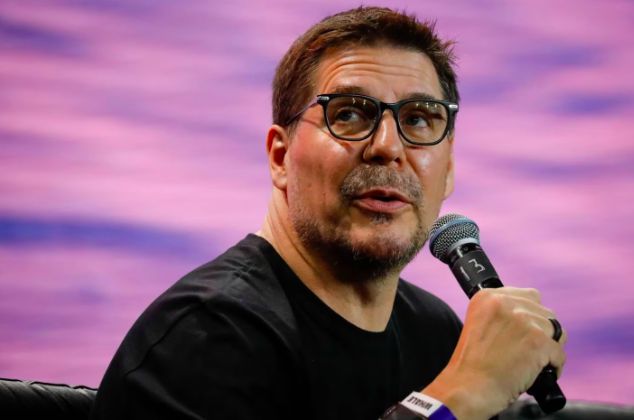
This is what Marcelo Claure, Shein’s chairman for Latin America, said in an interview with Bloomberg Línea.
According to him, the Chinese online retailer evaluates that Brazil has conditions to serve as a base to serve other markets in the region, besides serving as an experiment to internationalize production.

Shein’s executive, who met with authorities in the country in recent weeks, said that before the announcement, the company already had a pilot program with nine local clothing manufacturers in Brazil, adapting the production model of these suppliers to its processes.
In its established model, the retailer does not work with stocks and produces small batches of clothes, of only hundreds of units, which are then advertised on its website.
If sales of these pieces have found demand, new orders are placed with the suppliers.
According to the executive, who was COO of SoftBank until a year ago, traditional clothing manufacturers process orders on long terms and in large lots.
At the same time, Shein operates on demand: only what the consumer wants and in very small lots.
“It’s a digital model, different from traditional manufacturing.”
“That doesn’t mean we can’t adapt traditional manufacturing.”
“We will train people, bring our technology, and work closely with manufacturers who want to become Shein manufacturers.”
“We will bring them this new way of manufacturing where there is no inventory, given that we are manufacturing based on demand,” said Claure, who was once also SoftBank’s top name for Latin America.
PARTNERSHIP WITH COTEMINAS, BY JOSÉ GOMES
Shein expects to bring its fast, small-batch production model to Brazil, with the plan of working with 2,000 local suppliers and generating about 100,000 new jobs through these outsourced companies by 2026.
The retailer has already signed an agreement with Coteminas for 2,000 confectioners of the textile company to become Shein’s suppliers to attend the Brazilian and Latin American markets.
Coteminas is the company of former President José Alencar.
It is currently commanded by his son, businessman Josué Gomes da Silva, today president of Fiesp (Federation of Industries of the State of São Paulo), one of the most powerful class entities in the country.
Josué was quoted by President Luiz Inácio Lula da Silva to assume a ministry but refused, according to sources.
In a relevant fact released Thursday night (20), Coteminas said the agreement also includes financing for working capital and an export contract for home products.
The values of the agreement were not informed.
According to Shein’s executive, the expectation is to replicate the company’s experience in China, where the retailer works with tens of thousands of clothing manufacturers.
To this end, the company said it had set aside US$150 million to invest in training and technology for these manufacturers.
“We were already doing this in Brazil, still quietly, as a pilot program.”
“We already have nine factories operating in Brazil. And the results have been exceptional,” Claure said.
“The first commitment we made is with Coteminas, which has about 3,000 manufacturers today.”
“We analyzed who these companies are. We believe there is a cross-match.”
“Brazil has factories everywhere, especially in the Northeast and the South.”
“We don’t think we will have problems finding 2,000 suppliers.”
“They are small and medium companies that we can teach to work with small lots”, he said in the interview with Bloomberg Línea.
Claure said that when you have 2,000 partner factories in the country, demand could increase “dramatically” – a reference to production capacity.
Shein’s plan, therefore, is to serve not only Brazil but eventually neighboring countries in Latin America, manufacturing faster and designing products that meet the needs and desires of customers by the fact that the company is closer to the customers, according to Claure.
“We have always had a roadmap to ‘localize’ our business,” Claure said.
According to him, Shein has been testing a local marketplace to connect Brazilian sellers to consumers in the country since last year.
The local factories are part of this strategy, according to the executive.
The entrepreneur, from a Bolivian family, worked as COO of SoftBank between 2018 and 2020 and was responsible for restructuring WeWork and its subsequent IPO, as well as creating the Japanese conglomerate’s specific fund to invest in technology in Latin America in 2019.
He was also CEO of US telecom operator Sprint Corporation between 2014 and 2018.
PRODUCTION COSTS: BRAZIL VS. CHINA
Claure said that Shein has dialogues around the world with authorities who want local manufacturing from the Chinese retailer and that Brazil was chosen for the size of the market and the fit of the products with Brazilians.
Asked about the higher manufacturing cost in Brazil versus China and Southeast Asian countries, Claure said, “There is a huge misconception that people automatically assume that China’s manufacturing cost is low.”
According to him, the cost of manufacturing in China “has increased a lot,” and Shein incurs supply chain costs to move orders from the country directly to the Brazilian consumer.
Shein has enough analysis to eliminate those supply chain costs and be able to import large quantities of goods at a “very favorable” tax price, according to Claure, since the company is importing based on the cost at which the product was sold.
“We want to be able to turn those goods into finished products in Brazil and keep the same or lower prices, and we’ve already done that analysis,” he said.
“That will require a lot of time to set up these factories, spread the training, adapt to a new form of on-demand digital manufacturing, and so on.”
MEETING WITH HADDAD AND TAXES
On the government’s measures to expand tax collection on sales made by international e-commerce companies in the country, Shein’s Latin American chairman said the Brazilian government “did the right thing” by maintaining the import tax exemption on purchases of up to US$50 for individuals.
“This gives us much more conviction that we want to continue investing in Brazil; we are happy with the result,” Claure said.
On Wednesday (19), the Brazilian government reversed the decision to tax imported products in the cited values, plans that met a claim of large retail companies in Brazil and could represent an extra collection of US$8 billion a year, according to calculations of the Ministry of Finance.
This collection would affect large Asian e-commerce companies that sell in Brazil, such as Sea Shopee, from Singapore, and the Chinese AliExpress, from Alibaba, besides Shein.
Claure told Bloomberg Línea that he told Finance Minister Fernando Haddad that the rules are not clear today.
“There is confusion in the market, there is the exemption, or there is not the exemption.”
“My advice to him [the minister] was to define the rules, whatever they are, and we will be very happy to comply with them,” said the Shein executive.
Haddad said the government would try to curb abuses and eventual illegalities with greater oversight.
“We have expressed to Haddad that we will comply with whatever rules the government sets for everyone.”
“To make our commitment very clear, we left a letter signed by me and our CEO saying that we are committed to Brazil, creating 100,000 jobs, and allowing 2,000 Brazilian manufacturers to manufacture our products,” Claure said.
Haddad, for his part, said Shein requested a meeting Thursday morning to announce that it would adhere to the IRS compliance plan and was willing to do whatever was necessary to normalize relations with the Ministry of Finance.
According to Haddad, if the so-called compliance rule with the IRS applies to all companies in the industry, Shein said it would absorb the costs and not pass them on to the consumer.
“Haddad, at the end of the day, is the authority, and the Brazilian government will decide the best way to manage the different and cross-border marketplaces, and we will conform to whatever rule they establish,” Claure said.
“All we’re asking for are clear rules of engagement, which apply to all companies.”
“And as long as it does, we feel very comfortable because we have a superior business model.”
With information from Bloomberg
More: Brazil news in English, every day from The Rio Times.
Editorial responsibility: Matthias Camenzind, Editor-in-Chief · Editorial standards · Report an error