W.H.O. Withdrawal Would Isolate Brazil, Hinder Access to Vaccine and Treatment
RIO DE JANEIRO, BRAZIL – On Friday evening, Brazil’s President Jair Bolsonaro warned that unless the World Health Organization (W.H.O.) changed its behavior, regarded as “ideological” by the Planalto, it could follow the same path as Donald Trump and break with the organization.
President Bolsonaro’s threat to leave the W.H.O. was received in international diplomacy as a deliberate attempt by the Brazilian government to divert attention from, and relieve itself of responsibility for, the burgeoning number of deaths in the country due to covid-19.
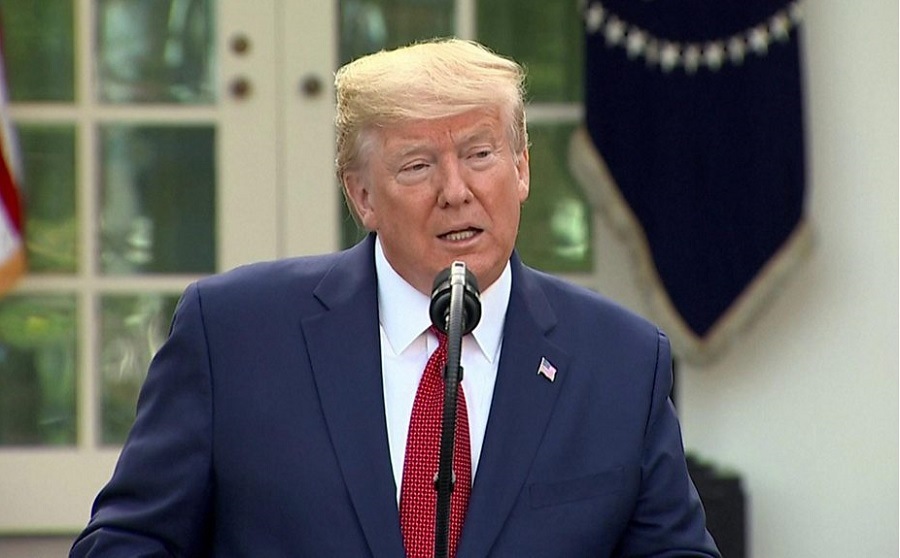
Officially, the W.H.O. announced on Saturday that it will not react to the Brazilian President’s declaration. But there was no shortage of comments at the top level of critical diplomacy, suggesting it was a ploy to find an external culprit for the crisis, the very tactic used by the White House when the US recorded 100,000 deaths. That day, Donald Trump announced that he was “breaking up” with the UN Health Agency.

The W.H.O., under heavy attack, concedes it will begin a process of reviewing its work. Among Europeans and several Latin American governments, the perception is that a change in the system needs to occur. But there is almost unanimous agreement that such reform should occur after the battle against the virus is over. Otherwise, the risk is that the focus on the pandemic will lose momentum.
For international negotiators, choosing the W.H.O. as the focus of attacks is a “smokescreen”; ambassadors and health experts point out the truth – Bolsonaro simply ignored the organization’s alerts.
On January 30th, the W.H.O. declared a global emergency, the highest level within international rules. Over a month later, on March 9th, the Brazilian President insisted that the issue was “blown out of proportion”.
Two days after that, the W.H.O. declared a global pandemic. At that same time, Bolsonaro said other colds killed more than Covid-19. A week later, Bolsonaro called the pandemic “hysteria”.
Months after the W.H.O. emergency alert on March 24th, the Brazilian president has insisted on using terms such as a minor “flu” and “cold”. On April 12th, he even suggested that the virus was “going away”.
Today, Brazil passed the US in the number of new cases in the previous two weeks. Over the past week, Brazil has also outnumbered America in deaths. Within the W.H.O., Brazil is regarded as the new epicenter of the international crisis.
Abyss
In Geneva, comments on Bolsonaro’s statement range from noting the “ridiculous role” the country plays in echoing Donald Trump’s strategy, to assessments that such a position would only exacerbate the country’s international isolation.
Outside the organization, Brazil could be excluded from an international effort led by W.H.O. and Europeans to ensure the production of, and access to, the Covid-19 vaccine.
The Brazilian government hesitated to be part of the effort and had not even been invited to the project’s launching. But last week, after a cabinet meeting in Brasília, the green light was given for the government to apply for inclusion.
In fact, if Brazil mimics Trump’s tactics, negotiators caution that the impact of Brazil’s potential withdrawal from the organization would not be the same as that of the USA.
The US government is responsible for US$400 million of a US$2 billion W.H.O. budget. Essentially, Americans sustains a large part of the global response to several health crises.
Brazil, on the contrary, is one of the system’s beneficiaries and today holds one of the largest debts to the organization – US$33 million. “Brazil loses more than it gains by leaving the W.H.O.,” pointed out an experienced negotiator.
Today, it is from the W.H.O. arm in the Americas – the Pan American Health Organization (PAHO) – that Brazil buys thousands of Covid-19 tests. The agreement established the sending of ten million tests to the country, and a part has already been delivered. Outside of the organization, Brazil would also be left without this purchase option.
Last year, the delivery of the triple viral vaccine to Brazil was also negotiated, and, in several crises in recent years, states in the country have been able to turn to the organization for help. During the Zika crisis, PAHO and the W.H.O were instrumental in the country’s response.
It is also thanks to the role of the different governments in W.H.O. that access to medicines and patent-breaking became a reality. Brazil revolutionized the way in which the W.H.O. has come to deal with the HIV virus. Moreover, Dr. Marcolino Gomes Candau, a Brazilian citizen, was the second W.H.O. Director General, serving from 1953 to 1973, consolidating the organization as the world standard.
New order
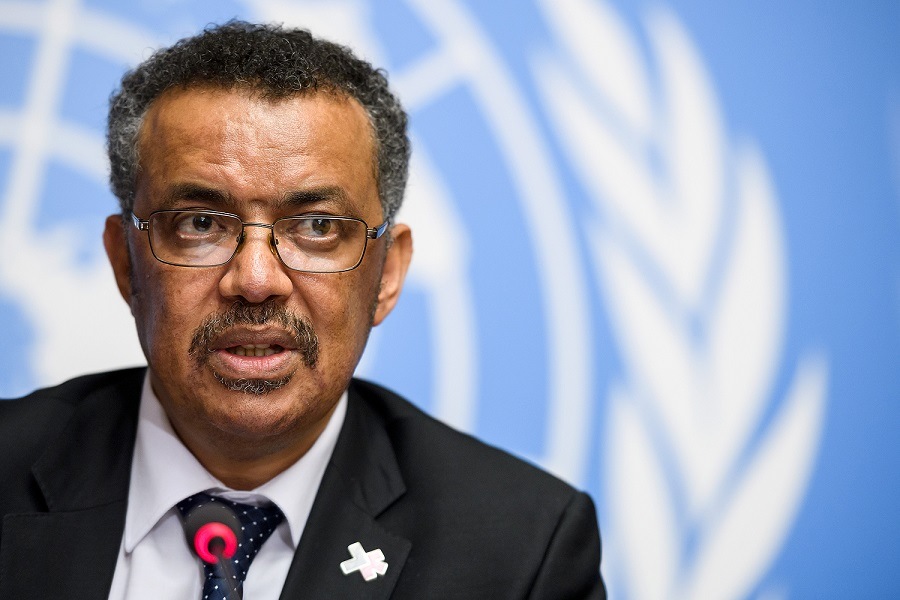
Since the start of the crisis, Brazil has adopted a position considered “problematic” by the W.H.O. At meetings, it mostly chose to remain silent, or simply not attend, while Bolsonaro attacked Tedros Ghebreyesus, the organization’s director-general.
In each of the organization’s comments, however, the government complained to its leadership. Letters were also sent by Itamaraty and were interpreted as pressure on Tedros.
But within the administration, it is believed that the alliance with the American government will offset the rupture with the other organizations and that Brazil will be part of a group of countries that are questioning multilateralism.
Brazil has systematically echoed Donald Trump and his allies’ criticism against the United Nations and its multilateral system.
The blows against multilateralism started in 2019, with the WTO courts completely paralyzed. For Trump, the organization led by Brazilian Roberto Azevedo favored the commercial growth of China. When, without a plausible explanation, Azevedo decided to announce that he was stepping down from the WTO command, Trump’s allied senators quickly went on social media to say “turn off the lights on your way out.”
In the W.H.O., the American position has been repeated. The US government initiated a string of attacks against General Director Tedros Ghebreyesus, accusing him of accepting Chinese influence. Although the agency failed to manage the pandemic, its alert was released to the world five weeks before Trump acknowledged the gravity of the crisis and started implementing measures.
Taking advantage of the context and the virus outbreak having been identified in China, the American government launched a campaign aimed at undermining the credibility of the W.H.O. and Beijing. The final blow was dealt last Friday when Trump announced he was breaking off from the organization.
There is, in fact, a behind-the-scenes process to redesign the new post-pandemic international order. The United States, in order to isolate China, its commercial rival, articulates an expanded G7 as a kind of new power center. But this time composed only of its main allies.
Last week, President Trump made two announcements that make up a reaction: the organization of a G7 with new guest countries and his break with the WHO, for allegedly being allied with the Chinese.
For some diplomatic sources, Trump is trying to build a front to contain China; to do so, he needs to establish new international bodies or forums. The White House’s proposal for a G7 meeting including India, Brazil, Australia, South Korea, and Russia comes within this context. Trump, in making the announcement, made it clear that the G7 was “obsolete” and would need to be recreated.
However, his maneuver has been interpreted differently: the proposed drainage is not for the G7, but rather the G20, a forum where America needs to share space with China.
It is not by chance, negotiators signal, that since the start of the pandemic the G20 has been inoperative and at a standstill. Several meetings ended without a final statement, vetoed by the US in a deliberate step to undermine its influence.
Source: UOL
More: Brazil news in English, every day from The Rio Times.
This article was produced by The Rio Times’ automated newsroom system. How we use AI · Report an error · Editorial responsibility: Matthias Camenzind, Editor-in-Chief