US Firm Wins US$700 Million-Plus Deal to Service Guinea’s Iron-Ore Trains
Key Facts
- —The country Guinea, in West Africa, has about 15 million people and a US$28 billion economy, smaller than Iceland’s. It mines about a third of the world’s bauxite, the ore behind aluminium.
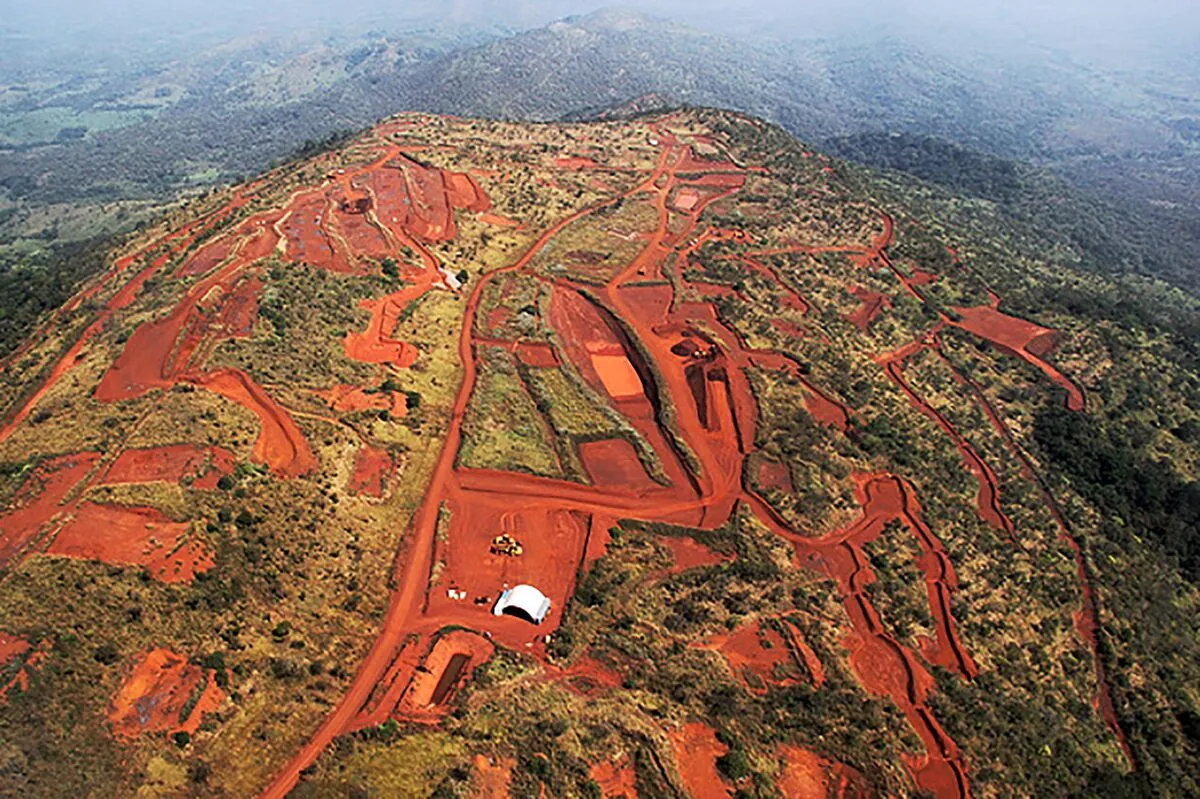
- —Why it matters Simandou, in Guinea’s southeast, is one of the world’s largest high-grade iron-ore deposits. After decades of delay, exports began in late 2025 on a new railway to the coast.
- —Why now The line is designed to carry up to 120 million tonnes of ore a year, so its locomotives must stay reliable. Its operator has now signed a long-term maintenance deal.
- —What happened US locomotive maker Wabtec announced a more than US$700 million services deal with CTG, the railway’s operator, on September 21. It is Wabtec’s largest services contract in Africa.
- —Who is involved CTG is owned 42.5% each by Rio Tinto’s SimFer venture with a Chinalco-led consortium and by Winning Consortium Simandou, a Chinese-Singaporean group. Guinea’s state holds 15%.
- —What it means for you Wabtec shareholders gain multi-year recurring income. Guinean firms are promised training and local partnerships, and Wabtec says the line will also carry passengers and other goods.
- —Still open Wabtec did not disclose the contract’s length or fleet size. Rio Tinto expects its Simandou mine to reach full output only in the second half of 2028.
Guinea, a West African country of about 15 million people, began exporting iron ore from its vast Simandou deposit in late 2025. US locomotive maker Wabtec has now won a more than US$700 million Guinea railway maintenance contract, its largest services deal in Africa.
Wabtec announced the agreement with La Compagnie du TransGuinéen (CTG), the joint venture that runs the Simandou railway, on Monday, September 21. Wabtec says the deal, together with earlier locomotive orders, takes its Simandou business above US$1.2 billion.
What the Guinea railway maintenance contract covers
The agreement covers scheduled and unscheduled maintenance for CTG’s ES43AC Evolution Series locomotives, which have 4,500-horsepower engines. It also includes parts and component overhauls, parts management, logistics support, training, remote diagnostics and localization.
Wabtec called it its largest services contract in Africa but did not disclose its length or the size of the fleet. The company describes it only as a multi-year, customized agreement.
Sameer Gaur, Wabtec’s president of global freight services, said the deal aims to maximize locomotive availability and reliability. He added that it would build local skills through training and partnerships with Guinean businesses.
The railway runs more than 600 kilometres from the Simandou mines in the southeast to the Port of Morebaya on Guinea’s coast. Wabtec says it will also carry passengers and non-mining goods.
The Simandou megaproject and its power players
Simandou holds one of the world’s largest high-grade iron-ore reserves, long described as the biggest untapped deposit of its kind. After decades of delays, operations formally started in November 2025 and the first cargo sailed in December.
Rio Tinto, the Anglo-Australian miner, develops blocks 3 and 4 through SimFer with a consortium led by China’s state-owned Chinalco. Guinea’s government holds 15% of the SimFer mining company.
Blocks 1 and 2 belong to Winning Consortium Simandou (WCS), whose backers include Singapore’s Winning International, China’s Weiqiao and China Baowu. SimFer and WCS each own 42.5% of CTG, and the Guinean state holds the remaining 15%.
Wabtec holds no stake in the project. It supplies, and will now service, the locomotives that haul the ore to the coast.
Wabtec’s growing footprint in Guinea
In July 2024, SimFer ordered US$277 million of Evolution Series locomotives from Wabtec. In January 2025, Wabtec announced a further US$248 million locomotive and services order from WCS.
Those orders, worth about US$525 million, plus the new agreement take Wabtec’s Simandou business past US$1.2 billion. The first locomotive, assembled at Wabtec’s plant in Marhowra, India, was unveiled in May 2025.
Guinea’s mines minister, Bouna Sylla, said the deal reflects the country’s wish to build partnerships with American companies. Chinese groups dominate Simandou’s ownership, so a large US contract stands out.
The company is positioning itself as a long-term partner rather than a one-time equipment supplier.
Why the maintenance deal matters for investors
Maintenance contracts often generate steadier revenue than one-off equipment sales. A long-term services agreement gives Wabtec recurring income tied to the railway’s daily operations.
For Guinea, reliable locomotives are critical to keeping iron ore flowing to export markets. Any disruption on the more than 600-kilometre line would delay shipments and revenue.
The Simandou project sits at the centre of a broader contest for minerals and infrastructure influence. It fits the pattern covered in Africa: The New Scramble, where global powers and companies compete for access to the continent’s resources.
The regional read-through for West Africa
Simandou shows how rival miners can share one rail-and-port system to reach the coast. Other West African mining economies face similar transport bottlenecks.
Chinese state-linked groups such as Chinalco and Baowu add a great-power dimension. American, Chinese, Singaporean and Anglo-Australian interests all meet in the project.
Wabtec’s contract signals that Western companies can still win large African infrastructure deals. But the competition is intense and often tied to broader diplomatic and financial relationships.
What to watch next
SimFer says the rail network was fully commissioned in the first quarter of 2026. It shipped 2.2 million tonnes of ore to China in the first half of the year.
The next milestone is SimFer’s own port at Morebaya, 85% complete in June and due to be commissioned in early 2027. Until then, its ore leaves through the WCS port.
Rio Tinto expects its Simandou mine to reach full production rates in the second half of 2028. The shared rail and ports are designed to export up to 120 million tonnes a year.
Wabtec’s maintenance record will be tested as traffic builds toward that level. Any delay on the railway would ripple across Guinea’s mining and logistics sectors.
The railway is part of the Simandou story that our Guinea explainer covers alongside bauxite and the political outlook.
Frequently Asked Questions
How much is Wabtec’s Guinea railway maintenance contract worth?
Wabtec says its long-term services agreement with La Compagnie du TransGuinéen is worth more than US$700 million. It announced the deal on September 21, 2026, and called it its largest services contract in Africa.
What does the Wabtec contract with CTG cover?
It covers scheduled and unscheduled maintenance, overhauls, parts management, logistics, training, remote diagnostics and localization for CTG’s ES43AC Evolution Series locomotives. Wabtec has not disclosed how long the agreement runs.
How long is the Transguinean railway in Guinea?
The Transguinean railway is more than 600 kilometres long. It links the Simandou mines in southeastern Guinea to the Port of Morebaya on the coast.
What is Simandou, and why does it matter for Guinea?
Simandou is an iron-ore deposit in southeastern Guinea, long described as the world’s biggest untapped high-grade reserve. Exports began in late 2025, and the shared rail and ports are designed to handle up to 120 million tonnes a year.
Connected Coverage
Sources
- wabteccorp.com (21 Sep 2026)
- africa.businessinsider.com
- trains.com
- wabteccorp.com (30 Jul 2024)
- wabteccorp.com (28 Jan 2025)
- riotinto.com (11 Nov 2025)
- riotinto.com (Simandou)
- simfer-sa.com (6 Aug 2026)
- riotintoguinee.com (8 Sep 2026)
- wabteccorp.com (26 May 2025)
- simfer-sa.com (3 Dec 2025)
- riotinto.com (29 Jul 2026)
- World Bank (Guinea population and GDP, 2025)
- usgs.gov (Guinea bauxite)
This article was produced by The Rio Times’ automated AI newsroom. Editorial responsibility: Matthias Camenzind, Publisher and Editor-in-Chief. The Rio Times also runs Ask Rio Times, which answers from 100,000+ of our own articles, the daily Latin America Power Map, and prediction-market odds on elections and markets.. How we use AI · Report an error
LatAm Markets: Live Signals → — real-time movers, turnover leaders and FX across Latin America.