Volkswagen Restructuring: US$18.6 Billion Earmarked for Cuts and Plants
GERMANY · AUTOS
Key Facts
- —The price tag Volkswagen has earmarked €16 billion (about US$18.6 billion) for job cuts and plant restructuring, German media report.
- —The plan The supervisory board approved the Future Plan 2030 on September 3: 50,000 additional job cuts, on top of 50,000 already under way.
- —The footprint Four German plants — Emden, Hanover, Zwickau and Neckarsulm — lack follow-on production after 2031 to 2034. None closes immediately.
- —The target A 9% operating margin by 2030 on about 9 million vehicles a year, with investment cut to €135 billion (about US$157 billion) for 2027–2031.
- —The pressure Net profit fell 44% in 2025; US tariffs alone cost €2.9 billion (about US$3.4 billion) last year.
- —Latin America No plant in Mexico, Brazil or Argentina is named. But Puebla, VW’s Mexican hub, is already cutting jobs.
Europe’s biggest carmaker has put a number on its own reinvention — and it is larger than anything the industry has attempted in decades.
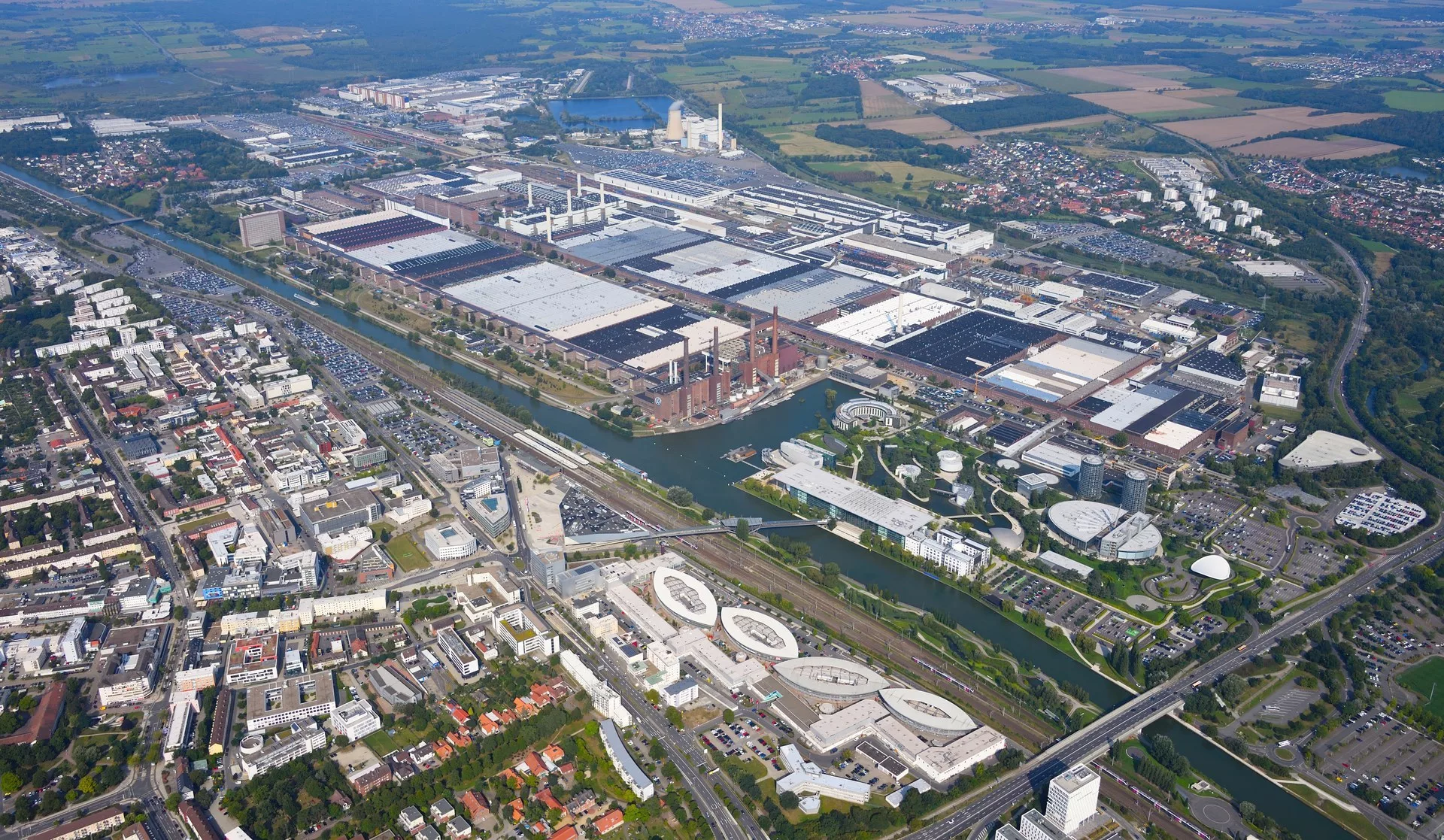
The Volkswagen restructuring now has a price tag. Europe’s largest carmaker has earmarked €16 billion (about US$18.6 billion) to pay for job cuts and the reshaping of its German plants, German media reported this week — the costliest overhaul in the company’s 89-year history.
What the Board Approved
As The Rio Times reported last week, Volkswagen’s supervisory board unanimously approved the Future Plan 2030 on September 3 in Wolfsburg. The plan adds roughly 50,000 job cuts — about 8% of the global workforce — to the 50,000 reductions agreed since late 2024, bringing the total toward 100,000 by 2030.
The new figure is the money set aside to execute it. At €16 billion (about US$18.6 billion), the earmarked sum covers severance programs, early-retirement schemes and the industrial reorganization of sites that will lose car production. Dollar conversions in this article use the European Central Bank rate of 1.1652 dollars per euro on September 10, 2026.
Four German plants — Emden, Hanover, Zwickau and Audi’s Neckarsulm — currently have no competitive follow-on production once their existing models run out between 2031 and 2034. The company says alternative uses will be explored; no plant is being abandoned outright. A controversial proposal to split the Volkswagen passenger-car brand from the components business is off the table.
The model lineup will shrink by as much as half by 2035, and about a third of activities deemed non-strategic will be divested or realigned. Volkswagen acknowledges more than 500,000 vehicles of excess annual capacity in Europe.
Why the Board Moved Now
The numbers explain the urgency. In 2025 Volkswagen’s net profit fell 44% to about €6.9 billion (about US$8 billion), operating profit dropped 53% to €8.9 billion (about US$10.4 billion) and the operating margin shrank to 2.8%. US tariffs added €2.9 billion (about US$3.4 billion) in costs.
China, once the group’s profit engine, has turned against it. BYD knocked Volkswagen off the top of the Chinese market in 2024; the group slipped to third behind Geely in 2025. Chinese brands have since doubled their combined share in Europe, pressing into Volkswagen’s home market with cheaper, software-rich models.
The Porsche-Piëch family, which controls a majority of voting rights through Porsche SE, pushed for faster action as dividends came under pressure. Labor leaders Christiane Benner and Daniela Cavallo said they had “prevented a dangerous escalation of the conflict” — a phrase that tells its own story about how close the fight came to open warfare.
The plan’s financial architecture pairs the cuts with discipline elsewhere: capital expenditure and research spending for 2027 through 2031 is set at €135 billion (about US$157 billion), roughly 16% below the previous investment round. Asset sales are adding cash — in June, Volkswagen sold 51% of its marine-engine unit Everllence to Bain Capital for US$8.4 billion.
Citigroup analysts called the agreement “a brave plan and a realistic decision” and “existential” for the carmaker. The open question, as trade journal Automotive News put it, is execution: the company has not published a brand-by-brand breakdown of the cuts, and the fate of the four plants will be decided model cycle by model cycle.
The Latin American Read-Through
No plant in Mexico, Brazil or Argentina appears in the Future Plan 2030. That is the official picture — and it deserves a caveat. The plan is a German-European framework, negotiated with German unions and the state of Lower Saxony. It says nothing, yet, about how a company cutting 100,000 jobs and halving its model range will allocate future products to its plants in Puebla, São José dos Pinhais or Pacheco.
Mexico offers the clearest warning sign. As The Rio Times has documented, Volkswagen’s Puebla complex — the group’s largest outside Germany — is already shedding workers, with the state government opening a job bank of 4,000 vacancies for affected employees even as the company declines to number the layoffs. The plant sits at the intersection of US tariffs, a strike threat and the USMCA review, a squeeze we detailed in August.
For Latin America, the Volkswagen restructuring cuts both ways. A leaner model range could concentrate production of global volume cars — the segment in which Puebla and the Brazilian plants compete — in fewer, fuller factories. Or the group could treat the region as a sales market rather than an industrial base, as Chinese rivals flood it with the same low-cost models that broke Volkswagen’s dominance in China.
What is certain is the direction of travel in Wolfsburg. A company that once defined itself by scale — twelve brands, more than 660,000 employees, plants on four continents — has now priced its retreat from that model at €16 billion (about US$18.6 billion). Where the remaining footprint lands is the question Latin America’s auto hubs will be asking for the rest of the decade.
This article was produced by The Rio Times’ automated newsroom system. How we use AI · Report an error
LatAm Markets: Live Signals → — real-time movers, turnover leaders and FX across Latin America.
Read More from The Rio Times