Europe Intelligence Brief — Wednesday, September 9, 2026
Executive Summary
Europe Intelligence Brief for September 9: Norway buries King Harald V in a state funeral after 35 years on the throne, Hungary expels ten Russian
Europe Intelligence Brief — Wednesday, September 9, 2026
Key Facts
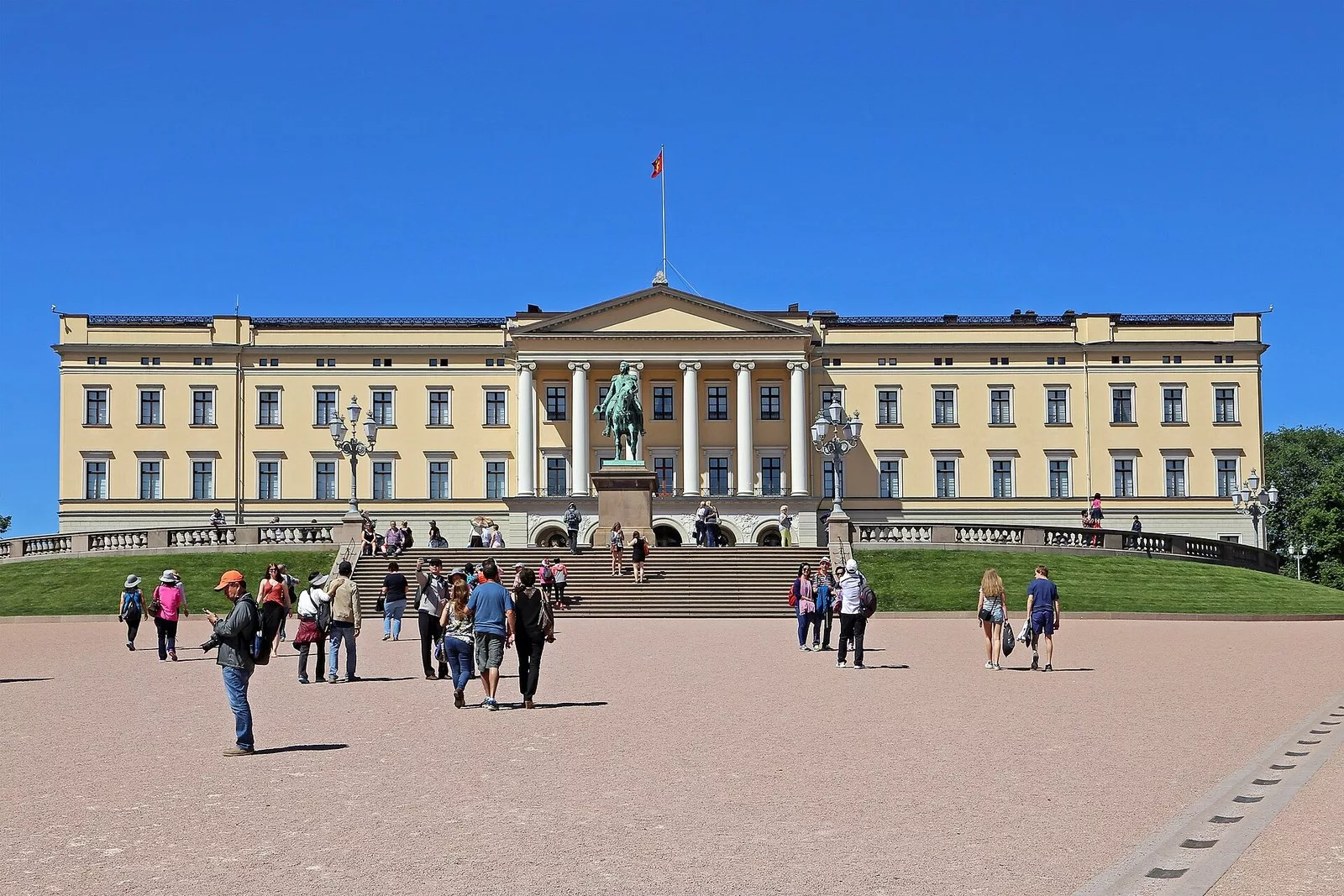
- Norway. King Harald V was buried in Oslo Cathedral after 35 years on the throne, in a state funeral drawing European monarchs, Britain’s Prince William and Ukraine’s Volodymyr Zelensky (NBC News, ABC News, 9 September).
- Hungary. Foreign Minister Anita Orbán confirmed the expulsion of ten Russian diplomats for conduct “unacceptable for diplomats under the Vienna Convention,” and Moscow’s Maria Zakharova promised a “harsh and painful” reply (Euronews, The Moscow Times, 8 September).
- Serbia. President Aleksandar Vučić signed the decree dissolving parliament and fixed a snap election for 25 October, confirming he will resign the presidency within weeks to run for prime minister (Meduza, TASS, 9 September).
- Ukraine. NATO’s Mark Rutte told allies civilian deaths have reached their highest level in years; UN monitors separately counted 437 civilians killed in July, the worst monthly toll since March 2022 (NATO, UN News, 8-13 September/August).
- Netherlands. The three-party coalition reached an eleventh-hour deal shelving most of a planned €6.5 billion welfare-savings package without a single opposition vote, ahead of the 15 September budget presentation (DutchNews.nl, 1 and 5-9 September).
- Italy. Wholesale electricity prices hit €218.93 per megawatt-hour on Monday, the highest since the 2022 energy crisis, after the country’s hottest summer since 1950 (The Local Italy, 8 September).
- United Kingdom. Jaguar Land Rover announced plans to cut 4,000 jobs over two years to save £1.7 billion, and the government has ruled out a bailout (ITV News, CNBC, 7 September).
Four governments spent Wednesday closing something they had left open, in four different registers: a reign, a spy network’s free run, an election date, and an honest count of a war’s cost. None of it resolves what comes next, but each closing is real, and each is dated.
Read in Norwegian, Hungarian, Serbian, Italian, Dutch, Greek, Spanish, French and Russian, across the continent’s largest outlets and our own Europe desk.
Norway: A Reign Closes, Correctly
King Harald V was buried in Oslo Cathedral on Wednesday after thirty-five years on the throne, in a state funeral that closed the capital’s streets to traffic and drew Sweden’s, Denmark’s, Spain’s, the Netherlands’ and Belgium’s reigning monarchs into the pews alongside Britain’s Prince William and Japan’s Crown Prince Akishino. His son formally succeeds him as King Haakon VIII, inheriting an institution that modernised itself gradually enough to outlast the turbulence around it.
Crowds queued for roughly seven hours to view the king lying in state before the funeral, and screens were installed downtown for those who could not fit inside the cathedral. The scale of public mourning, for a monarchy with no formal political power, is itself a kind of verdict on thirty-five years spent making the office look indispensable anyway.
Ukraine’s Volodymyr Zelensky used the visit for harder business a day earlier, meeting Prime Minister Jonas Gahr Støre on Tuesday to press for interceptor missiles and continued work on Freyja, a lower-cost Patriot alternative nine European countries are building toward a working prototype by the first half of 2027. “We discussed strengthening Ukraine’s air defence, our need for interceptor missiles, further work on the Freyja anti-ballistic programme, and Ukraine’s preparations for winter,” Zelensky said — grief and hardware occupying the same twenty-four hours in the same small country.
Hungary: Budapest Cleans House
Hungary’s government confirmed on Tuesday that it had expelled ten Russian diplomats for conduct Foreign Minister Anita Orbán called “unacceptable for diplomats under the Vienna Convention,” without specifying which staff or what exactly they had done. It is the sharpest counter-intelligence move Budapest has taken since Péter Magyar’s government replaced Viktor Orbán’s in May, four months into a promise to repair ties with Brussels and Kyiv that his predecessor spent twelve years straining.
Investigative outlet Agentstvo has reported that at least fifteen of the Russian mission’s forty-seven accredited staff carry intelligence links, a ratio Central European security services flagged for years without a Hungarian government previously acting on it. Foreign Ministry spokeswoman Maria Zakharova called the expulsions the work of a “Russophobic lobby” in Budapest and promised a response that would be “harsh and painful,” without describing what form it might take.
Hungary’s own foreign ministry was careful to add that the move does not mean “severance of diplomatic relations with Russia,” a distinction that matters given how deeply Orbán-era energy policy tied Hungary to Rosatom’s Paks II nuclear project. A government inheriting an intelligence apparatus twelve years in the building has picked a fight it cannot yet know the price of.
Serbia: A Date, Finally
President Aleksandar Vučić signed the decree dissolving Serbia’s National Assembly on Wednesday and fixed the country’s snap parliamentary election for 25 October, resolving a date that had sat unconfirmed between two options since his government’s dissolution proposal on Monday. “We need election results that will clearly show the will of the people,” he told the nation, promising to resign the presidency within weeks so he can run for prime minister instead — the job he last held before becoming president in 2017.
A student-backed opposition list of academics and professionals will contest the vote, the first electoral test of nearly two years of street protest that began with a railway station canopy collapse in Novi Sad that killed sixteen people. Analysts have already begun comparing the race to Hungary’s own April election, in which a similarly organised challenger ended Viktor Orbán’s sixteen years in power — a comparison Belgrade’s ruling party has every reason to find uncomfortable.
A separate presidential election must still follow once Vučić actually resigns, and no date for that vote has yet been set. Two ballots, one incumbent, and a constitutional workaround that, as of Wednesday, still had not technically broken the term limit meant to stop him.
Ukraine: A Number NATO Finally Said Aloud
NATO Secretary General Mark Rutte told the alliance’s Ukraine Defence Contact Group on Tuesday that civilian deaths in Ukraine’s war have reached their highest level in years, warning that “delays simply cost human lives” and pressing allies to fulfil the commitments made at the Ankara summit before winter. Rutte said allies have allocated more than $10 billion over the past year through the PURL mechanism and US foreign military sales, alongside a separate $3.5 billion EU Ukraine Support Loan.
The United Nations’ own human rights monitors had already put a number on that alarm three weeks earlier: 437 civilians killed and 2,610 injured in July alone, a toll up 30 per cent on June and 70 per cent on the same month a year before, which mission chief Danielle Bell called the highest monthly toll since March 2022. Kyiv itself absorbed 54 of the deaths and 202 of the injuries, as Russian missile launches more than doubled June’s total to at least 429 in July.
Long-range weapons, missiles and drones together, now account for 38 per cent of all civilian casualties, a share that keeps rising even as diplomatic visits keep producing encouraging adjectives without a ceasefire behind them. NATO’s own alliance chief putting a number to the trend, rather than leaving it to monitors and monthly reports, is itself a small measure of how far patience has worn.
Italy: The Price Behind the Postcard
Italy’s wholesale electricity price hit €218.93 (about $236) per megawatt-hour on Monday, the highest reading since the 2022 energy crisis, and Italy’s own year-to-date average of €115.9 already runs well above France’s €61.1 and Spain’s €65.3 averages for 2026 so far — though Spain’s own spot price moved to €172.07 on 7 September, a reminder that Monday’s spike was not Italy’s alone. Consumer advocates estimate the run of high prices has added roughly €633 (about $684) to a typical Italian household’s bill this year, with wholesale prices up 61 per cent annually.
The price spike lands on top of a summer Italy’s National Research Council has confirmed as the country’s hottest since 1950, with an average temperature of 24.3°C surpassing 2003’s previous record and August alone running more than five degrees above normal. “The data suggests 2026 could end up as the hottest year since 1950,” one researcher said, and a country already paying Europe’s highest power prices now faces winter demand with no cushion built from a mild summer.
Netherlands: A Deal Nobody Outside the Coalition Signed
The Netherlands’ three-party coalition of D66, CDA and VVD reached an eleventh-hour budget deal shelving most of a planned €6.5 billion (about $7.0 billion) four-year welfare-savings package, doing so without a single opposition vote behind it. Finance Minister Eelco Heinen called the result “a budget for 10 parties,” while Prime Minister Rob Jetten said the internal friction had produced “a more polished budget” than an easier negotiation would have.
Opposition leader Jesse Klaver was blunter, warning the coalition “had not made choices” and that “problems have been delayed” rather than solved, ahead of the government’s 15 September budget presentation to a parliament where it sits ten seats short of a majority in the Lower House and sixteen in the Senate. A poll published days earlier found seven in ten Dutch respondents dissatisfied with Jetten’s cabinet, which makes budget day less a formality this year than an actual test.
Britain: A Carmaker’s Bill Comes Due
Jaguar Land Rover confirmed plans on Monday to cut 4,000 jobs over two years, mostly in non-production roles, to save £1.7 billion (about $2.3 billion), days after reporting a 9.6 per cent revenue decline following a cyberattack that halted UK production for five weeks. Chief executive PB Balaji said the cuts were part of a “Growth Reimagined” strategy through which “JLR is moving decisively to strengthen our competitiveness and position the business for long-term success,” language that reads more like an obituary for the old cost base than a plan for a new one.
Business Secretary Jonathan Reynolds ruled out a bailout, saying he would only help “if it’s about long-term investment in the future,” while Unite general secretary Sharon Graham warned after meeting Reynolds and JLR’s chief executive that “it cannot be acceptable that workers again are made to pay the price.” A government with no bailout to offer and a union with no leverage beyond public pressure are, this week, negotiating from roughly the same weak position.
What This Means From Latin America
Hungary’s expulsion of ten Russian diplomats reads, from this side of the Atlantic, as the sharpest kind of foreign-policy reversal a change of government can produce — the sort several Latin American administrations have attempted with an outgoing government’s foreign patron, expelling officials or agencies while leaving the underlying trade relationship formally intact. Whether Budapest can hold that line without Moscow reaching for its one genuine point of leverage, the Rosatom financing behind Hungary’s Paks II nuclear project, is a question energy-dependent governments across this region have answered in more than one direction before.
Serbia’s constitutional workaround belongs to a genre Latin American politics knows well — the leader who changes the job rather than leaves it — but Wednesday’s decree at least fixed a real date, which is more than several regional term-limit disputes have managed. NATO’s Rutte finally attaching a hard number to Ukraine’s civilian toll, after months of monitors and reports doing that work quietly, is a reminder that Latin American governments courting foreign security guarantees of their own should ask not only for attention, but for someone willing to count out loud what delay actually costs.
Norway’s calm transition and the Netherlands’ bruised but functioning budget deal both describe something plainer and more useful than either country’s headlines: institutions, under real strain, doing roughly what they were built to do. That is a lower bar than crisis coverage usually implies, and it is one several of this region’s own institutions would be glad to clear as quietly.
What We Are Watching
- Russia’s still-unspecified response to Hungary’s expulsions, and whether it stays reciprocal or reaches into the Rosatom financing behind Paks II.
- Vučić’s promised resignation “in the coming weeks,” which will start the clock on Serbia’s still-unscheduled presidential election.
- The Netherlands’ 15 September budget presentation, the first real test of a deal reached without a single opposition vote.
- Whether NATO allies close the gap between Rutte’s “coming weeks” and the winter Ukraine’s civilian toll is already accelerating into.
- Whether Reynolds and Unite’s Sharon Graham can actually reduce Jaguar Land Rover’s 4,000-job figure, or only say they want to.
- The European Commission’s promised technical mission to Ceuta, and whether it produces funding or only sympathy for mayor Juan Jesús Vivas.
The Bigger Picture
A king was buried, a spy network was cut down to size, an election finally got a date, and an alliance put a number on a war’s cost — four governments, on one Wednesday, closing accounts they had each left open for their own reasons. None of it made for a loud telling, and that may be the actual story: institutions, tested this week in four separate ways, mostly did what they were built to do.
What none of Wednesday’s closings answers is what comes after — Moscow’s retaliation, Serbia’s second ballot, Ukraine’s still-climbing toll, and a Dutch budget that has ten days left to prove itself all remain genuinely open. The desk is reading Wednesday as a day of procedure rather than resolution, and will follow each thread until one of them actually resolves.
Background: BRICS Just Got Bigger — Who’s In, Who’s Still Out, and Why It Matters.
Background: Chile Visa & Residency Guide for Expats.
Frequently Asked Questions
Did Hungary sever relations with Russia by expelling ten diplomats?
No — Foreign Minister Anita Orbán said explicitly that the expulsions do not mean “severance of diplomatic relations,” though it is the sharpest counter-intelligence move Budapest has taken since Péter Magyar’s government replaced Viktor Orbán’s in May.
Is Aleksandar Vučić actually leaving Serbian politics?
No — he plans to resign the presidency to run for prime minister instead, with parliamentary elections now fixed for 25 October and a separate presidential election still to be scheduled once he steps down.
Has NATO given an exact figure for Ukraine’s civilian deaths?
Not in Tuesday’s remarks specifically, though the UN’s own human rights monitors counted 437 civilians killed and 2,610 injured in July alone, calling it the highest monthly toll since March 2022 — a dating that differs slightly from how Rutte’s comments were reported elsewhere.
Did the Netherlands avoid a budget crisis?
For now — the three-party coalition reached a deal shelving most of its planned welfare cuts without any opposition votes, but the real test comes at the 15 September budget presentation to a parliament where the government holds no majority in either chamber.
Sources: NATO, UN News, Euronews, The Moscow Times, Kyiv Independent, NordiskPost, NBC News, ABC News, Meduza, TASS, Associated Press, DutchNews.nl, NL Times, The Local (Italy and Spain), ITV News, CNBC, Bloomberg, Fox News, CBC, Keep Talking Greece · 7-9 September 2026.
This article was produced by The Rio Times’ automated newsroom system. How we use AI · Report an error · Editorial responsibility: Matthias Camenzind, Editor-in-Chief
LatAm Markets: Live Signals → — real-time movers, turnover leaders and FX across Latin America.