Mexico and Canada Ask to Extend the USMCA to 2042 as the US Waits
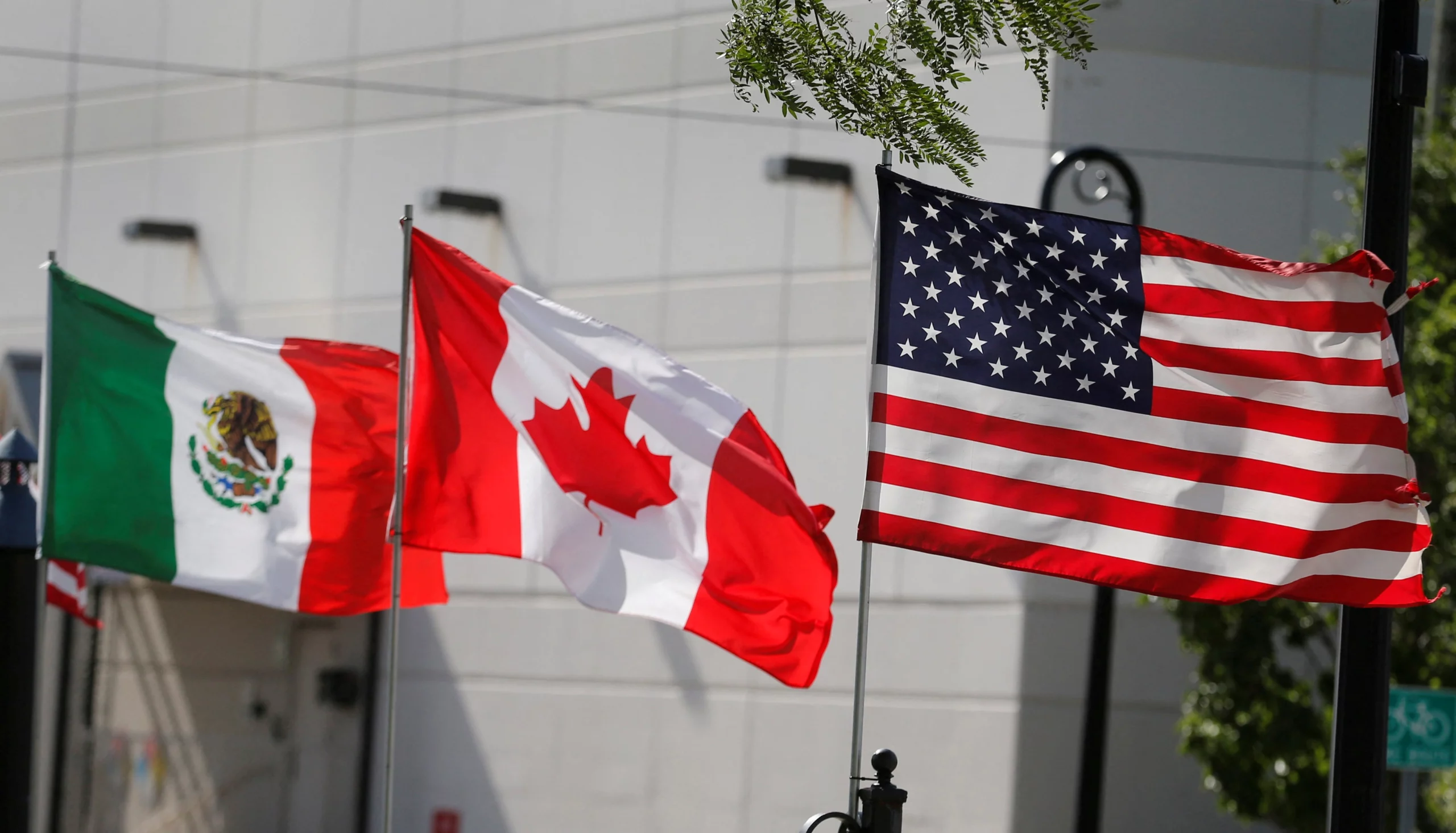
Trade
Key Facts
—The meeting. Trade chiefs from the three countries hold a virtual review on July 1, the pact’s first mandatory checkpoint six years after it took effect.
—Mexico’s move. President Sheinbaum has signed a letter formally asking to extend the deal by 16 years, to 2042; Canada has done the same.
—The unknown. Washington has not said whether it will agree; both neighbours are waiting on the US position.
—The agendas. Mexico brings 13 topics to the table and the United States 14, with the auto sector and rules of origin at the centre.
—Two paths. A yes extends the pact to 2042; a no starts annual reviews and keeps it in force until 2036.
—The scale. Trilateral goods trade has grown from about $803 billion to more than $1.6 trillion a year over two decades.
The USMCA review that opens on July 1 begins with an unusual asymmetry: Mexico and Canada have both formally asked to extend the pact for another sixteen years, and the only voice still missing is the one that matters most, Washington’s.
On Wednesday the trade ministers of the United States, Mexico and Canada meet by video link to open the first mandatory review of their trade pact, six years after it replaced the old NAFTA. Known as the T-MEC in Mexico and CUSMA in Canada, the agreement was written with this checkpoint built in.
What makes this opening different is that two of the three partners have already shown their hand. President Claudia Sheinbaum said this week she has signed the letter setting out Mexico’s position, and Canada has moved in the same direction.
What the USMCA review actually decides
The mechanism offers two clear roads. If all three governments agree, the pact is confirmed for a fresh sixteen-year term running to 2042, and the clock resets.
If they do not all agree, the deal does not collapse.
Instead it enters a decade of annual reviews and stays fully in force until at least 2036, with the three countries still free to agree an extension at any point along the way. Mexican officials have been at pains to stress that a failure to extend now is not the end of the agreement.
In her remarks ahead of the meeting, Sheinbaum said Mexico had done its part and was now waiting on the United States. Economy Minister Marcelo Ebrard, who leads the Mexican side alongside US and Canadian counterparts, will report on the outcome later in the week.
Where the three sides disagree
The talks are not a blank slate. Ebrard has said Mexico arrives with thirteen topics it wants discussed, while the United States has tabled fourteen, and Canada will set out its own list.
The hardest of these is the car industry. Washington wants tougher rules on how much of a vehicle must be built inside North America, and a firmer block on Chinese parts entering the region through Mexican plants.
Those demands sit on top of a tariff regime already partly in place. Goods that meet the pact’s content rules cross into the United States duty-free, while those that fail face a country-specific tariff of around twenty-five percent, with extra duties layered on steel, aluminium and vehicles.
Why the USMCA review matters beyond North America
The numbers explain the stakes. Trade among the three countries has grown from roughly eight hundred billion dollars two decades ago to more than one and a half trillion dollars a year, binding their factories into a single production system.
For the rest of Latin America, Mexico’s nearshoring boom is the benchmark every economy measures itself against, so a messier or more uncertain pact could redistribute some of that investment premium. For investors, the signal from July 1 is likely to be neither relief nor alarm, but the prospect of years of open-ended bargaining over the region’s most important trade relationship.
There is a further round to come. Mexican officials expect an in-person meeting of the three trade teams around July 20, when negotiators will start working through the detailed texts rather than the broad direction settled this week.
More: Latin America news in English, every day from The Rio Times.
Frequently Asked Questions
What is the USMCA review on July 1?
It is the first mandatory joint review of the North American trade pact, held six years after the deal took effect. The three trade ministers meet by video to decide the agreement’s next phase.
What have Mexico and Canada asked for?
Both have formally requested that the pact be extended by sixteen years, carrying it to 2042. Mexico’s president has signed the letter setting out that position.
What happens if the deal is not extended?
The pact does not end. It moves into a series of annual reviews and stays in force until at least 2036, during which the three countries can still agree to extend it.
What are the main points of dispute?
The toughest issues are the rules governing how much of a car must be made in the region and the effort to keep Chinese parts out. Tariffs already sit on steel, aluminium and non-compliant vehicles.
Connected Coverage
This article was produced by The Rio Times’ automated newsroom system. How we use AI · Report an error · Editorial responsibility: Matthias Camenzind, Editor-in-Chief