Uruguay’s Year-Old President Sinks to 20% as a Truck Scandal Bites
Politics
Key Facts
Uruguay is the country foreign investors reach for when they want calm, which is exactly why a president sinking to twenty percent approval is worth a second look.
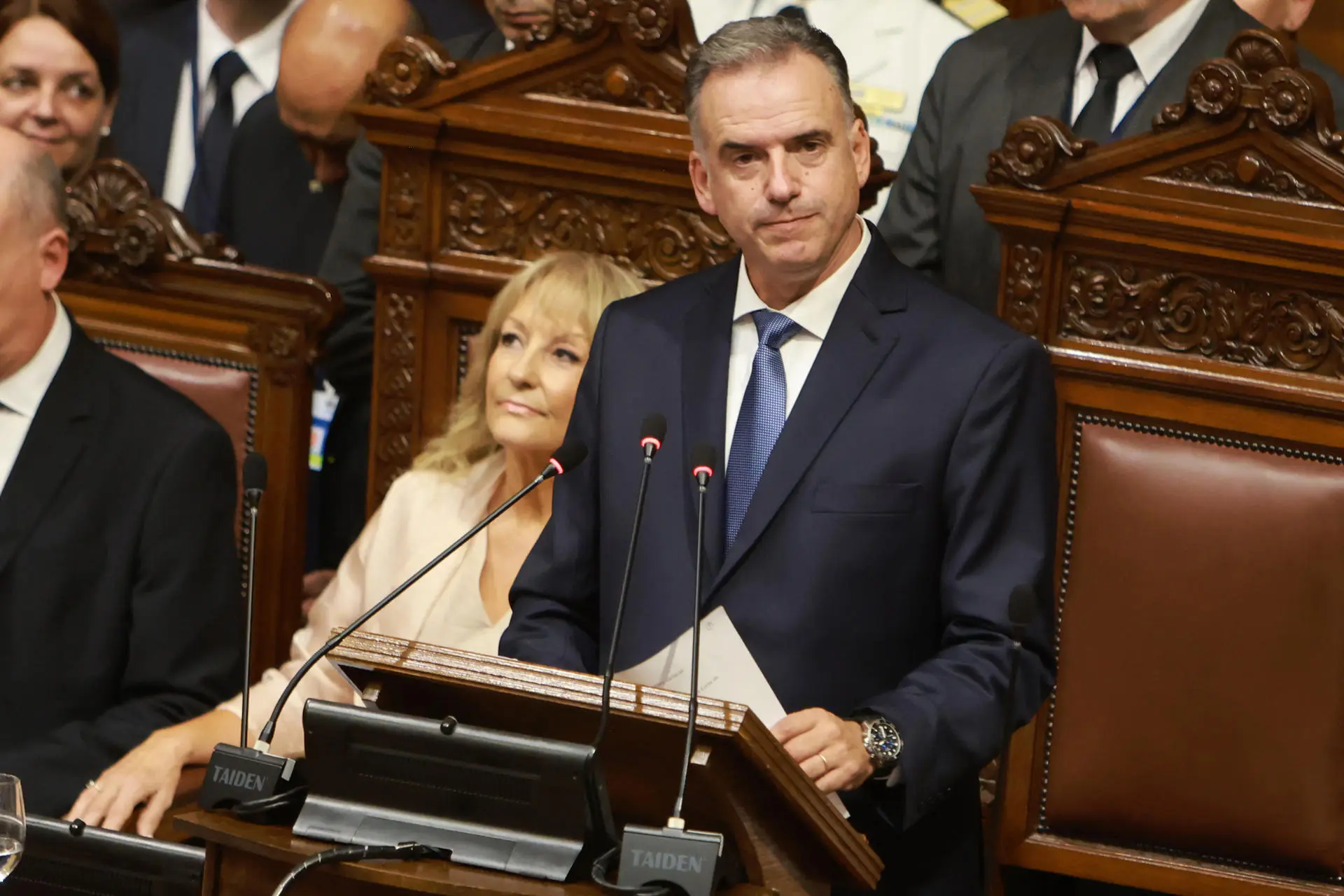
A poll published on June 24 by the respected local firm Cifra put President Yamandú Orsi’s approval at just twenty percent, against a disapproval rating of sixty-five percent. For a leader barely a year into a five-year term, those are stark numbers.
The government moved quickly to play it down. The president’s deputy chief of staff dismissed the survey’s weight the next day, but the trend is hard to wave away — three other pollsters had already flagged the same slide through the first half of the year.
What makes it sting is the source of Orsi’s appeal. A former small-town mayor with a teacherly, neighbourly style, his political capital was always personal rather than purely partisan, so a turn toward outright rejection cuts deeper than a normal dip.
What is dragging the Uruguay president down
The immediate spark was a vehicle. Eight days before his inauguration, Orsi bought a nearly new Hyundai Santa Fe for about fifty-four thousand dollars, a model the dealership was otherwise advertising near seventy-nine thousand — a gap of roughly twenty-five thousand dollars his team called a discount.
In a country that prizes clean government and ranks as the region’s least corrupt, the optics landed badly. The pollster was careful to say the SUV episode alone does not explain the fall, but it was the first survey to fully capture the public mood once the story broke.
The deeper problem is the economy. Growth is expected to slow toward one and three-quarter percent this year, an unusually strong peso is squeezing exporters, and a widening fiscal deficit is forcing hard choices just as budget season opens.
The hard left of his own Frente Amplio coalition wants a new tax on the wealthy and firm labour protections, while markets want the deficit narrowed. Squaring those two demands on twenty percent approval is the central bind of his presidency.
Why a foreign reader should care about Uruguay
Uruguay is small, but it plays an outsized role for investors. It carries the lowest country risk in Latin America and an investment-grade credit rating, and global banks have taken to calling it the regional safe haven where capital goes to sit out the neighbourhood’s drama.
That reputation rests on predictability, not on any single leader. A weak president does not change the rule of law or the credit rating overnight, and Uruguay’s institutions are built to absorb an unpopular government without lurching.
The risk is subtler than an outright crisis — a president this weak has less room to push a credible deficit fix past his own base, and a budget fight that drifts could nick the very stability premium that makes Uruguay attractive. For now it is a yellow light, not a red one, but it is a gauge worth watching closely in the months ahead.
More: Uruguay news in English, every day from The Rio Times.
Frequently Asked Questions
How unpopular is the Uruguay president now?
A Cifra poll published on June 24, 2026 put President Yamandú Orsi’s approval at twenty percent and his disapproval at sixty-five percent, conducted by telephone among eight hundred people. Since February his disapproval has risen nineteen points and approval has fallen eleven, a sharp deterioration barely a year into his term.
What is the truck scandal about?
Eight days before taking office, Orsi bought a nearly new Hyundai Santa Fe SUV for about fifty-four thousand dollars, while the same dealership advertised the model near seventy-nine thousand. His team described the roughly twenty-five-thousand-dollar gap as a discount, but in a country that prizes clean government the episode became an ethics flashpoint.
Does this threaten Uruguay’s stability for investors?
Not directly, since Uruguay’s investment-grade rating and low country risk rest on durable institutions rather than one leader’s popularity. The real risk is that a weakened president struggles to pass a credible deficit fix during budget season, which over time could chip at the stability premium that draws foreign capital to the country.
Connected Coverage
› How Uruguay Turned Boring Stability Into a Magnet for Capital
This article was produced by The Rio Times’ automated newsroom system. How we use AI · Report an error
Read More from The Rio Times