Trump’s 100% Tariff Threat Turns Canada’s China Outreach Into A Test Of North America’s Rules
Key Points
- Trump’s 100% tariff threat forced Canada to clarify, in public, how far it will go with China.
- Carney ruled out a China free-trade pact and tied Canada’s hands to USMCA rules.
- The deeper issue is a new kind of border control: stopping “backdoor” trade routes through trusted partners.
A weekend message from Donald Trump did what months of quiet diplomacy often cannot: it cornered Canada into answering, immediately, a question it prefers to manage slowly.
On January 24, 2026, Trump wrote that if Canada signs a free-trade agreement with China, the United States would impose a 100% tariff on all Canadian goods entering the U.S.
He framed China as an existential risk to Canada and warned that Beijing would try to use Canada as a staging ground to slip products into the American market.
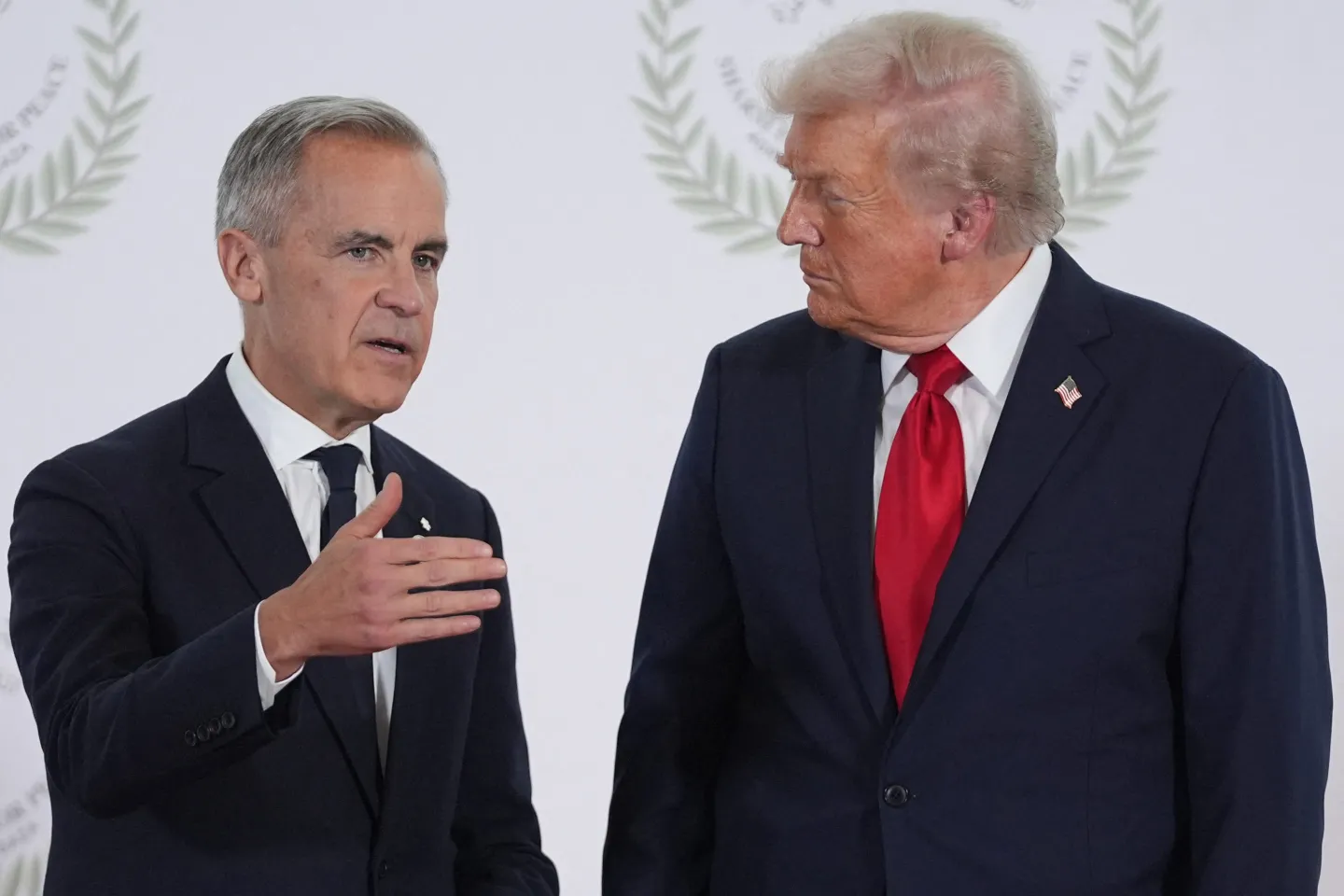
He also called Prime Minister Mark Carney “Governor,” a jab meant to turn a trade dispute into a test of political standing. The next day, Canada responded with a line designed to remove ambiguity.
Canada Prioritizes Trade Stability Over Deals
On January 25, Carney said Canada has no intention of pursuing a free-trade deal with China. He cited USMCA rules that require Canada not to seek such deals with “non-market” economies without prior notification.
He also insisted his China trip was about fixing concrete problems in trade flows, not rewriting alliances. Those problems are real, and they have price tags.
In 2024, Canada imposed a 100% tariff on Chinese electric vehicles and 25% on Chinese steel and aluminum. China retaliated with 100% tariffs on Canadian canola oil and meal and peas, plus 25% on pork and seafood.
Carney says the goal now is to unclog pressure points in agriculture, fisheries, and electric vehicles. Ottawa’s biggest signal was its adjustment on EVs. Canada replaced the 100% tariff with a quota system.
Carney said up to 49,000 Chinese EVs a year could enter at a 6.1% tariff, rising to about 70,000 within five years. He described the initial cap as roughly 3% of Canada’s 1.8 million annual vehicle sales.
The story behind the story is leverage, not love of China. Canada is the top export destination for 36 U.S. states, and about C$3.6 billion in goods and services crosses the border daily.
In that environment, even the threat of a 100% tariff can chill investment, delay hiring, and scramble supply-chain decisions before any tariff is signed. U.S. Treasury Secretary Scott Bessent amplified the message, saying Canada must not become a gateway for cheap Chinese goods.
Related coverage: Brazil’s Morning Call | Ecuador Bets On A U.S. Security Push As It Trades Blows With This is part of The Rio Times’ daily coverage of global affairs and Latin American financial news.
This article was produced by The Rio Times’ automated newsroom system. How we use AI · Report an error
Read More from The Rio Times