The number of Brazilian immigrants in Portugal asking for help to return to Brazil is increasing
The number of Brazilians in Portugal who have asked for help to return to Brazil in 2022 has almost quadrupled compared to 2021.
The main factors for this scenario are unemployment, difficulty in accessing the job market, irregular situations, lack of preparation in the migratory process, and higher cost of living in the European country.
The Voluntary Return and Reintegration Support Program of the International Organization for Migration (IOM) has seen the number of requests for help rise in recent months in Portugal.

Based on data from 2022, an average of 80 people per month signed up for the IOM program.
Of all those seeking support, 92% are Brazilians in situations of extreme vulnerability.
In an interview with RFI, Vasco Malta, IOM’s Head of Mission in Portugal, explains that the situation is worrying and one of the reasons for this alarming scenario is the little information about the Portuguese reality, in addition to poor planning before leaving the country of origin.
“This most recent influx shows a lack of preparation and insufficient information in this process, which leads to truly complex situations from a social point of view in Portugal,” he points out.
“The truth is that there is also a lot of misinformation on social networks, which ends up boosting the decision to migrate to Portugal based only on these sources and not on official information,” Malta explains.
“Sometimes, people may even bring savings, but when they need to face the difficult reality of the real estate market or the increase in the cost of living itself, for example, this emergency money ends up being used up very quickly,” he adds.
THE VULNERABILITY OF BRAZILIANS
The significant increase in requests for help shows a chaotic situation similar to that experienced in 2020, the year of the outbreak of the Covid-19 pandemic.
“Overall, there was an increase in the number of requests for support from 2021 to 2022. We are talking about 288 cases in 2021 to 1,051 in 2022,” Malta counts.
He also points out that 113 returned to Brazil with the device’s help in 2021, against 394 in 2022.
Brazil remains the most representative community in these requests for help to return to the country of origin.
They already represented 82% of the program’s beneficiaries in 2021; in 2022, they reached 92%.
Malta explains that 53% of those who ask for this type of help are women and that 30% of the total return to Brazil in the same year they arrived in Portugal.
Another 37% remain in the European country for at least a year before requesting support to return.
“In most cases, about 91% were in an irregular situation,” pointed out the head of IOM in Portugal.
Nayara Silva Ribeiro, 41, is from Ipatinga, Minas Gerais, and arrived in Portugal in November 2022 with her three children.
She is without a job, the children without schools, and suffers from a chronic illness.
Therefore, despite the short time in Europe, she has already requested support from the IOM to return to Brazil.
“I have three children, a 9-year-old, a 10-year-old, and a 15-year-old. I came practically tricked. The person told me it was totally different here, that everything was easier. I have a chronic disease, which is called lupus. When I arrived here, I got worse and could not do everything. My children still don’t go to school; I can’t afford to pay for their expenses, nor mine,” says Nayara.
“My boyfriend brought me here, and it is very hard for him to care for everything. It is not easy. I’m practically in bed, unable to do anything, and every day it gets harder. I am asking for help to go back to Brazil urgently.”
In the face of so many difficulties that she has faced, the Brazilian appeals:
“For the love of God, for those thinking of coming to Portugal, do some good financial planning first. Have your head in place. Otherwise, don’t risk it! Only I and God know what I am going through because I am without treatment, without medication, and I need to return to Brazil urgently.”
“I have already tried to get help at the Consulate but couldn’t. I went to the Social Assistance office in Arruda dos Vinhos, where I live, but they can’t help me either because I am in Portugal with a tourist visa, and now I am waiting for the IOM. Only after 90 days in the country will they be able to evaluate my situation,” she explains.
SOCIAL NETWORKS AND JOBS “FALLING FROM THE SKY”
The lawyer Vitoria Nabas specialized in immigration for over 20 years in Europe, says that many Brazilians are being deceived.
“I have witnessed an increase in Brazilians who are left in a risky situation when they come to Europe,” says the lawyer, who also sees social networks as a source of misinformation for many immigration applicants.
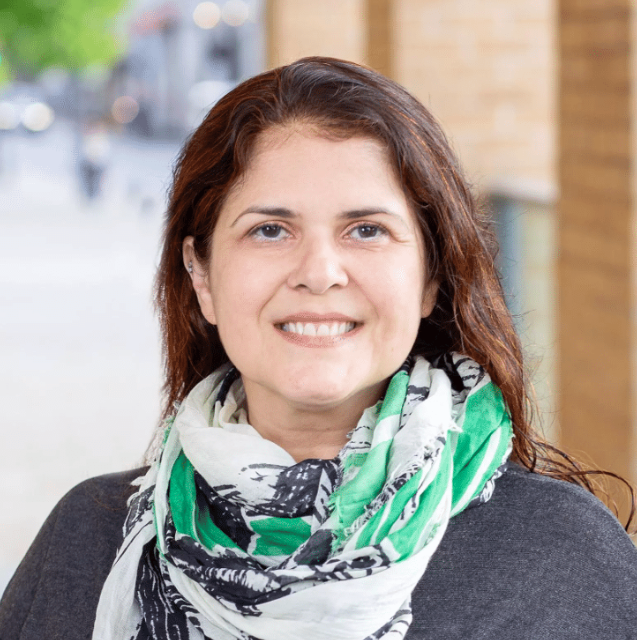
“I get very worried because I see many of these ‘influencers’ selling the idea that Portugal is wonderful. Portugal can be wonderful, and I love that country. However, to live in any country or any city, even within our own country, we have to do some planning. And these people are going [abroad] without planning,” says the lawyer.
“They believe that when they arrive in Portugal, they will have a job falling from the sky, easy accommodation, they will find a school without any difficulties for their children, and adaptation will be simple, and this is not true,” she points out.
“Even to rent a property is complicated because the person doesn’t have a credit [to prove an income] and will have to pay an advance on that rent because the landlord will want a guarantee. So people are being deceived based on what they hear on social networks, which is very dangerous,” insists the lawyer.
Over the several years of the IOM program’s existence, Vasco Malta says that situations of vulnerability have always existed, but in recent months, the scenario has worsened.
“What we have seen are people who are either homeless, or are victims of domestic violence, or of human trafficking, and who unfortunately are in a borderline situation,” said the head of the IOM mission in Portugal.
The organization seeks to ensure that immigrants who need and want to return voluntarily to their country of origin can do so in a dignified and safe way.
“What we have analyzed in recent months about returning are situations of greater and extreme vulnerability. Many people are even victims of fictitious networks and pay a certain amount of money to someone to get their cases going and, unfortunately, these entities end up taking the money and disappear,” she added.
With information from UOL
More: Brazil news in English, every day from The Rio Times.
Editorial responsibility: Matthias Camenzind, Editor-in-Chief · Editorial standards · Report an error