The Louisiana Film Prize: North America’s Most Unusual Film Fest
RIO DE JANEIRO, BRAZIL – The ongoing search for viable film distribution platforms is reflected in the proliferation of local film festivals across the US.
In 2002, there were 2,000 local film festivals on the boards. In 2019 there are about 8,500. That’s a growth index of 383 per year, indicating the birth of at least one new film festival every day.
There’s no indication that the trend has peaked. Cities and towns, neighborhoods and ethnic communities, and all varieties of special interest groups, have found that film festivals deposit funds into local coffers and provide alluring entertainment to the ‘community’ – be it location-based or special interest. They also increase tourism and create intergroup understanding.
For filmmakers, traveling the festival circuit is almost always required for the successful marketing of a film, be it a studio or indie production, or a quirky first feature. However, festival circuiting is expensive and with so many festivals on the calendar, some wind up duplicating or competing with each other. The fact is that festival screenings don’t always benefit filmmakers.

And it was that observation that led filmmaker and cultural activist Gregory Kallenberg to conceive of a new and different kind of cinema celebration when Shreveport officials asked him to help develop a film festival for his home town, Louisiana’s third largest city.
“Actually, I said no at first, because I felt that establishing another regional film festival wouldn’t do much for Shreveport citizens nor would it bring recognition to and develop our very creative artists’ community,” says the ever enthusiastic and energetic Kallenberg, whose philanthropically-minded family has long supported Shreveport’s cultural scene.
“I thought we should have something that makes Shreveport stand out. I came up with the idea for the Film Prize,” Kallenberg continues. “It was a different kind of film celebration that would would actually foster local filmmakers and bring others to Northern Louisiana, developing film production in our area.”

The city liked Kallenberg’s idea and embraced it. Community support for the Film Prize has consistently grown since the festival was established eight years ago, with an operating budget of about US$80,000 (R$320,000) – much of it from Kallenberg’s own funds.
Indicating Film Prize’s tremendous growth, this year’s budget was up to about US$600,000, most of it provided by corporate and private sponsors and the City of Shreveport.
Kallenberg’s Film Prize concept is indeed unique – and brilliant. The program consists of 20 short films that are competing for one prize, the highly coveted cash award of US$50,000. That is the world’s largest cash prize for a short film competition, and there are no restrictions on how the winner can use it.
Filmmakers immediately appreciate the value of the Film Prize. Every filmmaker wants to win. Filmmakers come from far and wide to enter the competition.
Film submission has several requirements. The shorts must be between five and fifteen minutes long and, most importantly, they must have been filmed in Northwest Louisiana. In fact, filmmakers who intend to submit shorts for the competition must register with the Film Prize Foundation before they begin shooting their projects. For that, there is a $50 registration fee. There is no limit to the number of shorts a filmmaker may submit.
Attributable to the Film Prize, annual film production in Shreveport and in Northern Louisiana has flourished. Filmmakers come to shoot shorts specifically for the competition.
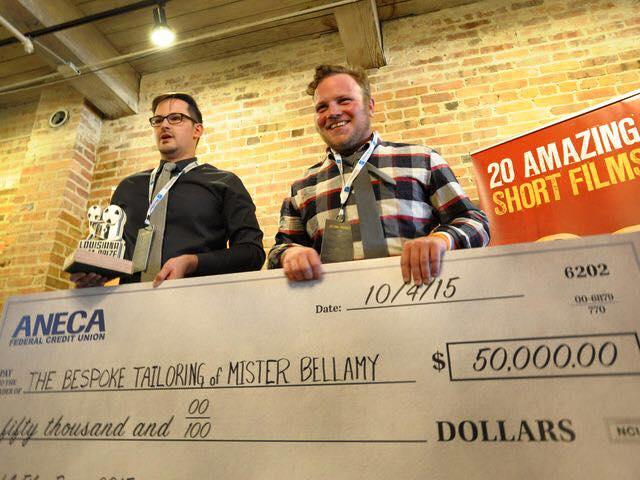
This year, 120 filmmakers hailing from Louisiana and surrounding states, Los Angeles and as far afield as Australia registered and completed projects for Film Prize submission. That’s a real and calculable Film Prize win for the region.
The 20 competing shorts are selected by Film Prize programmers (including Kallenberg, of course, and founding partner Chris Lyon) who pick films representing all genres. The emphasis is on excellent storytelling and creative moviemaking craftsmanship. And, the show of talent is actually enormous.
The Film Prize’s big cash winner is decided by two voting factions. Audience members buy festival passes that allow them to vote for the winner. And, industry professionals are invited to judge the competition, as well as to present informative panel discussions for the benefit of participating filmmakers and to mentor filmmakers who individually seek advice about storytelling, editing, other festivals, networking, film distribution, marketing their projects and themselves.
At the 2019 Film Prize, staged from October 2-6 in Shreveport cinemas, the 20 competing shorts were shown in two slates, each with ten films. Every voter was required to watch all 20 films, and attendance was strictly monitored.
This year’s voting audience was more than 5,000 strong, up from about 3,300 last year. Additionally, there were twelve industry judges who voted individually rather than by consensus.
In the end, audience and jury tallies weigh equally to determine the US$50,000 winner. The voting procedure truly engages audience voters and invited judges, who realize their vote can actually influence a filmmaker’s career. (In full disclosure, I was one of this year’s judges and fully felt the joyful responsibility voting for a winner. And, in truth, it was one of the most rewarding festival experiences I’ve ever had).

This year, the big money went to “Anniversary,” a clever musical about a couple celebrating their first year of dating by marking the changes they’d been through.
Remarkably, the dramady was written, composed, directed, produced and starred in by first-time filmmaker James Harlon Palmer, a truly extraordinary talent.
Four other top contenders illustrate the diversity of storytelling and genre in the competing films: “Black Pajamas” is a beautifully crafted dance film about PTSD. “Ghosted” is a dark thriller about a man obsessed with a lady co-worker. “Leo & Grace” is a heartbreaking romance about lovers kept apart by racism. “Maven Voyage” is a sci-fi adventure about a woman who wants to join a maiden voyage to Mars.
Audience voters also designate best actor and best actress accolades that include US$1,000 for each honoree. This year’s best actress was “Maven Voyage’s” Rachel Emerson. Richard Kohnke won best actor for playing a neurotic sports coach in “And That is Why I Succeed.”
The judges pick ‘promising’ filmmakers to receive US$3,000 Founder’s Circle Awards, intended to seed their next projects. This year’s winners included the directors of the aforementioned “Black Pajamas,” “Leo & Grace,” and “Maven Voyage,” as well as “Supplements” (a post-apocalyptic thriller), “Nowhere Arkansas” (a drama about a Civil War veteran who hunts a legendary eagle), and “Same Time Next Week,” (in which writer/director/producer Kalah Roberts plays an overwhelmed mom seeking counseling from a man she believes to be a therapist but who turns out to be a non-English-speaking janitor). Good stories, all.
But Film Prize has also grown to be about more than films. Enhancing the festival’s entrepreneurial spirit and boosting audience enjoyment, competitions for music, food and, as of this year, fashion is also slated.

Shreveport looks to the Film Prize as its favorite weekend of the year. And the city welcomes tourists from around the world to join in the exuberant fun.
Every Film Prize event begins with Kallenburg and Lyon leading the audience in the festival cheer. With arms thrust into the air, everyone shouts, “WE ARE THE PRIZE!?” And, everyone actually knows that, as members of the Film Prize community, they are!
Because of the Louisiana Film Prize’s tremendous success, Kallenberg’s format is being used, with his full encouragement and support, as a model for other festivals.
This year, Tennessee filmmaker David Merrill staged the first annual Memphis Film Prize (August 2-3, 2019), which presented ten shorts in competition for a cash prize of $10,000. Other cities have expressed interest in following suit.
Soon there might be a Film Prize circuit, but there’s no chance of programming duplication because each set of competing shorts must have been produced in the city or county where the Film Prize is presented.
Bottom line: if you’re keen on attending a film festival with great films, guaranteed seating at screenings and where your presence makes a difference, the Louisiana Film Prize is just right for you. Information about the 2020 Louisiana Film Prize will be available at prizefest.org.
More: Brazil news in English, every day from The Rio Times.
Editorial responsibility: Matthias Camenzind, Editor-in-Chief · Editorial standards · Report an error