The Khorasan Cauldron: South Asia’s Next Great Conflict
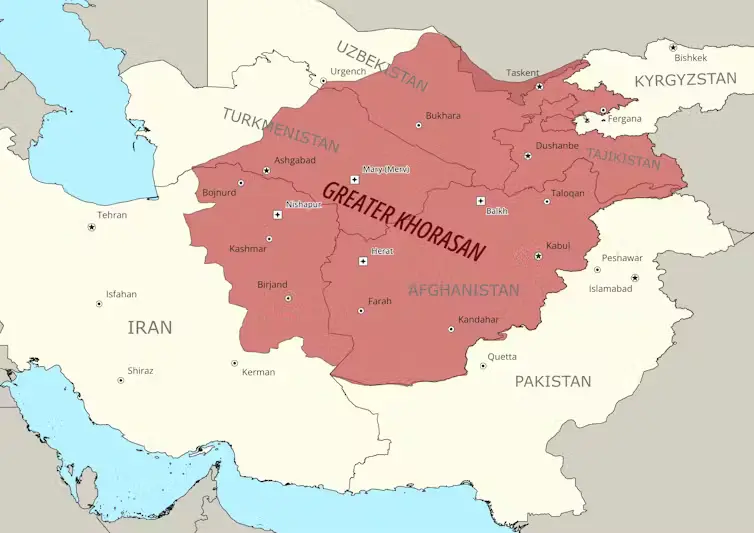
(Analysis) In the heart of South Asia, in a region once known as Khorasan, the lines on the map are blurring, not just in ink but in the blood of those who call these lands home – Iran, Afghanistan, and Pakistan.
These three nations bound by history, divided by borders, and now united by chaos — are witnessing the erosion of their sovereignty as the ground beneath them shakes with the footsteps of insurgents, separatists, and armies alike.
Imagine a landscape where the Durand Line, drawn with the arrogance of colonial strategy, no longer holds significance. The Pashtuns, divided by this historical mistake, whisper of unity, dreaming of an Afghanistan that stretches from the Hindu Kush to the Arabian Sea. But their dreams are not peaceful; they are fueled by the fires of insurgency and the echoes of nationalist cries.
In this theater, the Afghan Taliban, having reclaimed their country, now navigate a complex dance with the Pakistani Taliban (TTP), their ideological brethren who seek to disrupt Pakistani control over Pashtun lands. Meanwhile, the shadows of ISIS-K loom large, adding another layer of militant fervor, intent on toppling any government that stands in their path.
[arve url=”https://www.riotimesonline.com/wp-content/uploads/1735/48/the-looming-storm-in-south-asia-borders-battles-and-chaos.mp4″ /]
A Confluence of Conflicts
Balochistan, a region straddling these three countries, becomes the crucible of conflict. Here, Baloch separatists, feeling the sting of marginalization from both Tehran’s Shia-dominated government and Pakistan’s central control, strike at the heart of infrastructure, targeting not just local forces but international stakeholders like China.
Their weapons, ironically, are often those left behind by American forces, now turned against the very order they once sought to maintain. The skirmishes are not just about land or identity but also about survival in a landscape parched by water scarcity.
The Helmand River, a lifeline from Afghanistan to Iran, becomes a battleground where treaties are as dry as the riverbeds they promised to keep full. The water wars of the past might seem like child’s play compared to the potential for conflict now, where every drop could be argued over with bullets rather than words.
The Spiral of Retaliation
Recent months have seen a tit-for-tat retaliation that seems to have no end. Iranian missiles fly into Pakistani territory in response to Balochi insurgent attacks, and Pakistani jets soar over Afghanistan, targeting the very Taliban they once supported.
Each strike, each death, fuels further vengeance, drawing the nations into a vortex of violence where the old rules of sovereignty no longer apply. This regional maelstrom isn’t isolated. It’s a stage where global powers watch with bated breath.
China, with its investments in Pakistan, eyes the instability with concern, fearing for its Belt and Road projects. Russia, with historical ties to Afghanistan, might see an opportunity or a threat.
The US, having left its footprints in the sands of this region, watches from afar, contemplating the implications of a new theater of conflict where its strategic interests could once again be at stake.
The Coming Confrontation
The narrative here isn’t just of battles fought but of a possible future where these skirmishes could escalate into a full-blown regional war. The “proxy provocation theory” whispers that minor players might drag major powers into conflict.
If unchecked, this could lead to a scenario where Iran’s Revolutionary Guard, Pakistan’s military, and Afghanistan’s Taliban find themselves in direct confrontation, each backed by different international allies, turning a local conflict into a global one.
This is not just a story of land and water but of people caught in the cogs of history, where the next big conflict could redefine not just borders but the very fabric of regional and global politics.
Editorial responsibility: Matthias Camenzind, Editor-in-Chief · Editorial standards · Report an error